Share:

“I advise people to have a different perspective on what selling is. It’s really about learning to influence people in a positive way, not just by strong arming them or forcing them into your position.”

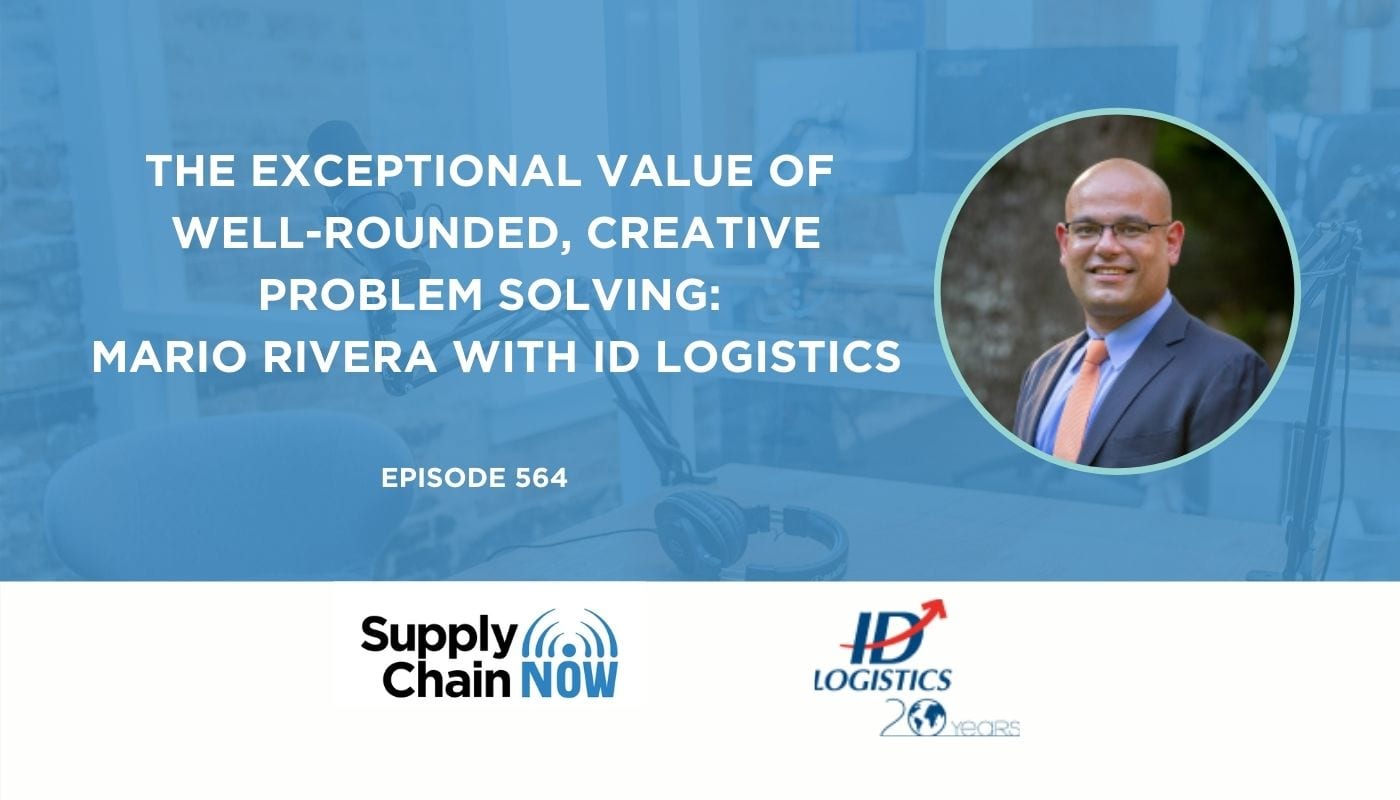
– Mario Rivera, Vice President of Development and Innovations with ID Logistics


Mario Rivera describes himself as intense, high energy, and hard working. But when asked questions about what really makes the difference in creative problem solving, it all comes down to one thing: listening. As the Vice President of Development and Innovations with ID Logistics, he has plenty of opportunities to listen to others, and he is often surprised by what he hears.

If we listen – really listen – to the people we are speaking to and working with, we are likely to hear a number of important things. We hear their personal successes and struggles, we hear what they are actually looking for in a deal, and most importantly, we can hear opportunities for mutual long-term gain.

In this interview, Mario shares his point of view on creative, real-world problem solving with Supply Chain Now Co-hosts Greg White and Scott Luton:

· Why almost everything we do in life is actually selling, and how we can increase the likelihood of our success

· The danger of working with people that paint themselves into a specific role and then refuse to look beyond what they see as their responsibilities

· The fundamental shift he believes is coming towards micro-fulfillment, and what that is going to mean for asset-heavy players in the supply chain space

More Podcast Episodes
supply chain resilience
play-button-podcast
podcast-blue-microphone
Podcast
June 12, 2026

The Buzz: AI Adoption, Brand Differentiation, & Embracing Discomfort

On this episode of The Buzz, Scott Luton is joined by special co-host Dr. Muddassir Ahmed and special guest Anthony Reeves, Vice President of Global Brand & Creative at Kohler and author of Eat the Donkey: Why Great Companies Embrace Discomfort. Together, they explore the realities of AI adoption, decision-making optimization, innovation, leadership, and what separates organizations that thrive from those that struggle to keep pace. As supply chains continue to evolve in the age of AI, organizations face critical decisions about technology adoption, data quality, change management, and leadership. Scott, Muddassir, and Anthony examine why many AI initiatives fail, what companies can learn from both successes and setbacks, and why strong decision-making remains one of the most valuable competitive advantages. The conversation also explores the growing importance of human connection, brand differentiation, organizational culture, and the willingness to embrace discomfort in pursuit of long-term growth. Drawing on experiences from Amazon, Kohler, Starbucks, and other global brands, Anthony shares powerful lessons on innovation, leadership, and staying true to what makes an organization unique. Key Takeaways AI success depends as much on adoption, change management, and leadership as it does on technology. High-quality, contextualized data remains the foundation for effective AI…
Sustainability
play-button-podcast
podcast-blue-microphone
Podcast
November 10, 2025

Survey Results: 2025 Trends and Attitudes Report in Supply Chain and Sustainability

In this episode of Supply Chain Now, host Scott Luton and special guest co-host Maria Villablanca welcome Dr. Dinesh Davè, Professor & Director of Supply Chain Management at Appalachian State University, and Evan Junker, Chief Growth Officer at SPARQ360, to unpack insights from the 2025 Supply Chain Trends and Attitudes Report. The annual study, conducted by Appalachian State and SPARQ360, surveys hundreds of supply chain managers across the U.S. to reveal where leaders are investing, from AI and visibility platforms to sustainability and risk management. Together, the panel discusses how familiarity and adoption of AI are rising, why the “ambition-action gap” still challenges sustainability progress, and what’s driving executives to balance cost efficiency, resilience, and environmental responsibility. They also explore how partnerships, collaboration, and customer-centered priorities are emerging as the new competitive advantage. Packed with practical insights and forward-looking data, this conversation offers a clear snapshot of where supply chain strategy is heading in 2025 and beyond. This episode is hosted by Scott Luton and Maria Villablanca, and produced by Trisha Cordes, Joshua Miranda, and Amanda Luton.   Additional Links & Resources Check out all the great resources and information mentioned during the show: Connect with Dr. Dinesh Davè Learn…

Supply Chain is Boring – Episode-564

Share: