

More

freight
September 18, 2025
Freight Audit & Payment: The Anchor for Supply Chains in Turbulent Times
Special Guest Blog Post written by Bart A. De Muynck The past few years have exposed just how fragile our supply chains can be. From tariff shocks to pandemic disruptions, from inflationary pressures to mounting parcel surcharges, the landscape has shifted beneath our feet. Companies that once managed logistics as a back-office function are now grappling with its role as a front-line business risk. What’s often missed in this conversation is the role of freight audit and payment (FAP). Long considered a tactical necessity, FAP has quietly become a strategic imperative. And as I explored in the Better Supply Chains Market Radar: Freight Audit & Payment, the companies that treat it that way are the ones best equipped to weather today’s volatility. Why FAP Has Become Mission-Critical When tariffs can add 15–20% to input costs almost overnight, or when the elimination of the U.S. de minimis exemption threatens to reshape cross-border e-commerce, companies need more than visibility. They need real-time intelligence and agility. Traditional FAP approaches—manual audits, siloed spreadsheets, reactive error correction—are no longer sufficient. Modern FAP platforms, powered by AI and advanced analytics, enable shippers to: Audit with precision at scale, uncovering hidden…
data
December 17, 2025
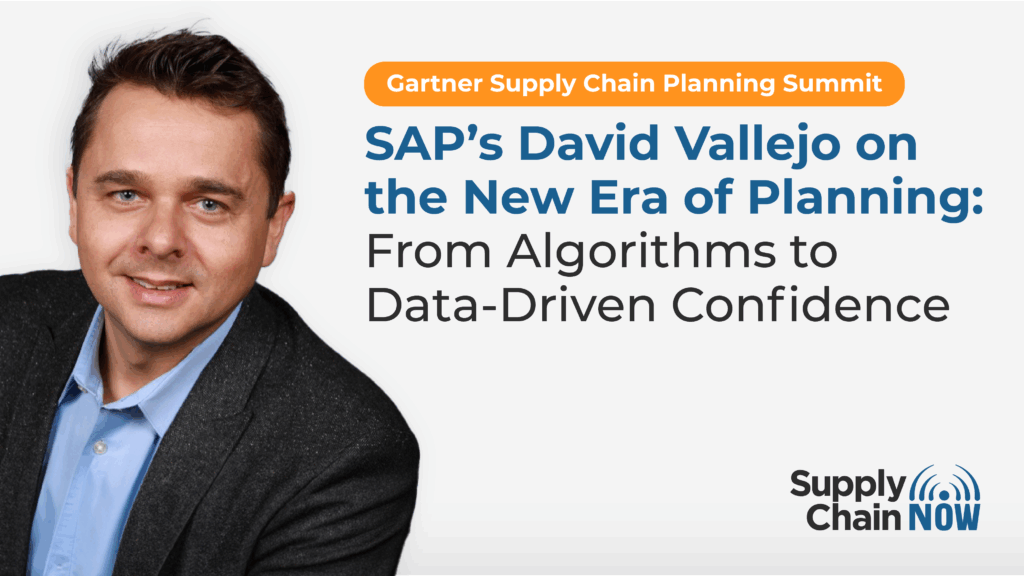
SAP’s David Vallejo on the New Era of Planning: From Algorithms to Data-Driven Confidence
In a rapidly evolving global supply chain landscape, SAP’s David Vallejo believes the most exciting innovations are happening in planning—and that the industry is entering a fundamentally new era. At the Gartner Supply Chain Planning Summit 2025 in Denver, Vallejo, who leads global product marketing for SAP’s supply chain portfolio, joined Scott Luton to discuss how planning is transforming, why data now sits at the center of competitiveness, and what SAP is doing to help organizations make faster, more confident decisions. A Shift From ERP-Centric to Data-Centric Vallejo described his team’s role as one that constantly scans the market—identifying trends, customer expectations, and the problems companies will need to solve next. Those insights help shape new innovations across the SAP ecosystem. He noted that SAP has moved decisively from an ERP-centric worldview to a data-centric one. This shift is essential, he argued, because the biggest advantage in modern planning lies in having the right data—clean, connected, contextualized, and ready to drive decisions. As Vallejo put it, “It’s all about the data that I need to make better planning decisions.” Planning Models Are No Longer Static Reflecting on how planning has evolved since he entered the field two decades…