

More
supply chain
June 4, 2025
5 Things I Wish More People Asked About Supply Chains in Latin America
Special Guest Blog Post written by Demostenes (Demo) Perez, Photo by Rikin Katyal After more than 25 years in logistics and supply chain management and having led over 200 regional distribution projects, I’ve come to realize that the questions people don’t ask are often the most important. Throughout my career, I’ve worked with global multinationals, emerging brands, and family-run businesses. I’ve helped move everything from underground mining equipment to high-fashion goods, from pharmaceuticals and food to toys and chemicals. Some supply chain models I helped design are still thriving today; others were shut down after a few years. Many didn’t even make it past the drawing board. In that time, I’ve had the privilege of collaborating with logistics professionals from nearly every corner of the world and making lifelong friends in the process. Yet no matter the company size or product type, I still wish more people would ask these five questions before launching or scaling their operations in Latin America: 1. How well do I understand the diversity within Latin America? “Latin America” is often treated as a single market. It’s not. Logistics conditions in Mexico are completely different from those in Brazil. Colombia, Argentina, Peru, and Chile…
logistics
November 2, 2021
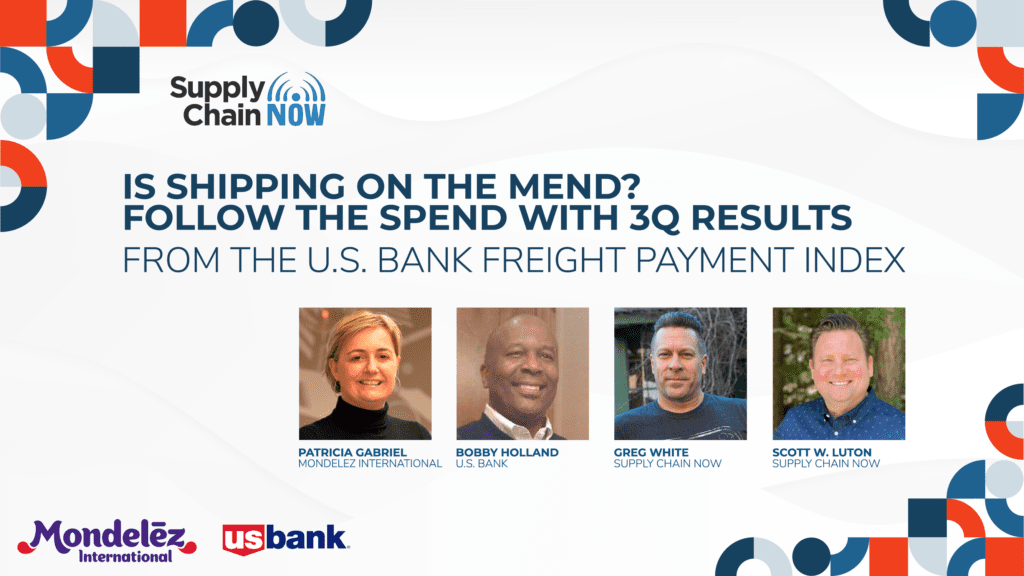
Is Shipping on the Mend? Follow the Spend with 3Q Results from the U.S. Bank Freight Payment Index
The U.S. Bank Freight Payment Index for 3Q 2021 has been released, and one thing remains clear: spend is up. More specifically, year over year, quarterly freight spend showed the second largest increase ever – rising 32.6% from 3Q 2020. What’s driving the dollars, and what can this increase tell us about the state of the supply chain across the country? Supply Chain Now co-hosts Scott Luton and Greg White recently sat down with Bobby Holland, Director, Freight Data Solutions at U.S. Bank, and Patricia Gabriel, Vice President US Customer Service & Logistics, at Mondelez International, to find out. Let’s review highlights from their discussion of the report – and take a look at what you need to consider moving forward. But first, what is the U.S. Bank Freight Payment Index? The U.S. Bank Freight Payment Index is a free report you can download each quarter to keep your finger on the pulse of freight shipping volumes and spend from both a national and regional perspective. The report uses actual transaction payment data, de-seasonalized and calendar adjusted for maximum comparability. How do I use it? When you’re asking the question, “What happened last quarter?” the U.S. Bank Freight Payment Index…