

More

supply chain war room strategy
February 26, 2026
Inside the Supply Chain War Room: Max Garland on Backup Plans, Delivery Costs & the Human Side of Innovation
At Manifest 2026, Scott Luton shared a cup of coffee with Max Garland, Senior Reporter at Supply Chain Dive, an Informa TechTarget publication, for a boots-on-the-ground perspective from one of the industry’s most plugged-in observers. Garland covers freight, logistics, retail fulfillment, and parcel delivery: the parts of the supply chain where strategy meets reality. And after a bruising 2025, he sees an industry that’s not just reacting anymore. It’s recalibrating. From Plan B to Plan D If 2025 had a theme, Garland says it was contingency planning. “Last year was when a lot of companies were putting together those Plan B’s, Plan C’s, and Plan D’s,” he explained, pointing to tariff upheaval and shifting trade policy that forced leaders into constant reaction mode. Companies prioritized flexibility: diversifying sourcing, adjusting procurement strategies, and preparing for fires wherever they might spark. In 2026, that flexibility remains. But the tone has shifted. Now companies are “firming up their plans, fine-tuning, making sure those back-up plans are cost-effective as well.” It’s no longer just about avoiding disruption; it’s about operating efficiently within it. In other words, supply chain leaders aren’t just jumping over candlesticks anymore (like Jack from the old nursery rhyme). They’re…
Africa
July 25, 2025
The Future of Supply Chains Starts With Better Questions
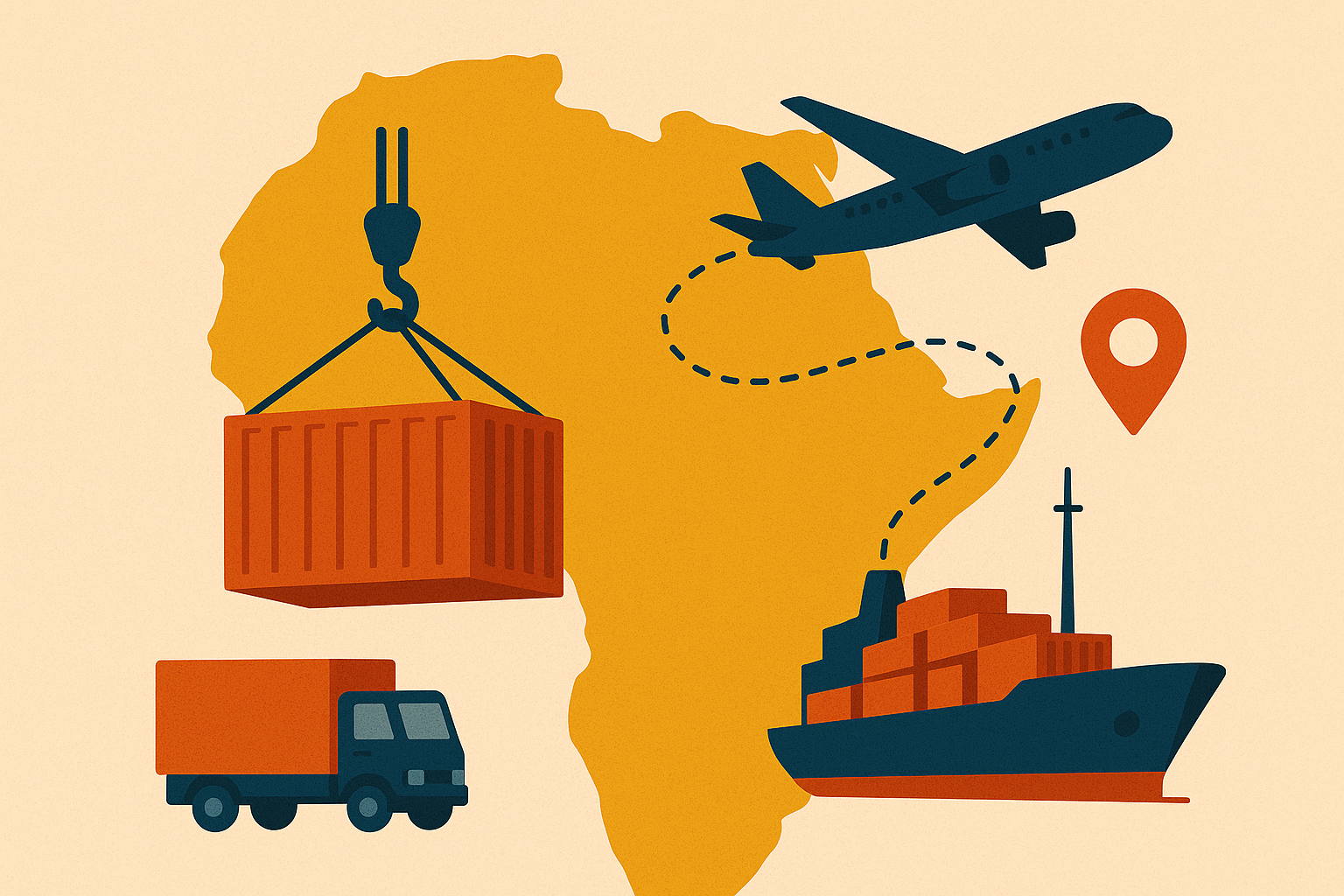
Special Guest Blog Post written by Stela Jaqueta In today’s fast-changing world, Africa’s role in global supply chains is at a tipping point. For too long, the continent has been viewed primarily as a source of raw materials rather than as a strategic partner in value creation. But what if we reimagined everything, from policies and technologies to mindsets and sustainability practices, through an Africa-centered lens? In this blog post, I explore five questions that challenge conventional supply chain thinking. From redefining Africa’s place at the global negotiation table, to elevating cultural intelligence from “soft skill” to strategic necessity, to designing climate-restorative logistics and embracing the digital revolution in a way that includes youth-led and informal businesses, each question is a call to rethink, redesign, and re-center. 1. What would a truly Africa-centered global supply chain look like? A truly Africa-centered global supply chain would shift from a model of extraction to one of empowerment and value creation. It would prioritize investment in local manufacturing, infrastructure, and knowledge transfer, ensuring that raw materials sourced from Africa are processed, packaged, and innovated on the continent. African-led businesses are seen as power players, with a voice and authority at the negotiation…