Share:

“We’ve seen a huge uptick in supply chain planning – not just now, but actually a year or two years ago. Lots of companies want to extend the boundaries of their supply chain planning out to their customers and they’re doing it in a variety of ways.”

– Laura Foley, Global Services Lead with John Galt Solutions


“We have tons of data, and as our systems grow more and more information keeps piling up. How do we take that data and make it actionable to the point where our planners aren’t digging through to find out what they need to do – it’s right there, they can’t avoid it?”

– Brad Sayers is the Director of Demand Planning at Milwaukee Tool


Lots of companies have a wealth of data that they plan to do something with ‘someday,’ and Milwaukee Tool was no exception. What makes them different, is the decision they made early in the pandemic to prioritize their ‘someday’ data initiatives and start working on them immediately. Their short-term goal was to make consumption and monitoring trends more available and prescriptive for their planners.

Brad Sayers is the Director of Demand Planning at Milwaukee Tool and Laura Foley is a Global Services Lead with John Galt Solutions. They have worked closely over the last year to achieve Milwaukee Tool’s data and supply chain planning objectives on behalf of their planners and customer base.

In this episode, Brad and Laura discuss the following with Supply Chain Now Co-hosts Greg White and Scott Luton:

· How Milwaukee Tool is using data to future-proof their business by linking strategies with actions that can be adjusted over time

· The huge difference it makes to get supply chain planning and analytics out of Excel spreadsheets and into a BI solution

· The value of being able to combine external or third-party data with internal data to facilitate the supply chain planning process

More Podcast Episodes

play-button-podcast
podcast-blue-microphone
Podcast
October 29, 2024

Cambiando al Mundo una Cadena a la vez
Desde Cadena de Suministro y Logística se puede tener un impacto positivo en nuestra sociedad y en nuestro planeta. En este episodio entrevistamos a Fátima Álvarez Co-founder & Chief Impact Officer de Someone Somewhere; una empresa que conecta trabajo artesanal y materiales sustentables con grandes cadenas de valor de corporativos globales para poder llevar así oportunidades de trabajo justo y constante a los más de 10 millones de artesanos que viven en México. Someone Somewhere es un claro ejemplo de cómo crear cadenas de valor con impacto social y ambiental positivo mientras se cumple con los objetivos de negocio y crecimiento de las empresas. Fátima nos comparte su experiencia emprendiendo en la industria textil y sobre las prácticas sustentables y de circularidad que se han implementado en su empresa. Finalmente, nuestra invitada nos comparte lo que más disfruta de su trabajo y lo comprometida que está con la misión de Someone Somewhere.  
supply chain visibility
play-button-podcast
podcast-blue-microphone
Podcast
September 22, 2026

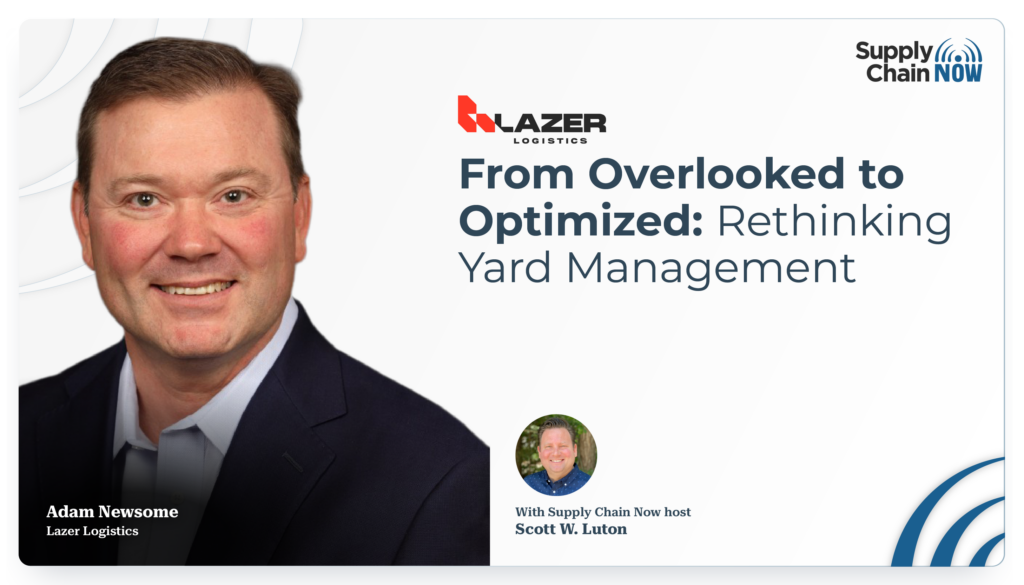
From Overlooked to Optimized: Rethinking Yard Management

From Overlooked to Optimized: Rethinking Yard Management The yard may be one of the most overlooked areas of the supply chain, but its impact extends across transportation, warehousing, customer service, safety, and the bottom line. In this episode of Supply Chain Now, Scott Luton sits down with Adam Newsome, CEO of Lazer Logistics, to explore how greater visibility, intelligence, and action can transform yard operations into a strategic advantage. Adam shares how Lazer Logistics combines connected technology, operational data, AI, and decades of institutional knowledge to improve decision-making across hundreds of locations. He explains why visibility alone is not enough, how AI can help teams identify the “next right thing” to do, and why technology must solve real operational problems. The conversation also introduces “Uncle Phil,” Lazer’s AI coaching tool designed to capture the experience of longtime operations leaders and make that knowledge available to managers at scale. Key Takeaways The yard connects the supply chain. Inefficiencies between transportation and warehousing can affect the entire operation. Visibility must lead to action. Data creates value when it improves safety, productivity, service, and financial performance. AI needs operational context. Combining technology with institutional knowledge produces more practical guidance. People remain essential. Culture,…

Supply Chain Now – Episode-592

Share: