Share:

Over the last few years, we have seen ports closed for labor strikes, COVID, and the Ever Given getting stuck sideways in the Suez Canal. Every time a port is closed, it disrupts the flow of materials for a whole region and creates hardships for vast areas and communities that count on that port to supply them with all kinds of things.

But can a closed port be a world history changing rallying point? It was in 1774. In fact, closing the port of Boston led to a turn in public opinion that brought together the residents of the Massachusetts Bay Colony – separatists and loyalists alike – as well as the other 12 colonies. It was a catalyst leading up to the American Revolution.

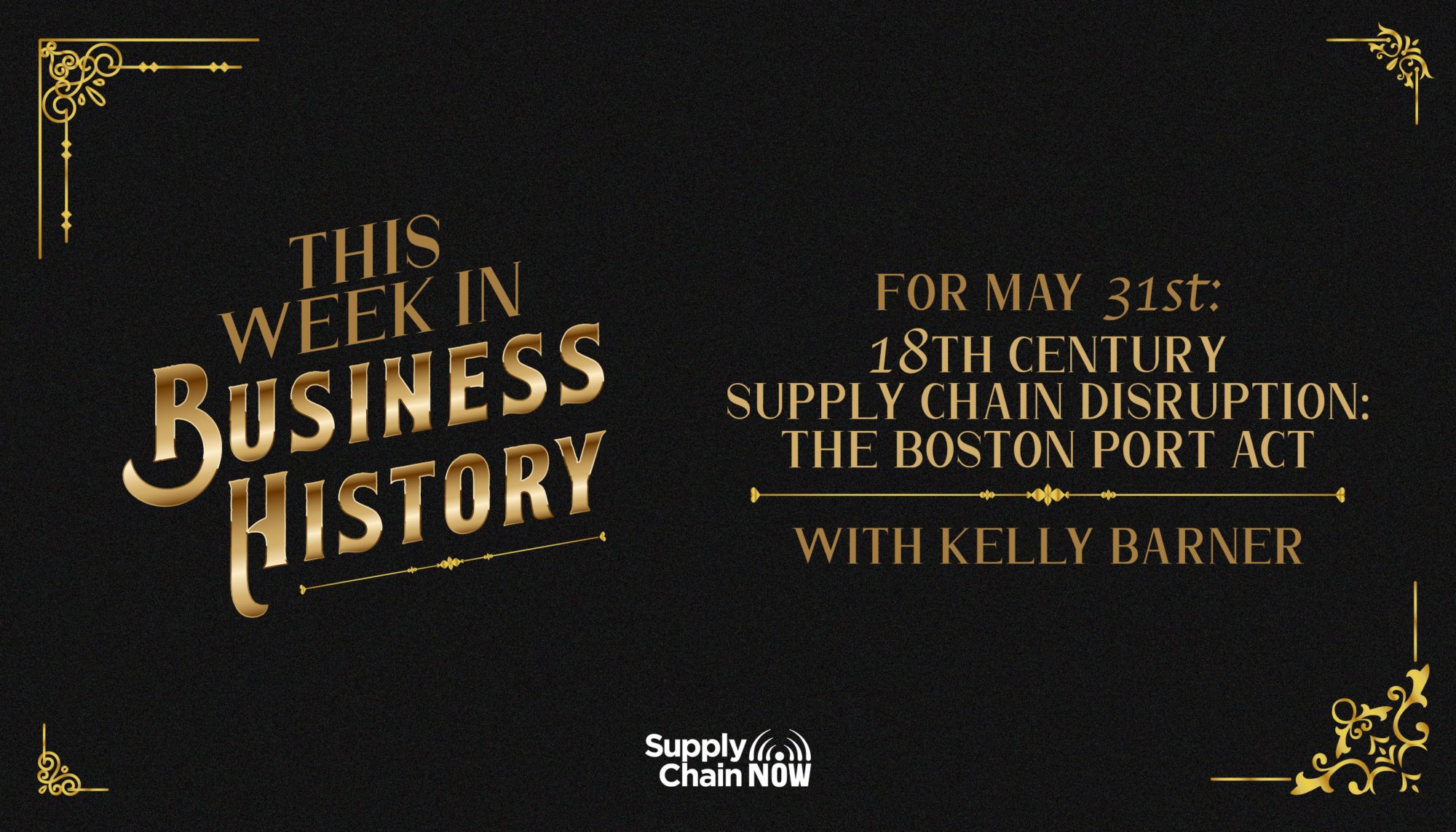
Listen to this episode of This Week in Business History as host Kelly Barner shares the very business-driven history of the Boston Port Act, which took effect on June 1, 1774.

More Podcast Episodes
community
play-button-podcast
podcast-blue-microphone
Podcast
July 5, 2024

Healing Trauma Together: The Importance of a Supportive Community with Jeremy Stalnecker from the Mighty Oaks Foundation

In this episode of Veteran Voices, host Mary Kate Soliva welcomes Jeremy Stalnecker, a Marine Corps veteran and CEO of the Mighty Oaks Foundation, to the show. Listen in as Jeremy shares his journey from military service to working with the Mighty Oaks Foundation, a non-profit organization that helps veterans, active duty service members, and first responders deal with trauma. Stalnecker discusses the importance of having a supportive community during the transition from military to civilian life, and the need for veterans to take care of each other. Learn how important it is for veterans to seek help and utilize available resources during their transition period, and so much more.
supply chain careers
play-button-podcast
podcast-blue-microphone
Podcast
April 8, 2026

The Now Generation: The Future of Supply Chain is Orange

What are future supply chain leaders paying attention to right now? In this episode of Supply Chain Now, Scott Luton is joined by Julie Niederhoff, Associate Professor of Supply Chain Management and Department Chair of Marketing, Retail and Supply Chain Management at Syracuse University, alongside standout students Odette Sherk, Katherine Foley, Makayla Amatuegwu, and David Patterson. Together, they explore how today’s students are discovering supply chain as a dynamic career path that blends strategy, sustainability, and real-world problem solving. The conversation highlights how hands-on experiences, from study abroad programs to industry internships, are helping students connect classroom learning to global challenges. Topics like sustainability transparency, rail transportation, globalization shifts, and ethical sourcing take center stage as each student shares what excites them most about the industry. Their perspectives reveal a generation that is not only career-focused but deeply motivated to create meaningful change. Julie also shares insights into how Syracuse’s program develops well-rounded leaders by combining academic rigor with experiential learning. This episode offers a glimpse of how the next generation is approaching the field of supply chain with curiosity, adaptability, and a strong sense of purpose.   This episode is hosted by Scott Luton, and produced by Trisha Cordes,…

This Week in Business History for May 31st: 18th Century Supply Chain Disruption- The Boston Port Act

Share:

Coming soon!