Intro/Outro (00:02):
Welcome to Supply Chain Now, the number one voice of supply chain. Join us as we share critical news, key insights, and real supply chain leadership from across the globe. One conversation at a time.
Scott Luton (00:14):
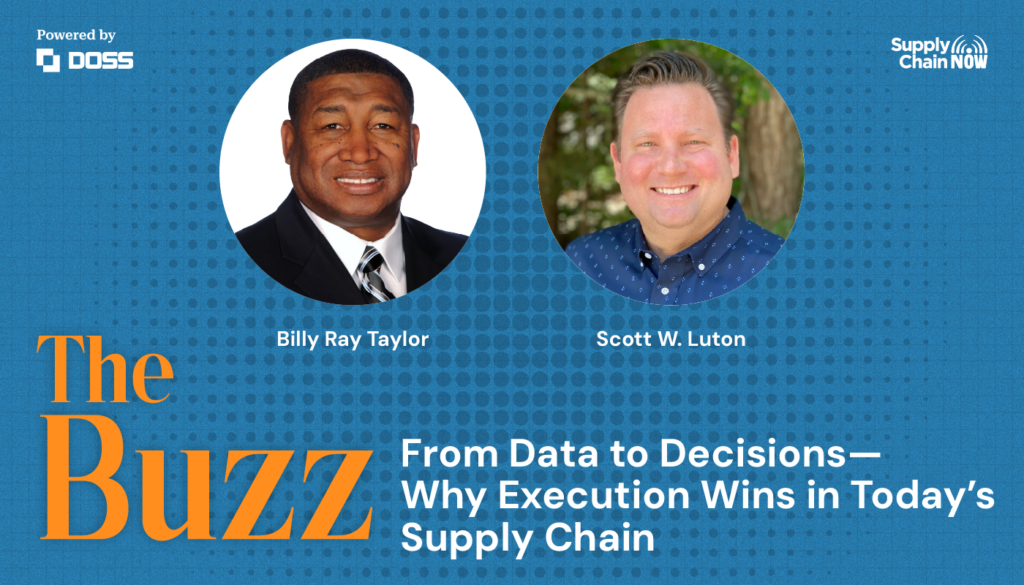
Hey, good morning, good afternoon, good evening, wherever you may be, Scott Luton, and the one and only Billy Ray Taylor with you here on Supply Chain now. Welcome to today’s live stream. Billy Ray, how you doing?
Billy Ray Taylor (00:24):
I’m doing well, Scott. How about yourself?
Scott Luton (00:26):
I’m doing fantastic. It’s like I’m catching up with industry royalty here today with Mr. Taylor. And I tell you, you continue to do big things out in the industry. It’s great to have you stop by here on the buzz. Are you about ready to dive in?
Billy Ray Taylor (00:39):
I am ready. And thank you for having me. Good to be around a good friend. That’s
Scott Luton (00:43):
Right. We go way back. But folks, hey, today on The Buzz, where every Monday at 12 noon Eastern time, we discuss a variety of news developments across global supply chain, across business, across leadership. News that matters is what we like to call it. And as you may know, the buzz all month long in April is brought to you by our friends at DOS, the world’s first adaptive resource platform. You can learn how DOS gives companies real-time visibility into their operational data and connects it seamlessly to the financial systems that run their business. Visit doss.com. All right, so Billy Ray, we’re going to be talking about manufacturing data from March. We’re going to be talking about what business leaders’ priorities are right now, given the current challenging landscape. We’re also going to look at all the BS and nonsense in play when it comes to corporate jargon, all that much, much more.
(01:33):
And I should add, we’re not live today, folks. We keep it real to our audience. We’re not live today. Our team and me is on the scene at Modex here in Atlanta, connecting with about 40,000 supply chain pros from around the world, but never fear. We’re going to be back live with you next week. Billy Ray, all those topics much, much more, including taking a look at some of the great work you’re doing out in the industry. You already had your Wheaties and your vitamins this morning. You ready to roll?
Billy Ray Taylor (01:58):
Absolutely. I’m ready to go. My wife made sure I did all of the above.
Scott Luton (02:04):
Outstanding. We got to do what you do day in and day out. But before we get into the news and some of the topics we’re going to talk about, I’ve got a distinct advantage on our SCN Global FAM out there because very familiar with your background, what you used to do, what you did, what you’re doing, what you’re doing next year maybe. And I think it’d be helpful context on the front end here for you to share a little bit about your background with our audience, including, I think, and Billy Ray, we don’t like breaking a 20 year rule, but I want to say you spent over 30 years leading and transforming manufacturing operations, right?
Billy Ray Taylor (02:39):
Absolutely. So with the legendary company, Goodyear Tire and Rubber Company, I spent 30 years with good year running manufacturing, commercial manufacturing. So I did that. I was one of the pioneers for Lean and operational excellence. After 30 years, I retired, started a company called LinkedExcel, meaning Linked Excellence. And we basically architect and implement operating systems. And then we give you a give the software away. And it’s like an MRI of your business. So it gives you an inside, internal look at your business. So LinkedIn Xcel, we work with companies all over the world. That’s what we do now. And I have the book, The Winning Link, which is actually a blueprint. So it’s not just stories and what I think you should do. It’s kind of what we did and we failed at it. And here’s how you overcome those type of things. So that’s what I do now.
(03:25):
I go all over the world and I do a lot of keynote speaking. So I was just in Dubai, did Dubai. Yeah, that was great. I’ve been all over. So Hannah, God, you appreciate this. I was in Hollywood, not recently, but the founder of Ugg Boots, the founder of Outback, and Paul Mitchell.
Scott Luton (03:40):
Man.
Billy Ray Taylor (03:41):
That was an exciting to get. And I’m going to talk about some of those perspectives today when we have our conversation.
Scott Luton (03:48):
Well, and in addition to all of those heavy hitters, I think we’re going to also talk about another heavy hitter in Vera, which contributes many anecdotes to your book, The Winning Link, right?
Billy Ray Taylor (03:57):
Absolutely. Absolutely. In my mind, the greatest executioner and business I’ve ever seen.
Scott Luton (04:07):
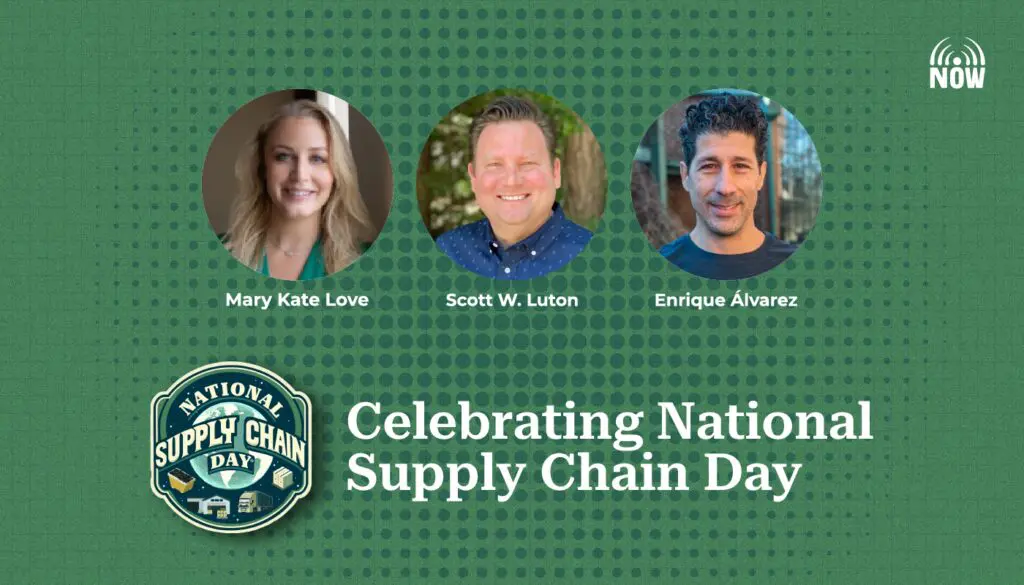
I love that. All right, folks, stick around. We’ve got a great show of the buzz here today, all powered by our friends at Doss, and you’re going to love what Billy Ray Taylor brings to the conversation as always. All right. Before we get into some of the stories we’re going to be covering here today, I want to tackle two things on the front end. First, hey, if you don’t get enough Billy Ray Taylor today, stay tuned because on April 29th, we got our next dose of Billy Ray Taylor as he joins us as our very special keynote for National Supply Chain Day. Me and Mary Kate Love, who you see pictured there, we’re really excited about this next installment where we really celebrate the people that make this industry happen. And don’t let the name fool you. When we talk about National Supply Chain Day, because we believe every country out there should have a national supply chain day.
(04:51):
So it’s really all about a global movement. And Billy Ray, when you think of the people, the people, the special, talented, hardworking, incredibly innovative people that make global supply chain, global industry run, what’s the first thought that comes to your mind?
Billy Ray Taylor (05:03):
Well, I look at supply chain and you hear a lot about strategy. If you do this and what I really tell you, most people don’t fail or most companies don’t fail because of bad strategies. They fail because they don’t know how to execute. And they get so focused on the KPI, Scott, that they forget about the KPA. And what I’m seeing now, if you stand on the scale, if you want to lose weight, that’s the KPI. What you have to focus on is how many calories you ate. How many miles did you walk? Those are KPAs. And that’s when you start to tie those two together, the KPIs that get you there. It’s the KPAs. So that’s what I’m seeing now. So
Scott Luton (05:41):
I’m going to take a guess. Now, I’m not quite as smart as you are, Billy Ray, but if I’m thinking KPIs, key performance indicators, and KPA is my hunch, is key performance actions. Is that right?
Billy Ray Taylor (05:52):
That is correct.
Scott Luton (05:53):
Okay. So see how
(05:58):
Practically brilliant that is, really. And folks, you’re going to find more of that in Billy Ray’s keynote again, coming up on April 29th. You can learn more about that in the book, The Winning Link, which we’ll tackle towards the end of today’s show. Big fan of that. Because Billy Ray, one quick thing before we move on to the second announcement I want to share is I love how down to earth and very practical that your point of view is. Keeping things simple is not simple. It takes a lot of talent and a lot of knowledge and expertise to do it. But man, it is so powerful when you can take really important concepts that can be really complicated and boil it down and communicate them in a simple manner that anyone can pick up and apply. That’s critical, huh?
Billy Ray Taylor (06:37):
It’s absolutely critical because those things … And also your standards, right? When you put those standards on how business should be ran, sometimes talent is not the edge. With the current tournament going on for basketball, right? Talent becomes an equal thing. Focus on the actions and priorities and what’s your standard is what helps you win the game.
Scott Luton (06:58):
I like it. I
Billy Ray Taylor (06:59):
Like it. That’s what helps you win the game.
Scott Luton (07:01):
And my brackets are ruined, Billy Ray. My brackets.
(07:06):
All right. So folks, join us April 29th, but there’s another event we want to put on your radar that I’ve attended one of these in the past and Billy Ray, I bet has spoken at these in the past. And that is this event from our friends at the Association for Manufacturing Excellence. It’s the 2026 Lean Summit in Charlotte, the Queen City, May 5th through the 7th. You got great speakers, workshops, tours, tools, you name it, all in an effort to help organizations across all sectors elevate their performance. So no matter if you’re in manufacturing, healthcare, service industries, any industry, come on and join us. And we’re going to drop the link in the chat, but you can generally speaking, learn more at ame.org. And Billy Ray, what can folks expect from this lean summit up in Charlotte?
Billy Ray Taylor (07:49):
Well, it’s beyond the tools. And you get there often when tools lead, failure follows. I often say that. But what you’ll get are the blueprints. You’ll get the relationships. You’re face to face with experts that you can also have that dialogue. So it’s a practical experience as well that’ll help you transition your company, your business, or your team. So it’s an outstanding event. I’m going to be there as well. I’m going to fly in. I just talked to the president this morning and let her know I’m going to be there.
Scott Luton (08:17):
Okay. Now, Billy Ray, I’m tracking your plane now. Let’s see. Dubai, to Hollywood, to New York City, to London, and then probably to Charlotte. Is that about how it goes?
Billy Ray Taylor (08:27):
Yeah. And then Atlanta, right?
Scott Luton (08:29):
That’s
Billy Ray Taylor (08:30):
Right.
Scott Luton (08:31):
I can’t wait to get you here in the flesh in person here. All right. So folks, those are two great events. There’s many, many others. We’re going to share a couple of resources of how you can keep your finger on the pulse of what we’re up to here at Supply Chain now towards the end of the show. But we want to get into a couple news stories and also pick Billy Ray’s brain a little bit more. And for starters, we want to set the table. We want to take a look at some recent data on the US manufacturing industry. So as reported here by our friends at Manufacturing Die, there was a little bit of good news at least in the manufacturing industry last month being March here in the US. According to the US Bureau of Labor Statistics, the US manufacturing industry added 15,000 jobs in March.
(09:09):
That’s a lot better than March 2025 last year, which showed a net loss of 5,000 jobs. And it’s better than last month being February 2026, which showed a net loss of 6,000 jobs. Now leading the way when it comes to jobs, adding jobs, the transportation equipment and the fabricated metal product sectors were top of the list, along with the non-metallic mineral products sector. I need some converting charts to put sectors with products. The sector that lost the most jobs in March was a chemical sector, at least according to their data, followed by furniture and related products sector. Now, in related news, the S&P Global … Let’s see here, what’s this called? S&P Global US Manufacturing P&I held steady at 52.3, a reading of 52.3 in March 2026. Now keep in mind, usually anything over 50 indicates that there’s expansion and anything under 50 indicates its contraction, right?
(10:05):
So this reading signaled solid expansion for the sector driven by strong domestic demand, higher output, and new orders. That 52.3 reading is up from 51.6 in February. However, there’s two sides to every coin. Input cost inflation reached its highest since August 2025, and supply chain disruptions due to Middle East military conflicts caused supplier delivery times to worsen. We’re going to drop the link so you can learn more from both of these data sets. But Billy Ray, when you look at employment and manufacturing, and you look at some of the expansion or contraction factors, pricing, new orders, you name it, what are some of your thoughts? So
Billy Ray Taylor (10:42):
I’ve actually took a deep dive in this with companies I work with and recently I was looking into the latest labor data and what I’ve seen though job openings really have held steady at 6.9 million, but the hiring drop sharply to 4.8, the lowest sense when I look at the lowest since early pandemic levels, but quits have declined. And basically in summary, the overall labor market, from my perspective and real life experience talking to executives, it’s summed up as this low hire, low fire.
Scott Luton (11:13):
Ah, okay.
Billy Ray Taylor (11:14):
So it’s stable on the surface, but it’s losing a little momentum underneath, but growth is slowing, but it’s not stopping. And so what I mean by that is we’re seeing right now is not a labor shortage or a labor crisis. It’s a confidence gap. Companies are struggling to find … They’re not struggling to find people. They’re struggling to decide when to move. And it goes right back to what you just talked about, Scott. It compliments what you were just talking about. And so I wouldn’t push the panic button at all. I lived through a point where the funnel at the bottom was just as wide as the funnel up top. So the turnover was turning, that’s not the case today. People were hiring three workforces in a year, right? Retention was the problem. That’s not the case right now.
Scott Luton (12:00):
Yeah. The other thing I think that is a big time … I’m about to ask you some common threads through some of your big time discussions with business leaders out there, but I’ll tell you one of the common threads we’ve seen, and it didn’t start in January. It didn’t start last year. It goes back several years, and that is this enormous uncertainty factor that has seemingly continued to compound and compound and compound. And look, folks, I’m not Pollyanna. I know a lot of that comes with the territory in global supply chain, right? There’s always some uncertainty, but between economic, industry, geopolitical, regulatory, you name it, all of them feed into this massive full chalkboard equation of all these variables. And a lot of experts say, “Hey, we’re at near historic heights when it comes to uncertainty.” Really quick, Billy Ray, comment on that. Is that what you’re seeing too?
Billy Ray Taylor (12:48):
Absolutely. And in decisiveness, they’re struggling to make decisions because of the uncertainty. And no decision is a decision. So
Scott Luton (12:56):
True.
Billy Ray Taylor (12:56):
And one of the things I see, thinking about executive psychological safety. We often talk about the people that are doing the work, right? They fear making decisions, and so everything says stagnant. And I’m seeing that in executives now. Psychological safety, and I have to put it in a vera term, they’re no longer playing to win. They’re playing not to lose.
Scott Luton (13:17):
I like it.
Billy Ray Taylor (13:17):
And then they’re taking those decisions away from the people that are executing the business. It’s so much bureaucracy and business now that … And it’s also being exposed through AI and other things. We’re smarter, we’re faster, and so it’s no longer do as I say, and just go along. Now people saying, explain to me what you say, so I have a better understanding.
Scott Luton (13:40):
All right. So Billy, you mentioned a bunch of things there I’m going to come back to. Vera terms. We need more Vera terms. And I told y’all that was going to come up today, right? Vera, of course, is mother that has some of the best anecdotes and takes on life and business. Then that psychological safety observation, that’s an interesting one. We’ll pull up in just a minute and maybe talk more about that. But Billy Ray, you started, you’re reading my mind because you know where I’m going next with you. You’re already kind of opening a can of worms. The supply chain leadership pulse check, which we really enjoy doing, especially with folks like you, Billy Ray, that are working with some of the biggest movers and shakers out there, have conversations at the C level, but also on the front line and all points in between.
(14:20):
And you got your finger on the pulse of where business leaders’ minds are at, which is what you were just talking about. What else really sticks out common theme-wise in terms of what are priorities right now for business leaders out there in this crazy environment we’re in?
Billy Ray Taylor (14:35):
Well, AI is no longer a buzzword. It gets thrown out there now as AI is revolutionizing the game, but it’s not. And people think that AI is changing the game. It’s not. AI is exposing the game. And so when I see executives and I talk to them and I say, “What does that mean?” And they tell me, “We thought we were data driven. AI has proven that we’re not. ” Interesting. And leaders thought they had alignment. AI is showing the gaps in their organizations. And so when they look at embedded problem solving or understanding their issues, organizations that thought they were efficient, AI is refilling that they have waste. And so the summary, what I would say now around one of the things that are on the pulse is AI didn’t break your business, it revealed it. And you often hear me say you can’t manage a secret.
Scott Luton (15:24):
Yes, that’s right.That’s
Billy Ray Taylor (15:25):
One of my favorite. AI is exposing those secrets, your own data secrets. And if your foundation isn’t right, AI just makes you fail and execute faster. So understand that failure is a part of it and then you know what to do to fix it. But people are using AI now, it’s how you’re using it. How are you using it to get you information faster, to make better factual decision, but also people are afraid of it because it exposes those that are accountable, exposed to what they’re not doing.
Scott Luton (15:56):
And some folks run and go hide from accountability. We know we
Billy Ray Taylor (15:59):
Are. Oh, 100%. 100%. And it’s one of the things that I’ve recently with the CEO and we had a conversation and I asked some specific conversations around what a real business should have. These are the core elements of a company. And when I went inside the business and asked those leaders, they had no idea. They had no idea. Now, here’s the thing, the leaders said, “Wow, Billy, they’ve been faking it until they made it. ” And I said, “I’m going to be a little more politically correct.” When someone asked me, “So Billy, have you been in a position where you fake it till you make it? ” I said, “No, I want to be in the mindset of I’m modeling it until I make it. ” You want to be able to do the work. AI gives you the information to help you close the gap faster, but you’re not faking until you make it.
(16:45):
As a leader, put the data there and then now you help them and you write Lidodo, learn one, do one, teach one. Learn one, do one, teach one. And now you build a resistant bench strength. You build a team that’s learned through practical application. It’s the one thing this leader I was recently with Scott, I mean, it was one of the most profound quotes I’ve ever heard. And he asked, “If you think I’m coming in here to help you, you’re wrong. And you might as well not even sign a contract with me. ” And I’m sitting there saying, “Wow.” Now this is a seven figure contract he’s walking away from. What he said to me, and we’ve talked about it before, he says, “If you think of an egg, when the egg is cracked from the inside, life begins.” But when the egg is cracked from the outside life ends, we’re having that ed egg for breakfast, right?
Scott Luton (17:36):
We
Billy Ray Taylor (17:36):
Are. So how are you cracking your egg when it comes to your company?
Scott Luton (17:39):
So, all right. So folks, got a new acronym, courtesy of Billy Ray Taylor, and that’s that Lodoto, right? L-O-D-O-T-O. So write this down that’ll make sense. Learn one, do one, teach one. And Bill Ray, I liked your spin on because as that relates to, it’s not fake it till you’re make it because to your point, that’s kind of the wrong connotation, right? That’s right. It’s model it till you make it, right? You keep modeling, you keep modeling. Absolutely. You keep experimenting, you keep learning, and then you have some breakthrough moments, repeated breakthrough moments, right?
Billy Ray Taylor (18:13):
100%. Think about your son or your daughter. When they’re trying to hit that ball, they’ve got their favorite hero, their favorite Michael Jordan moment. They’re modeling it until they make it. That’s right. They’re modeling it. And so still in shamely is not. You shouldn’t be condemned from that for that. That’s how we all got to where we are.
Scott Luton (18:33):
That’s right. All right. So couple final things here. And then we’re going to, again, folks, we’re having a supply chain leadership pulse check with Billy Ray Taylor, one of the few that really delivers on this pulse check. You’ve got Billy Ray, you’re always willing to keep it real and to say what needs to be said. And I bet a lot of folks would love to talk with you about some of your maybe counterintuitive viewpoints on AI and workforce and whatnot. And I bet you relish those conversations. Is that right, Billy Ray?
Billy Ray Taylor (19:02):
I love it. I love it. I love to have that type of dialogue because I learn, right? I learn from these discussions because there’s other different viewpoints, right? There’s more than one way to make a sweet potato pie or a German chocolate date. And so when we talk about it, together we can make the best, the ultimate. And so I love dialoguing with people on LinkedIn in many ways. I love to connect with people.
Scott Luton (19:28):
We got to. We got to keep the dialogue going, whether we agree, whether we disagree. And really, hopefully we have more of the latter because that’s when we’re having the perspective, the market intel exchange, perspective exchange, knowledge exchange. It’s when we can really start shining light into our blind spots because all of us have them. And that’s really where industry wins and teams win when we can exchange those kindred spirits that don’t always align. Here’s where I want to go next, Billy Ray, because I’m really curious, very curious of this next story and your reaction to it. So I’m going to pull up the graphic here. And this comes to us from our friends at HR Brew, and we’re going to be talking about some of the nonsense that goes on in organizations everywhere. There’s probably lots of definitions of nonsense, but for here, we’re talking corporate jargon, the cliches, the sayings and the acronyms and the phrases that many times make no sense or they’re used out of context.
(20:25):
So as reported here by HR Brew, there’s new research from Cornell University that points out how buzzwords can hurt the workplace, can hurt organizations, can hurt teams. The research is creatively named the corporate bullshit receptivity, scale, development, validation, and associations with workplace outcomes. Hey, that’s the name of it to hold it against me. That’s the name of it. We’re going to shorten that down to BS for the rest of the conversation. This is authored by a cognitive psychologist named Shane Latrell. The research here studied how and where corporate jargon and acronyms were used accurately and inaccurately, and the impact it had on influencing professionals and that decision making we referenced earlier. And one of the bottom lines from the research seems to be all industry professionals are susceptible to BS that appeals to our biases. So not only is critical organizational communication and decision making susceptible to corporate BS, but when it comes to the workforce, there are big risks.
(21:26):
Performance reviews can be impacted negatively when corporate jargon interferes with expectations, for example, that are shared with employees. Sometimes, as the research points out, this is caused by supervisors not wanting to be direct and brutally honest, so they lean on corporate BS and jargons and their communications to team members. To be honest, there’s lots of different layers of the onion here because you’ve got, you and I probably, and I bet a lot of our viewers and listeners out there have seen folks use acronyms inaccurately or use phrases or cliches inaccurately because it helps with communication flow. “Hey, I’ve done it. I’ve done that. So I’ll point to myself there. “And then on the flip side, you’ve got a different layer of the onion where supervisors, hiring managers, you name it, team leaders, they don’t want to lead with the blatant honest truth because they kind of want to sugarcoat it a bit, which is a different part of this core BS equation.
(22:20):
And we’ve all probably been very familiar with that too, because everybody’s not a frank communicator. And oftentimes that can really hurt team members that want to do … They want to turn into A+ performance, but it’s moving goalposts. So Billy Ray, that’s a lot of different takes on this research that was kind of focused on corporate BS, but what are your thoughts?
Billy Ray Taylor (22:40):
I’m laughing because at the end of it, I’m going to share a story. I lived it. And it was a really funny situation, but I actually pulled the leader to the side. But first, one of the things that I’ve seen, the jargon often creates the illusion of intelligence. But what that leader’s doing is actually masking a lack of clarity or substance. And so listening to you, I’ve got two high impact takeaways when I think about that. And when jargon and the leader thinks they’re communicating, the language you tolerate in your business determine the quality of thinking in your business. And so this isn’t about words, it’s about decision quality at a leadership level. So if you have a leader that’s sitting up there and they’re promoting the wrong leader, they’re promoting the wrong language here where it gets dangerous. The people that they believe are polished are the people they’ll follow.
(23:27):
And they’re going to follow them down the road where they’re going to lead to destruction. And it’s ineffective decision making. And what I’ve seen in those leaders, going back to, we’ve heard the phrase winging it.
Scott Luton (23:39):
I’m guilty as
Billy Ray Taylor (23:39):
Charged
Scott Luton (23:40):
Sometimes, Billy Ray. I’m guilty as charged, been there, done it.
Billy Ray Taylor (23:43):
Yeah. And so that’s the case. But I remember taking over a business and I was in one sector and they gave me off highway and I was getting ready to go into a meeting with this deck. It’s probably this thick, literally. And the guy hands me the deck who’s the VP under below me reporting to me. And he goes,” We’re going to this meeting. I said, I’m not going in there with that deck. They’re going to announce. “I said,” This deck is a distraction. “And so I go in over three pages, I deliver on every metric that they’ve asked me to deliver. And the leader running the business, that business comes up to me in front of everyone and says,” So Billy, I see you hit all your metrics, but what is your OEE? “And I looked at him and I smiled and I’m thinking,” Are you serious?
(24:25):
“And I didn’t say it to him. I said,” I’ll tell you what, can we take this discussion offline? “Because Scott, I knew he had no idea what OEE was, but the person that was in my role prior didn’t know either. So he could pull that wool over his eye. When he got back in my office one-on-one, I asked him, I says,” Excuse me, other than spelling OEE, tell me what does it mean? “He looked at me, swear mine and says,” Billy, I can’t. “Wow. And I told him, I says,” Listen, I could have embarrassed you in front of everyone and you’d have lost credibility. That wasn’t the goal. But if you ever do that to me again, because you’re misleading people around high effective manufacturing can contribute and we should be a team. “So you see that distraction, Scott, that’s what happens. Those things, people are not focused on the right thing.
(25:08):
And that leader’s just trying to get promoted, it’s about myself. Or now I have winged it. Trust me, I’m going to be very honest, I wing it too, right?
Scott Luton (25:17):
We all have, whether in college, on an exam or in the business world, you name it, right? That example though is a good one, Billy Ray, because whether it applies to manufacturing or supply chain or business circles or other sectors, it’s interesting when you pull group of leaders and managers together. So almost inevitably, I think there’s an unwritten rule somewhere that 10% or 1% of folks in any meeting, their objective is a throw a stone. And they don’t always know about the stone they’re throwing, but it’s like a psychological, they want to be seen kind of above whoever they’re throwing the stone at. And Billy Ray, this has been happening since Dinosaur’s First Walt Earth. It’ll probably happen long after our AI overlords come after them and take over
Billy Ray Taylor (26:01):
Society.
Scott Luton (26:01):
Absolutely.
Billy Ray Taylor (26:02):
It is
Scott Luton (26:02):
A human thing. Is that right?
Billy Ray Taylor (26:04):
It is. It is a human thing because we want to be valued. That’s one of the biggest misconceptions or missed opportunities that leaders have when they’re leading people. As husbands, the greatest thing we can offer our wives, and I’m saying that because you and I are both men and we’re married and we talk often, my wife wants to be valued more than anything for me. If I can make sure that that happens, my whole household changes, the environment change. Now, at leaders, when they’re up there spinning it up, they’re trying to make sure they’re valued. They’re giving you this here. I’m bigger than nice. The guy, I mean, I’m a former athlete. The guy with a big car, the nice clothes, right, then there, that’s about them feeling like the person, the value. But when it comes to team, you have to make sure that you provide that clarity, that consistency, that substance, and that’s what’s missing now.
(26:57):
But Scott, what’s really damaging are those people are getting promoted now. And the people following them, they know the truth. And so you’re really hurting your organization.
Scott Luton (27:07):
We could be here all day talking about this topic. And folks, we’d love to get your take on this article about the corporate BS factor and a variety of different layers and levels. So let us know. But going back to your point there, Billy Ray, clarity is a beautiful thing, right? And folks are going to be … There’s plenty of folks out there that we’ve probably worked with some, worked with some, managed some, worked for some. And they’re like that gentleman that Billy Ray was talking about, that person that Billy Ray was talking about. Tell me about OE, even though they had no idea. They had just wanted to challenge. First step, we got to be aware, whether it’s this research piece about corporate jargon and corporate BS or whatever, we got to be aware so we can figure out a smart path to overcome or to engage or to, you name it, right?
(27:51):
Billeray. By the way, if Amanda asks me about OEE or any other question, she knows exactly what she’s talking about
Billy Ray Taylor (27:59):
And
Scott Luton (27:59):
I take it to the bank. How about you?
Billy Ray Taylor (28:02):
Absolutely. If you can’t explain it, you don’t understand it. That’s right. That
Scott Luton (28:07):
Simple. So really quick, overall equipment effectiveness. I had to Google that acronym to remind me what that is. 85% is world-class. As I understand it, Billy Ray, it measures plants equipment and the performance of basically how their equipment’s running. It probably factors in. I’m assuming maintenance, downtime, overall productivity. I bet quality is probably maybe factored in a certain way, shape or form. It’s been a long time since I’ve talked about OE in plants, Billy Ray. I’m talking your language with that, huh?
Billy Ray Taylor (28:39):
Absolutely. And you know what makes it funny? I had delivered every part they wanted on time in full 100%. So what did OEE have to do with that conversation at all? That was my point I’m trying to make.
Scott Luton (28:52):
So Back to Good Year, one of my favorite phrases that we talk about anytime you join us. I think you shared this in your very first appearance here on Supply Chain now years ago. As you were leading at least one, numerous plants and North America footprint for that matter at Goodyear, you had a mantra that you use at least at one plant, if not numerous plants, round and black and out the back. When you’re making tires, as long as they’re round and black and getting them out the back, shipping them, that was a good day. Is that right, Billy Ray?
Billy Ray Taylor (29:19):
That was in the old days, right? Before quality and all of that really hit. Games changed a bit. The game changed. I just wanted numbers back then, beyond the numbers, right? Before then, rounding black and out the back. Keep them coming, fellas.
Scott Luton (29:34):
Love it.
Billy Ray Taylor (29:35):
Keep them going.
Scott Luton (29:35):
All right, folks, by the way, we’re going to touch on the book in just a second. There’s a lot of anecdotes from all of Billy Ray’s stops, especially in a manufacturing world that you’re going to enjoy. All right, so let’s do this. We’ve talked about … Y’all go check out that corporate jargon article from our friends at HR Brew. Before we continue on with our dear friend, the one and only Billy Ray Taylor here on the Buzz powered by Doss, I want to make sure this is on your radar. I want to invite our Entire SEN Global FAM to connect with us at one of our favorite yearly events. We’re going to be serving its media partners once again at the Gartner Supply Chain Symposium in Orlando, May 4th through the 6th. It’s right around the corner. Less than a month out. That’s crazy. I think we conducted 15 or 20 interviews at Gartner last year, some of the best of the year, in my opinion at least.
(30:19):
And if you’re interested in being a part of our coverage, you can reach out to Katherine Hents on our team for a lot more information and we’re also going to be dropping a link to the event there in the chat. Billy Ray, I’m hoping that it’s not going to be 95 or 100 degrees already in Florida when we’re there in May, but I’m not liking my chances. What do you
Billy Ray Taylor (30:38):
Think? I think it’s going to be pretty warm there. I think it’s going to be pretty warm. And that’s not a bad thing. I kill with my friends. And listen, considering if you lived in Chicago or Minnesota, New York, you’re probably looking for that type of good weather.
Scott Luton (30:53):
That’s right. All right. So we’re coming down to home stretch on this edition of The Buzz, again, powered by our friends at Doss. And I want to ask you again about your book, The Winning Link. And actually, I’ve got Moncopy that you’ve signed and I’ve got several extra copies because I like giving them out to folks that really like no nonsense, been there, done that, practical reads. I want to ask you this, Bideray, because it’s been a couple years since the first edition went out. And now I think it’s in its third printing because it’s been popular. I think it’s still top 100 business book on Amazon, if I heard you correctly earlier. And I also see some of the cool video that comes out of your keynotes and events and where folks are asking you to sign their copy. And I bet you get tons of feedback.
(31:38):
What’s some of your favorite feedback you’ve gotten related to this book?
Billy Ray Taylor (31:40):
Well, I do. And it’s great to see that the people come in because I never turned down a good selfie, first of all. I have a favorite thing, Scott. You make people visible, they make you value. And so I take the opportunity to shake every hand, take any selfie. But the feedback that really, when I think about my purpose and the purpose of writing the book, they talk about how the book change, how they lead, not just how they think. And so they said one person stopped and recently says, “Lee, I stopped managing reports and start managing execution.” And so what the book does is talks about, it teaches you how to win, how to win, how to define winning, align yourself to win, and how to put a system in place so you can execute winning. And even if you hit the lottery, business to keep running.
(32:29):
And the one lady I recently talked to, he says, “I now run my business with rhythm, structure, and clarity.”
Scott Luton (32:35):
Ooh, I like that.
Billy Ray Taylor (32:35):
That was heartwarming. And so the feedback I get, visible and repeatable, and it’s based off experience. It’s not based off theory. And like I said, Scott, they come back and they say, “Hey, this may not have been applicable for me because it’s manufacturing.” I run a nonprofit or I run a series of retail stores. It’s not a manufacturing based book. It’s an execution based book. I didn’t know that. I didn’t think of it. They’re like, “No.” And the quotes, “The ugly baby, right? Can you have the conversation? I like the ugly baby, whereas that’s something we don’t like to talk about. ” Now, I thought it’s ugly baby. What I mean by that is how do you have those uncomfortable conversations? And I tell people, “Let the process be the bad guy.” Don’t get into it over those personal, emotional. Scott, if we agree that I’m going to be on the podcast today, tomorrow, and you tell me a time and I’m repeatedly late, don’t call me and start yelling, “You’re often late.” You say, “Listen, the standard was you show up 15 minutes.
(33:34):
I send you this, we do this, this is what we’re going to do. ” And if I keep violating that, make a decision not to have me on your podcast again based on the fact that I can’t follow your standard. See, let the standard be the bad guy. I don’t like confrontation. I don’t shy away from it, but I have it based on the standard is the agreement. And like I tell my daughter, she’s dating. And I tell her, I say, “Listen, what’s your standard? That’s the first question.” The second thing I tell her, I said, “Dating is like hiring an employee. The best you’re going to get is the first 30 days. They’re not meeting your standard
Scott Luton (34:08):
Firearm.”
Billy Ray Taylor (34:09):
Oh,
Scott Luton (34:10):
Man. So this applies to manufacturing, supply chain, industry, and dating and maybe even family.
Billy Ray Taylor (34:20):
So it’s kind of going to ask you a question to prove the point. If you got a daughter and you say refuse at 11 o’clock, your daughter comes in at 1:30 AM and you don’t say anything, what’s the new standard?
Scott Luton (34:32):
1:30, that’s right.
Billy Ray Taylor (34:33):
Because you never said anything. But if you had a conversation with her, honey, I agree 11 o’clock, you’ve got a car, I pay your insurance, I pay, give me the keys based off what? So that’s what I mean, great leadership. And that’s what the book talks about. How do you hold and set the standard?
Scott Luton (34:48):
Love it. And going back to some of your feedback you’ve gotten, I like that rhythm, structure, and clarity. And that’s almost like the Holy Trinity and it comes to the business leadership world. You got those three things. You’ve got a lot of it figured out, especially if it’s across the organization. So a lot of good stuff. Folks, go check out, you’re going to love the book, The Winning Link, order it and find out what millions and millions of folks have already found out. And that’s Billy Ray’s Taylor’s perspective, no nonsense perspective that works across industry, even as it applies to your dating life folks, even as it applies to your parental journeys too.
(35:26):
Okay. So let’s do this, Billy Ray. I’m about to make sure folks know how to connect with you and the cool things you’re doing at Linked Excel. But before I do, I mentioned this on the front end, but now is the time folks. You got to really find trusted sources of information and guides. We need more Sherpas out there to navigate through this disruptive timeframe. Billy Ray Taylor is certainly a Sherpa you can trust. So definitely do that. And also come check out all of our live programming. So today, again, we recorded this edition. We’re usually live on the buzz, but we have no shortage of live programming at supply chain. Now you can go over to the newsupplychainnow.com and click on upcoming live programming. You can stay apprised of our schedule there. And while you’re there, be sure to check out our resource hub.
(36:10):
And this is where we have blogs, eBooks, white papers, tools, research, you name it. And it’s not the most sexy named title or portal on our website, but I love what we’re doing with the Resource Hub. And you might too to go check that out again. It’s at supplychainnow.com. Okay. As we wrap here today, Billy, I want to ask you about a couple of things because before I ask you how folks connect with you and the Linked Excel team, y’all have got some new news because there’s a new school of thought that y’all have launched. Tell us about that really quick.
Billy Ray Taylor (36:43):
Yes. We launched what’s called the School of Business Execution, and it’s S-K-O-O-L. And what we do is we offer free templates on how to build your strategy on a page. So if you’re a business or if you’re just a function, we give you the templates free with video. And so it’s kind of the way we’ve been giving back. We had a couple of companies we were helping some nonprofits and we started the school of business execution for entrepreneurs. So that’s kind of what we’ve been up to. Again, traveling all over the world, doing keynotes and reading the news. And I’m excited about National Supply Chain Day. If you hadn’t planned on attending, it’s going to be a great keynote for you.
Scott Luton (37:22):
It is. April 29th, folks, write that down. Join us. It’s free. It is free. And beyond having the good news that is Billy Ray Taylor, we got some good news as it relates to some of the individuals that we’re going to honor based on their contributions industry. Hey, Billy Ray. So beyond the school of business execution, beyond keynotes, beyond the winning link, Linked Excel where you’re helping leaders and their teams find their own rhythm, structure and clarity. How can folks connect with you? I know you are offering demos. You demo pretty regularly. How can folks track you down there?
Billy Ray Taylor (37:56):
So on linkedexcel.com, and what we do now is we hate for people to have any buyer remorse and we don’t want seller’s remorse. So what we do is give them a sandbox. We let them play. We build it and you play with it for three months. So the MRI, the MRI, we give you the MRI of your business and let you run with it. My wife said, “Well, what are you doing giving it away?” And I’m like, “No, it’s a value proposition.” And people need to know that’s what it is. And so that’s what we do now with LinkedIn Excel. We’ve worked with some major hospitals now and some major companies. And I’ll tell you, Scott, it’s been really interesting and going back to that thing you just talked about, that rhythm, structure and clarity that people know. So that’s what we’re doing now.
Scott Luton (38:40):
It’s a winning combination there. It’s like, what? In New Orleans, you got bell peppers, onions, and what’s the third part of the Trinity down there when they cook with this? Bell peppers is onions, garlic. I think that’s, I think … No, no, no. You know what? Billy Ray, I’m about to alienate a big valued portion of our listening and viewing audience. I know what it is. It’s celery. I
Billy Ray Taylor (39:03):
Was about
Scott Luton (39:03):
To say celery. Bell pepper.
Billy Ray Taylor (39:06):
I was out of
Scott Luton (39:06):
Trouble.
Billy Ray Taylor (39:07):
My wife cooks one heck of a gumbo.
Scott Luton (39:09):
Oh, okay.
Billy Ray Taylor (39:10):
Next time. She probably ran in here in my office if she’d heard you. He’s messing up the gumbo, Billy.
Scott Luton (39:18):
Oh,
(39:19):
I don’t want to get anybody. My culinary mistakes should be my own. I don’t want to misguide anybody out there. But hey, folks, you can connect with Billy Ray Taylor on LinkedIn, but you can also learn more about what him and the Linked Excel team is doing at linkedxcel.com. Billy Ray Taylor, this was kind of an abbreviated edition of The Buzz. Always enjoy your perspective on manufacturing and leadership and technology and turning teams around, right? Because these teams made up of these really valuable, talented individuals. 99.999%, they want to win, they want to perform, they want to deliver. Very few people clock in in the mornings and say, “Eh, I want to skate by today.”That’s the few minority.
Billy Ray Taylor (40:02):
Absolutely.
Scott Luton (40:03):
But I really appreciate what you’re doing to help organizations find their rhythm, structure and clarity. You get the final word today, Billy Ray.
Billy Ray Taylor (40:09):
Oh, I want to thank you all. Thank you for the platform you provided. I mean, with all sincerity, we’ve been knowing each other for a while now. We flew to places to meet each other. That’s right. We’ve had the opportunity to sit down and talk, break bread. And not only are your platforms good, you’re a great person. And I was asked a question about my son here recently, who’s become my mentor, it seems. We’re going to be at the AME conference doing a panel call, a Next Generation Legacy. And so where I’m going with it is, he asked me a question. I want to end it with this. He says, “Dad, how do you pick your friends?” He said, “But when you build teams, how did you consistently put good teams around you? ” And I said, “It’s really simple, son.” I said, “Most people, most leaders, they just look at the resume.
(40:51):
It’s the last thing I look at.” I says, “I want to know about character first, chemistry second, and then capability.” I need them all three, but if you’re a person of no character, I want to be around you. If we can’t work together and we have no chemistry, you’re going to destroy the team. And if you’re not capable of doing the job, we’ve asked you to do what we need you to do, then we’re going to self-destruct. When I come to you, I’m going to end with this, you and your platform. You are a strong person of character. I love the chemistry. When we spoke recently at an event, I think the camera person says, “Whoa, you and him work really well together and the capability of your platform’s outstanding. And that’s where I want to end.”
Scott Luton (41:30):
That’s how I praise come from the Billy Ray Taylor. And I really appreciate that. Business benediction, I’ll call it Billy Ray Taylor, the business benediction. Folks, I want to thank my esteemed co-host and fearless leader, Billy Ray Taylor for being here. Go out and get your copy of the winning link. And if you don’t, at least go find where Billy Ray is keynoting. And hey, April 29th, remote, virtual, you don’t get any easier than that.
Billy Ray Taylor (41:55):
Yes.
Scott Luton (41:55):
So come see them on National Supply Chain Day. Big thanks to our friends at DOS. You can learn more about the innovative things they’re doing at dos.com. Of course, big thanks to Amanda and Tricia and Joshua all behind the scenes. Most importantly, big thanks to our global audience, our SC and global fan for being here. The last thing I’m going to say in this business benediction is I got to challenge you. You know the homework ask our audience with every week, and there’s wonderful options here today. Take one thing. Billy Ray brought tons of actual perspective here today. Been there, done that perspective. Take one thing, share it with your team, put it into practice. You know it’s all about deeds, not words. That’s how we’re going to keep transforming business for the better, leaving no one behind. And with that said, on behalf of the entire supply chain now team, Scott Luton challenge you, do good, give forward, be the change that’s needed.
(42:38):
We’ll see you next time right back here on Supply Chain Now. Thanks everybody.
Intro/Outro (42:43):
Join the Supply Chain Now community for more supply chain perspectives, news and innovation. Check out supplychainnow.com. Subscribe to Supply Chain now on YouTube and follow and listen to Supply Chain Now wherever you get your podcasts.