Intro/Outro (00:02):
Welcome to Supply Chain Now, the number one voice of supply chain. Join us as we share critical news, key insights, and real supply chain leadership from across the globe. One conversation at a time.
Scott Luton (00:14):
Hey, good morning, good afternoon, good evening, wherever you may be. Scott Luton and the one and only Kim Reuter here with you on supply chain now. Welcome to today’s live stream. Kim, how are you doing today?
Kim Reuter (00:24):
I’m doing great. How are you?
Scott Luton (00:26):
Wonderful. Well, it’s great to see you. I know you’ve been busy on a lot of different things, which we’re going to get into later in the show, but I got one quick check-in. We’re both comparing pre-show some of our childhood memories when it comes to a little bit of snow with getting in South Carolina and Virginia. How cold is it in your neck of the woods right now?
Kim Reuter (00:42):
It’s pretty cold. It got cold last night. We got just a touch of snow yesterday, which I’m super excited about. But we’re in the 20s, 30s right now. Typical Virginia weather, but on the coast, we don’t get the snow like we used to.
Scott Luton (00:53):
And I’m good with that. We don’t either. We avoided the snow here in Georgia this weekend, but I’m good with brisk weather. I’m going to enjoy it because that oven weather in July is going to be here before we know it. So I’m going to enjoy all of these brisker days. But folks, we got a lot to get into here today, folks. You know it’s the buzz where every Monday at 12 noon Eastern time, we discuss a variety of news and developments and weather across global supply chain and business. News that matters is what we like to call it. And as Kim knows, the buzz is powered by our friends at EPG, who is a leading global provider of a wide range of supply chain technology solutions. In fact, EPG has over a thousand team members across 23 locations worldwide, serving some 1,600 customers. Some of your favorite brands.
(01:36):
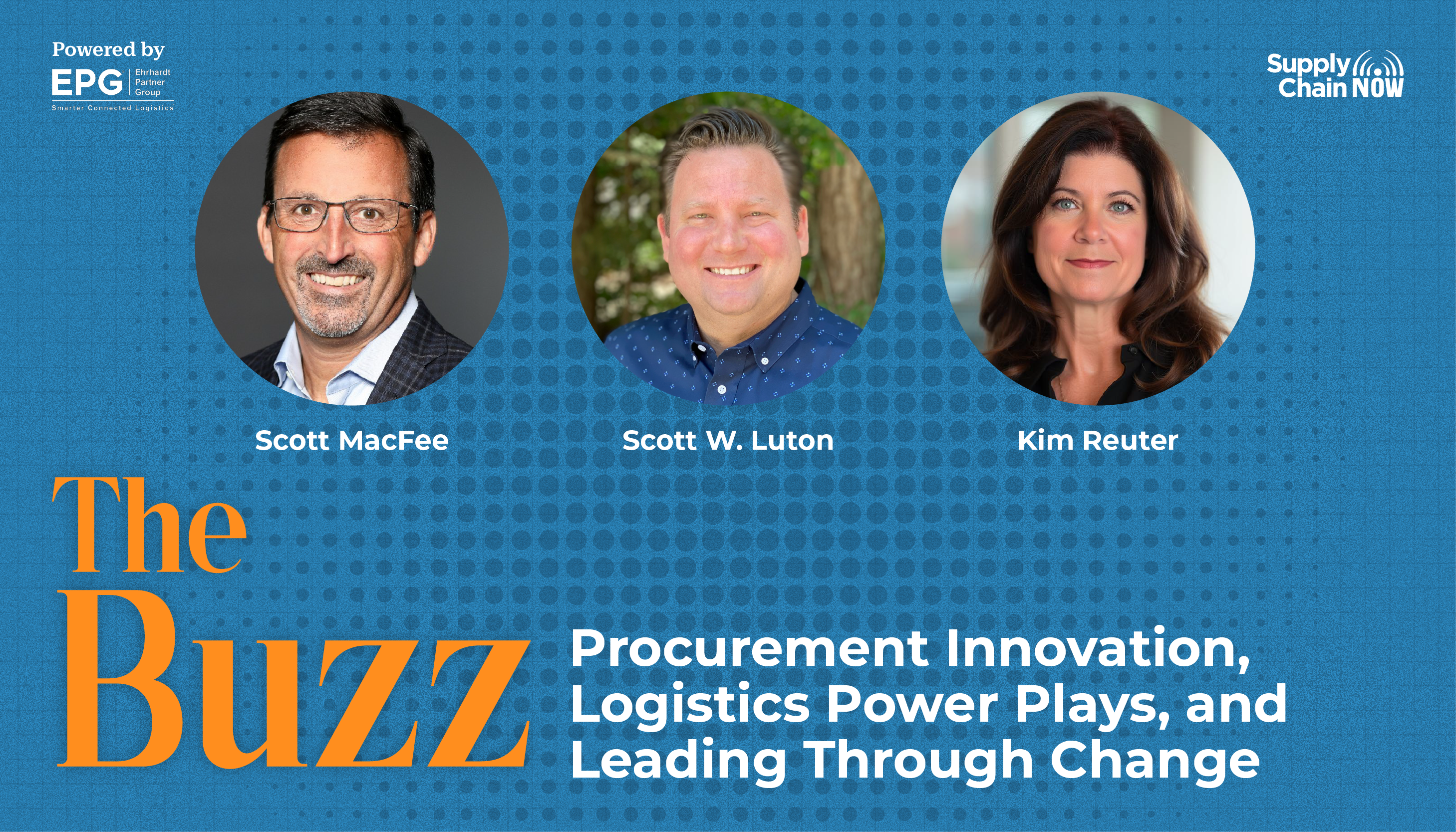
You can learn more about how your organization can benefit from smarter connectedlogistics at epg.com. So Ken, big show here today, of course, it’s Dr. Martin Luther King Jr. Day here in the States. We’re going to be celebrating his leadership and extraordinary legacy here in just a minute. We’re going to be touching on shifts that UPS continues to make. We’re going to take a look at how turnover is plaguing supply chain leadership. We’re talking procurement today, including what AI is doing to drive innovation as well as priorities that procurement leaders will have in this year and beyond. All of that and much, much more. And Kim, in about 12 minutes or so, we’re bringing in a special guest, Scott McPhee, CEO of SpendHQ is here with us on the buzz. You’re going to enjoy his perspective today. So Kim, did you eat Wheaties? Did you take your vitamin B12, whatever you need?
(02:22):
Are you ready to go today?
Kim Reuter (02:24):
I’m ready to go. I’ve taken my zinc to help me fight the flu, and so we’re ready.
Scott Luton (02:29):
Outstanding. Outstanding, folks. Stay tuned for a big edition of The Buzz, powered again by our friends at EPG. Hey, really quick. Let’s see, Tricia. Happy buzz day. Say hello and let us know where you’re tuned in from. Tricia, thanks for all of your great support. She’s also dropped linked to EPG here. Seaham is back with us in Delaware tuning in for the buzz and she is in snow. Well, em, let us know what you do, your favorite activities in the snow. You might be a skier, you may not be a skier. You may go truck, tailgate, inner tubing like we did back when I was a kid, but great to have you regardless. So Kim, before Scott McPhee joins us here today, I want to tackle three quick things on the front end and we’re going to start by sharing our almost weekly newsletter with that said.
(03:11):
And the addition that dropped over the weekend, of course, we led off with MLK Day, including this great quote from Dr. King. I love this quote, “Faith is taking the first step even when you don’t see the whole staircase.” Man, I love that. So very true. And by the way, Kim, that image we used, we took that snapshot when the family went up to DC a couple years ago and look the contrast between that new MLK Memorial and that picture S blue sky is captivating, huh? But folks, check it out. Let’s see what else we tackled in with that said. We got some great feedback from our incredible SCN Global FAM. We’ve got resources from leading organizations such as EasyPost, Saari and US Bank. We even touched on Kim, the Artemis mission, because you know I’m a big old space nerd, right Kim? We’ve talked about that, right?
Kim Reuter (03:54):
That’s what I clued in on too. I was like- Oh,
Scott Luton (03:57):
Really? Well, I want to get your take, but really quick folks, find our live events for the upcoming week and with that said, so check it out. We’re dropping a link to it right there in the chat. So Kim, you said you keyed in on the … We’re talking space supply chain and kind of comparing and contrasting the rocket sizes, right? But Kim, what stood out to you?
Kim Reuter (04:16):
I’m always looking for the next greatest challenge in supply chain, right? I love solving supply chain problems. And so if we do put a permanent residence in space,
(04:25):
They’re going to need stuff on the regular. And so all of these things that we think about that are very at our fingertips, that are around toilet paper, everyday necessities, there is going to have to be a really robust supply chain behind that because it’s not running to the store. It’s not, I got to run out and get it. We’re looking at like two week transit time just to get the basics. So that’s super interesting on how you’re going to be able to do that. Of course, there’s also a high fail rate. So probably the next biggest supply chain challenge is right there.
Scott Luton (04:54):
Yeah, Kim, excellent perspective. And who knows, it’ll probably make our terrestrial supply chain challenges be a lot more simple. But stay tuned folks. We’re going to be launching a space supply chain special podcast. So get ready as we dive into it. And hey, we’re embracing the inner nerd, inner space nerd, Kim.That’s how that works.
Scott MacFee (05:11):
Yes.
Scott Luton (05:11):
Again, Trisha dropped the link. Y’all check it out. Give us your take on anything. And with that said, we welcome it. And hey, Chris Thornton Jr. Great to see you, Christopher. It’s been a while. Let us know where you are in the world today and we look forward to your comments on any topics we’re talking about. Hey, one quick thing. Ken, before, I know I want to talk about UPS and Amazon with you, but I want to include one more thing because we’ve added a new wrinkle to, with that said, we’re really excited to collaborate more and more with one of my favorite nonprofits out there. And that’s the team at American Logistics Aid Network, that acronym. The Allen team connects nonprofit organizations responding to disasters with the logistics expertise and resources of the private sector. We invite you to learn more about open cases and projects and find out where your support can be used.
(05:55):
And we also, in the newsletter, each week we’re trying to share two of their top priorities where they need help. So check it out and give the Allen team a call. So Kim, I love your podcast and I really enjoy reading your various supply chain leadership and business takes on LinkedIn. I really do. I get a kick out of it. Thank you. Now last week, I was reading your take on a topic that it’s been evolving for quite some time,
(06:17):
But I loved your perspective on the UPS and Amazon relationship as it continues to ebb and flow. Of course, most folks are tracking. UPS continues to reconfigure its network related on those big shifts and continuing shifts and volumes. But I think you have unique perspective given your time at Amazon. And I would love to get you just to weigh in a few observations on the UPS and Amazon relationship as it has continued to evolve.
Kim Reuter (06:40):
As this continues to evolve. I was with Amazon when UPS held all the cards, right? So when they were the 600 pound gorilla where they were dictating how things were going to run, they were dictating what we could and couldn’t do. And Amazon as it is today, back then, even more so, does not accept no for an answer.
(06:56):
And so this really started was the beginning of Amazon’s diversification of carriers, leaning more on USPS, bringing them in as an alternate solution. And then eventually Amazon just created their own delivery network in order to work around basically the shortcomings of the commercial carriers that were in the market. No one can service Amazon the way that they need to be serviced from a logistics perspective today. But these early conversations with UPS really shaped what we see today in the market. And we went from UPS being the 600 pound gorilla to Amazon being the 600 pound gorilla and Amazon being the tail that was wagging the dog versus vice versa. And UPS had to evolve. I don’t know if you guys all remember, but UPS didn’t always do Saturday delivery. That was actually a union requirement not to do Saturday delivery. And they had to in order to keep the Amazon business and stay relevant.
(07:46):
So that’s an example of when you have a company that’s over 50% of your volume, how they impact how you do business. And so over time, UPS figured out that they were optimized for Amazon and not optimized for themselves. And now we see UPS pulling back and trying to reconfigure, focusing on smaller businesses. They’re trying to get actual small DTC customers now versus working with the big ones, not exclusively, but they are shifting how they move around. And that’s directly an impact from Amazon.
Scott Luton (08:15):
Yeah. We could be here for hours, but you got some stories that we probably couldn’t share all publicly. But one thing you shared there is an important, not just supply chain lesson, but life lesson. You shared, and I’m going to paraphrase, UPS found out they were optimized for Amazon and not optimized for themselves. Folks, we’ve all probably been there with some of the big customers that we have served and you got to constantly manage that, right? Because while we want to knock it out of the park for all of our customers, if we pay too close attention to just one, we could lose a lot of many others and stunt growth or create more complexity and other challenges. So Kim, I look forward to when the book comes out on all you could share there, but thanks for commenting on this relationship that continues to evolve.
(08:54):
So let’s see here. I’m about to introduce our special guests here today, but want to call out just a couple of things. Tricia shared a link to Alan, right? The American Logistics Aid Network. Check that out. See him says, “Hey, I’m a child with snow, made a tiny castle with neighborhood kids.” Okay. And she commented on what you were just sharing there, interesting to a set note. And sometimes as the famous founder of Apple, Steve Jobs, he had a famous quote there around one of the most important things he learned to do is to say no. And I think we can all learn that whether it’s to customers, partners, suppliers, you name it. All right. So Kim, I am excited about our wonderful guest we got here today on The Buzz, powered by EPG. Folks you’re going to enjoy. Scott McPhee is the CEO of SpendHQ, the leading provider of enterprise spend intelligence and procurement performance management solutions.
(09:43):
Now he brings more than two decades of experience leading technology companies and he’s passionate about transforming procurement into a strategic data-driven powerhouse. It’s music to my ears. He’s also a leading advocate for finance and procurement leaders to unlock their full potential by working from a shared understanding of value. Want to welcome in Scott McPhee, CEO of SpendHQ. Hey, hey, Scott, how are you doing today?
Scott MacFee (10:06):
I’m doing well. Good to see you, Scott. Good to see you, Ken. Great. Hi, how are you?
Scott Luton (10:11):
Great to see you. Did you see me there, Scott, where I was asking if Kim had her wheaties in her B12, and I need to take more Ginkgo below but so I can recognize transformative business leaders, the good old memory. But it’s great to see here today. And we want to do this. It is, of course, a very special day here in the States. MLK dat. It’s one of my favorite shots, man, there in our nation’s capital. What a great day to reflect, not just today, but year round on what we do as humans and leaders and our businesses and our communities. But I want to start with a little question for you both here, Scott, with MLK Day as a backdrop. What’s one element Dr. Martin Luther King Jr’s approach to leadership that is important for all leaders to understand and model today? Scott, what comes to mind?
Scott MacFee (10:52):
MLK, what an inspirational leader. I think something that comes to mind here is really that if you have done any reading about him or watched any of the documentaries or had any exposure, as he was leading his movement, he always consistently kind of framed what that future state journey was going to look like for those individuals. And it was all about justice, dignity, and equality. And despite any setbacks along the way and along the journey, he always reminded people that change and progress is slow, but if we’re anchored in a vision for the future state, eventually we’ll get there. So I think just really appreciating just that consistency of vision and just the inspiration that he led with in leading that movement towards that end goal of justice, dignity and equality for all.
Scott Luton (11:41):
Scott, love it. Very poetic there, your comments you shared. Ken, what comes to your mind in terms of leadership lessons we can learn from his credible legacy?
Kim Reuter (11:48):
The best leaders and the biggest leaders I’ve worked with in the past, my favorites are always the ones who were able to pull out the uncomfortable truth and actually talk about it and not hide it, not try to pretend it didn’t happen, but really pull that out for the group to look at and say, “Yeah, this is not attractive. We didn’t want this to happen. This isn’t our ideal state, but how do we move forward?” And that takes a particular skillset and a lot of courage in order to stand in front of a group of people and tell them that maybe it’s not going as well as I think it is.
Scott Luton (12:17):
Yeah. Kim, good stuff there from you and Scott. And I’ll tell you, one thing I would add in terms of things we can learn from Dr. King, you’re never too young to step into powerful and consequential leadership roles. I shared some perspective last week and I shared one of my favorite images of Dr. King. Oftentimes we can kind of see the same shots, but I share this great shot of him as a father and a husband. And I believe Dr. King was in his mid 20s when he was elected as president of the Montgomery Alabama Improvement Association, which was one of his first prominent roles that certainly helped shape his fight for civil rights in our country. The boycott in Montgomery, of course, was an early big time event that he helped create and lead. So folks, I’ll tell you in addition to what Scott and Kim said, raise your hand, volunteer, get out of that comfort zone.
(13:00):
We can all do more of that really no matter where we are in our journey, whether you’re just getting started or if you’ve been in the industry for a while. So we got a lot to get into here today. We could spend hours talking about the incredible journey that Dr. King had in profound impact, but we got a lot of news. We’re going to talk about cross-global supply chain. And the next place I want to go, Scott, we’re going to continue talking leadership, but a little different of a vein because Gartner research, recently published research, points to how turnover is impacting supply chain performance. That’s kind of obvious, right? We’ve all known that. It’s nothing new, but check out some of these stats that they uncovered by interviewing 227 supply chain leaders in June 2025. So get this, 54% of supply chain leaders say that leadership turnover has moderately to completely disrupted their organization’s ability to execute over the last three years.
(13:47):
The survey also found a few factors that are related to turnover. Let’s see here. Less than half of those polled found their company’s leadership development programs to be effective. So the other half, not so much, right? Only 31% found that the path to higher leadership included a work-life balance. Man, only 37% found that promotion and advancement processes were transparent. And hey, Sunlight’s good for just about everything. So Scott, again, turnover in terms of the challenge it poses to so many organizations out there, that’s not new, but I found some of the data nuggets that were interesting. Your thoughts on the role turnover plays in our supply chain organizations.
Scott MacFee (14:23):
As I kind of read through that report and I had the same response you did, it was eye-opening and kind of shocking around just really what it was highlighting was just kind of the weakness of just a pipeline of future supply chain leaders out there. And so the game’s got to change. And we are seeing it change slowly, but surely out there with more of a focus on the long-term development model for supply chain leaders. So much is changing out there as it relates to technology. There’s a whole new set of skills that need to be developed. And much like any role in an organization, it’s all about succession planning and kind of understanding what those skills of those future state leaders need to look like. What’s in your pipeline now? Where are your gaps and how do you actually set a plan? Because it’s just not going to happen out there.
(15:13):
You have to be disciplined and prescriptive around developing your talent for the future of your business. It’s a strategic imperative. And so we work with 400 plus customers out there and we have a select few that are on our advisory board. And it’s a topic that’s often taught when we bring these 12 CPOs together around, hey, to survive in the new world out there, what do we need to change to build that talent pipeline and to effectively move people through that?
Scott Luton (15:42):
Yep. Good stuff there, Scott. And one thing that you mentioned that I want to call out, you talked about the new skills, the imperative that the workforce new skills that it has to have as we continue to get further and further into this golden age of supply chain tech. And you know what? It’s incumbent upon leadership to help that workforce develop those skills. And I think that’s why one of the things I read, of course, from the survey. Kim, your thoughts on turnover and all the many ways it can wreak havoc on organizations.
Kim Reuter (16:07):
Yeah. Any turnover in leadership’s going to wreak havoc. In supply chain, I think it’s sort of magnified just because of the operations and the complexity of it. But what I see in supply chain leadership is this. We have sort of a transition from old school supply chain leadership, which has traditionally been sort of reactive. Come to me, I don’t go to you, kind of whatever comes down the hill, we’re going to manage it sort of management style. And that’s sort of how supply chains have been run for a really long time. I’ve been in this industry for a long time, so I’ve sat in a lot of those rooms. But today’s modern supply chains are requiring supply chain executives that are collaborative, that are creative, that are strategic, that are solving problems before they happen. They’re having proactive financial conversations with the other leaders in their organizations.
(16:50):
And so what I see as a shift from the old way we used to do supply chain and managing supply chain, sort of this leader in the ivory tower that nobody really talks to, except when it’s RFP time and then they come out and they do their dinners and their lunches and then they go back in their ivory tower. But now it is more like supply chain leaders need to be in the trenches. They need to be in the trenches with the other departments, customer service, marketing, procurement. They need to be a part of everything and that skillset. And I want to focus on this is because when we say that new leaders in supply chain need to develop new skills, right? People almost always think, “Oh, well, now I have to know how to use AI.” The biggest skill that you can develop right now as a supply chain leader is collaboration.
Scott Luton (17:28):
I like it. I might add one more to that. Of course, we hear a lot and say a lot about demand sensing. Well, hey,
(17:34):
We need workforce sensing, all right? To kind of to your point, the counter, that traditional way that supply chain leadership has approached it. Good stuff there. Scott and Kim. And folks, we’re dropping, as always, we’ve dropped link to these articles we’re tackling right there. So don’t take our award for it, dive in and we’d love to hear your take. Really quick, before I move on to the next story, going back to Amazon and UPS, Francisco, great to have you here today. It says, “I work with DHL and we also had to evolve and reconfigure with Amazon.” Hey, Francisca, we feel that in our bones. I know Kim does in
Kim Reuter (18:05):
Particular. Yeah. I did a lot of work with DHL and international stuff. They were a fabulous partner, fabulous partner. They made a lot of changes.
Scott Luton (18:12):
Well, Francisco, great to have you here. Let us know where you’re tuned in from. Okay. Scott and Kim, we’re going to be talking a lot about procurement here today. Really appreciate the good work Scott and his growing organization is doing. But from our friends at Payments, research from Oracle says that AI can reduce the time to complete basic and common procurement task by up to 80%. How about that? Liberating human teams from some of the basic blocking and tackling such as processing purchase orders. And that’s a great thing because McKinsey data shows that full-time human team members, get this, are managing up to 50% more spend than they were just five years ago. This article, again from our friends at Payments, cites several examples of companies leveraging AI and procurement, including the use of AI supported tools and negotiations with indirect suppliers and leveraging AI to help find a single source of truth in supplier contracts, which can lead to significant savings and operational clarity, which is a powerful, powerful thing.
(19:10):
Both are. Anascott, now I’m sure we could be here for days talking about all the different ways that AI is playing an innovative role in procurement and really beyond. What are some of your general thoughts when you read articles like this, what are some of your general thoughts that you’re seeing business leaders do out in the marketplace?
Scott MacFee (19:25):
Yeah, fascinating article. And these are conversations we’re having day in and day out with our customers. And the only slight change I would make to that article is, as opposed to the tagline or the title being May Boost, we’re changing to will boost because we are seeing it out there in our current base and with the current use cases and workflows. And so whether it’s preparation for contract negotiations, whether it’s autonomous sourcing, whether it is building out a category management plan, these are live things happening right now. And what I find fascinating is there’s so much talk out there about, hey, it’s going to eliminate procurement roles and jobs. In reality, what we’re actually seeing with our customer base is that it is augmenting teams. It’s not necessarily replacing teams. And because we’re at the early stages of this technology, so it still requires human oversight in many cases.
(20:22):
So we’re seeing it as a significant productivity enhancer or booster at this phase of the adoption cycle that we’re in.
Scott Luton (20:30):
Yeah. Scott, good stuff. I hope I never report. You mentioned human oversight. Let’s keep it that way. Tim, I don’t want to report to a bot e-time soon. But kidding aside, augmentation, that’s a common theme we talk about here. Your thoughts, Kim, related to how AI is impacting the world of procurement.
Kim Reuter (20:45):
So procurement is one of the most difficult parts of supply chain. I move stuff a lot, but the very beginning of this and procurement, who are we going to buy it from, what are we going to buy, what are the pricing, what the contracts are, all those kind of things. It’s very complex. And if there’s any place I’ve said that I think you could apply AI quickly is demand speculation and then also procurement because the truth is nobody knows, right? Nobody actually knows how much anybody’s going to buy. We can use historical data to try to predict it. We can use historical pricing to figure out what we think our price is going to be, but they’re all kind of predictive, right? So these are always places where I thought AI could be useful. Again, as I always say with AI, you got to train it and you got to watch it and you got to continue to train it.
(21:23):
It doesn’t come smart. It gets smarter. So don’t just turn it on and go get a cup of coffee and come back because you will find that it is faster, which means it also makes mistakes faster.
Scott Luton (21:33):
That’s right. And folks, Scott and Kim, to get perfect illustration of that, I saw Georgia Tech had a staffing change, right? And the coach they brought in, they had a shot of his playing days. I think it’s George Godsey was a Georgia Tech quarterback. I thought I recognized the stadium he was in in the shot. So I went straight to Google and I asked it to, “Hey, get me Georgia Tech’s conference schedule from 2013,” I think it was. And it did two seconds later. But the AI driven response put Georgia Tech in a different conference. It happened to ACC. And that’s the first time in a recent memory, because I wasn’t asking for the quadratic equation, which sounds highfalutin. It may not be, but something basic, what conference a football team’s in. So as Kim mentioned, you got to watch it. And Scott, I’ll give you the last word here.
(22:15):
We can’t just set it and forget it. Like a good old Ron Papill used to put in his info commercials way back in the day. Constant oversight to make sure we’re getting out of it and getting the outcomes and not creating more headaches for our people. Huh, Scott?
Scott MacFee (22:27):
Yeah, absolutely. It starts at the front end too around having the right foundation of data because garbage in, garbage out. And it does require at this current phase of where we’re at with the technology requires that monitoring and that evolution.
Scott Luton (22:42):
Good stuff. And again, Trisha dropped a link to that article there. And CHAM, great call out here. Kim, you mentioned the importance of collaboration earlier. Sam says amazing that collaboration has to be highlighted as if anyone can do this work alone. And it is frustrating to see him when we find those that don’t like to collaborate. When I said that, I bet we all, a few images popped up maybe between our ears. So Scott, enjoyed reading an interview that you had not too long ago. Shippers are leaning on not just AI that we’re just talking about, but many other things as they navigate elevated pricing from the good old United States Postal Service, which rolled out a variety of pricing increases for 2026, which I think kicked in yesterday, I believe. You were interviewed by a procurement magazine on how shippers can be ready to successfully navigate these increases.
(23:27):
And we’re going to drop the link to the full interview right there in the chat. But Scott, what are some initial thoughts, key things that shippers got to be considering in light of these cost increases or others? Well,
Scott MacFee (23:36):
The good news on this one is we actually got a heads up it was coming. So we were able to, as shippers, get out in front of it and prepare for the change. So there’s nothing like getting surprised out there by kind of hidden increases in pricing. But in this case, we had the opportunity to tackle that upfront. And so no one should be getting surprised by the hidden pass through of these costs. And so the key to navigating this is really understanding the underlying data and most have it at a surface level, but getting down to that line item level detail is really critical to Kim’s point to be able to model it and forecast it out so you can plan accordingly. And so with our base and what we’re seeing out there is those that have a heavy presence with the US Postal Service, they took the proactive steps to actually really dig into that data and start to do some forecasting so they could navigate this increase accordingly.
Scott Luton (24:31):
Two things there from what Scott shared, Kim. Number one, hey, at least it’s a silver lining that we get a heads up. A lot of problems are just dropped in our labs, right? And number two, as he was calling out your perspective, we got to go deeper, can’t stay at service level. Your thoughts, so Kim, on navigating all these increasing costs for shippers.
Kim Reuter (24:50):
So I think the USPS thing took people by surprise because USPS doesn’t up the rates on a regular basis as is like FedEx and UPS where it’s almost like an annual. But just be honest, USPS has been losing money for a long time. Every year they’re most close to bankruptcy. We don’t know what’s going to happen with them, but their business has changed dramatically. I live in a very rural location. I have to pick up a lot of my packages at the post office. So there’s a very intimate relationship with my post office. And 20 years ago, they delivered bills, right? Letters, little things that went in a bag.
(25:19):
80% of their business now is Amazon packages and they were not set up for that. They don’t have post offices for that. They don’t have distribution centers for that. My poor ladies at the post office are like up to the eyeballs and Amazon packages are tripping over them. So this had to happen. How do you navigate it? Exactly what we just said. Get real deep on what the requirements are. There’s some little niches in there that you might be able to take advantage of, but you’re probably going to have to go back and look at all your carriers.
Scott Luton (25:45):
Riches and the niches. Good being there, done that advice. And I tell you, if you say 80% is Amazon packages, the other 20% are credit card offers or other junk mails.
Kim Reuter (25:54):
That’s off the cuff. Don’t quote me on that. I’m sure people are out there like, “Is it truly 80%? It’s dang close.” But yeah, they have really changed how they do business. It’s no longer the postal service. It’s the United States Courier Service is really what it is now.
Scott Luton (26:06):
That’s a great point because there’s some big decisions that hopefully sooner rather than later that we’ve got to come to grips with. We’ve discussed the role when the USPS was formed forever ago. Of course, society was a lot different. And to your point, gosh, they’ve been in the red for a long time and the red gets deeper and deeper. We’re going to maybe reinvent perhaps the USPS role. We’ll see though.
Scott MacFee (26:26):
For anybody that’s a history buff, next time you’re in Washington DC, go to the USPS museum. It’s actually phenomenal to see the entire history collection of stamps and just kind of the evolution of the postal service over time.
Scott Luton (26:40):
Outstanding.
Kim Reuter (26:41):
Started the Pony Express.
Scott Luton (26:43):
That’s right. It’s a fascinating … And by the way, that’s the best part about DC. All the different museums and resource centers, a lot of them are free to go to. So folks, if you hadn’t taken your family to DC lately, make sure you do. All right. I bet this is Amanda, is my hunch. Amanda says, “Kim, I think about that every time I go to the post office to send my Amazon returns. It’s about the only time I’m ever in the post office despite my best efforts to limit returns. That’s a whole different show. A lot of good stuff. Scott, we’re about to get into a segment. We’re going to learn more about Spend HQ and learn about some of the big moves you are making. But before we go there, I want to share this big news from our friends at EPG. The innovative supply chain technology leader is announcing new AI-driven logistics solutions, which are powered by a very familiar name, Nvidia AI infrastructure and EPG’s deep human logistics expertise.
(27:29):
The company has also introduced its new supply chain execution AI environment called EPGRA. These new rollouts will help organizations optimize decision making, stability, resilience, service, and speed. All of this points to, I think, an exciting new chapter at EPG, whereas they’re going to tell you, they’re on a mission to set the pace for the logistics of the future. You can learn more about EPG and this innovation via the link in the chat. Really good stuff there. Scott McPhee, we’re going to dive more into what you and your team have been doing here on the buzz for January 19th, gosh, 19th, 2026. So let’s start with some level setting. If you would, for the three people out there that may not know SpendHQ, tell us briefly what organization does.
Scott MacFee (28:11):
Sure. So we’re the strategic execution layer for procurement. And really what we focus on is enterprise spend data and taking that and driving insights and the actions and ultimately the value for organizations from that data. So it’s kind of a full stack platform starting with messy enterprise spend data that based on data we’ve processed, generates insights. Those insights convert into actual initiatives and action. We track and manage those, ultimately delivering results. And so we work with 400 plus customers out there. Over the life of the business, we’ve processed over 10 trillion in spend. About 1.2 trillion a year flows through the platform. Last year alone, we had about 290,000 procurement initiatives/projects managed on the platform, resulting in close to about 17 billion in savings. So
Scott Luton (29:04):
It’s
Scott MacFee (29:04):
Really all about taking data and delivering value out of that data.
Scott Luton (29:08):
All right. So Kim, one of the things I heard there from Scott and can you imagine insights, they garner from 10 trillion in transactions over the lifetime of the company. But if you want to dive in deep, especially in a very fast, complex environment, you got to have the right tools. And one of the things I heard there from Scott is how SpendHQ empowers their customers to dive deep on the right things we should be looking at, not all the noise that’s out there, but what’d you hear there, Kim?
Kim Reuter (29:32):
So getting the signal out of the noise is crucial in procurement because you will be chasing down the wrong things. I see a lot of people do this, right? They’re not zeroed in on what the specific things are driving up their cost or creating unpredictability in their supply chains. And they start to do these big sort of swath improvements that are kind of peanut buttered across a bunch of things, and they don’t actually get down to the actual root cause of what the actual problem was. And a great example of this is paying for expedited ship because you’re going to be out of stock. But what the actual problem was was that your analytics poorly predicted when you were possibly going to sell out of this product because it didn’t take into account a weather event or a sales event or something that spurred an increase in sales.
(30:15):
And so as a result, you end up going out of stock or potentially going out of stock and now we’re paying for extra shipping. And when someone looks at that, they go, “Well, we should have never paid for extra shipping,” but then actually go down to what actually caused the extra shipping in the beginning.
Scott Luton (30:27):
Kim, love that. And Corinne Versa shared the same peanut buttering analogy last week. I’m going to steal it from y’all both. A great point. When I was in the manufacturing world, gosh, expedited shipping anything, any mode was expensive. Nothing’s changed. And to your point, if we don’t get down to root cause, guess what, folks? The bad news is going to happen again and again and again. And it’s not just the dollars, which is important, but it’s a headaches on our people, right? Let’s make life easier for them. Scott, good stuff. Now that we kind of better understand what spend HQ does, you’ve got some big news too, because in recent months, your organization made a strategic investment and a company known as Sligo AI. So if you would tell us more about the startup and what prompted the investment.
Scott MacFee (31:08):
Sure. So Sligo.ai is really the first creative, a purpose-built, agentic enterprise procurement platform. So it’s really about with the advent of AI, how do you quickly establish and build agents to leverage the value of the data that procurement organizations hold? So unlike a number of AI solutions, it’s really purpose-built and grounded in the context of that organization’s procurement data and then the organizational and operational context. And so what was really exciting for us at SpendHQ was we sit on this huge amount of data that we just talked about. We’re processing a large amount. Foundational element of our business is all about enterprise spend data. So how do we accelerate unlocking the insights? We’ve been utilizing AI in our platform since the launch of the business around the optimization, the classification, normalization, categorization, et cetera, and then elements to drive insights. But now with this mass amount of data in a secure, scalable fashion, how could we go faster on the performance management side and on the spend side to unlock more insights and more values for our customer?
(32:21):
And so what Sligo provided us was really the ability to accelerate our journey with a purpose-built platform that’s simple and easy to use to stand up new agents, whether it’s category management agent, it’s a sourcing agent, it’s our FX agent, connected in a secure manner with all of the proper kind of AI required governance around
Scott Luton (32:43):
It. Kim, one of the things I heard there, this big move, general themes is we can’t just go faster for faster sake. We got to increase velocity and success and our ability to do both at the same time here in this incredible age we’re living in. Your quick thoughts, what you heard there from Scott.
Kim Reuter (32:59):
It was a great investment because what people don’t realize is that artificial intelligence has to be educated. And last number I heard with Google’s Gemini, I think the last number I heard was 30 billion, it’s probably higher than that now, that they spent just educating the AI. So by partnering with Sligo, they were able to get the best of both worlds, right? We can take a lot of this industry expertise and practice and leveraging that with an already educated, lot of data, lot of intelligence, AI engine, versus trying to build it on your own, which is going to take forever.
Scott Luton (33:31):
Yep. This age old discussion. Do it internally or outsource it. Well, folks, if you’re going to do it internally, got to make sure you got the skills and the resources and the know- how. Otherwise, goodness gracious, you could burn up a lot of emotional intelligence in the business maybe.
Kim Reuter (33:45):
Burn up a lot of money too. That’s right. You can burn
Scott Luton (33:47):
Up a lot. No doubt. Folks, Trisha dropped a link. You can check out the press release related to this big move that Scott was just sharing. So Scott, you’ve mentioned a couple of times you work with, I think, 400 organizations around the world, $10 trillion in transactions. It’s a powerful platform there. As you put your finger on the pulse with procurement leaders here in, we’re still in the first month, 2026, what are some of the key priorities that you’re finding that they’re targeting?
Scott MacFee (34:11):
So number one ties back to our investment in Sligo and no surprise, AI. And how do we move forward with this in our organization? So how do we start to build the organizational skills and capabilities to leverage with the technology? And that’s several just forming task force, others moving forward with implementing new technology solutions. But everybody is wrestling with cutting through the noise. And what are the solutions that I can deploy that are going to drive real value? First and foremost, when we hear that, you just see an AI addendum in every RFP now and just the nature of the environment has shifted. So the second is really procurement teams are being asked to do more with less. And so how do they leverage this technology, but then also leverage their teams to accomplish more and actually increase the velocity of the decisions and the value that they’re delivering.
(35:07):
And so it’s not assuming they have the right data in place, it’s about velocity of outcomes from that data, not more and more analysis. And then the final aspect is we live in interesting times now where there’s talks now about the EU launching the bazooka on tariffs and new 25% tariffs coming. So the climate is changing. So just as procurement organizations are operating, how are they embedding risk awareness into everyday decisions that they’re making? They want to get out in front of it to avoid the downstream disruption.
Scott Luton (35:43):
Scott, on your last point, Kim, I tell you, if we keep going this pace, I’m going to need a whole new Bingo card because nothing I’ve been reading, nothing that’s hit new cycles has been on my Bingo card, it seems like for months. But Kim, in light of those three priorities that he touched on, what’d you hear there?
Kim Reuter (35:57):
I agree with everything he said. Global supply chain has never been more unpredictable. Let me just put it that way in the United States. I think other countries may not be suffering the way that we are, but we wake up almost every day not knowing exactly what our supply chain may or may not look like, depending on an executive order. So what we’re seeing in supply chain, and I think this has been coming for a long time, but supply chains a lot used to be set it and forget it. We got 6,000 containers, we’ll get 6,000 more next year. There wasn’t a lot of active thinking with supply chains. Also with procurement, same vendor, but we wouldn’t use them for 30 years. We negotiate on the price a little bit every year, but for the most part, things aren’t changing. But recently, since we kind of flipped the table on global supply chain, we have to make decisions more often and with sometimes less detail.
(36:41):
So we are now deciding almost on a monthly basis, where do we want procurement? Do we want to try to get out of China? We want to India, want to Indian work in. So there’s a lot more decisions that are happening and they’re finer decisions. They’re not the big sort of gross decisions like we’re going to move from one big vendor to another big vendor. People are making smaller decisions, things that may shift tariff rates one way or the other by including something or not including something. It’s just become more fluid. People are looking at fluid landed costs now. My landed cost from yesterday is going to change for tomorrow, and how do I react to that? So these are places where I think AI can allow us to think faster and in finer detail, not take over the executive function, but do that level of processing for us.
Scott Luton (37:27):
Kim, spot on. As you and Scott both were sharing your commentary around those priorities, the big decisions are always going to be tough. We’re gaining resources and perspective and tools and technology to maybe to make those differently. We’re a little bit easier perhaps, but still you’re always going to have big decisions. But the call out for me was what you just said there, Kent. It’s the totality of endless micro and smaller decisions and how can we get technology to make a lot more of those accurately for us so that we don’t, as humans, don’t have the constant burnout of this every day is filled with millions of decisions. Kind of like Scott and Kim, that old joke, end of the day, you ask your husband or wife or significant other what they want for dinner and they don’t even want to make that decision because they’ve made decisions all day long.
(38:11):
All day long. There’s a parallel here. And that’s one of the things I am excited about despite the challenges of this current era that you both pointed to. It’s really interesting to see the technology evolve and some of the incredible outcomes and how it makes our people’s day much, much better. Scott, congrats on your continued growth and innovation. We’re going to have to have you back soon. But in the meantime, how can folks connect with you and to spend HQ team?
Scott MacFee (38:35):
Sure. Two ways. Feel free to reach out directly to me. It’s SMACV@spendhq.com. We’ll drop that in the chat. And then secondly, for anybody that happens to be in the Southeast or the Atlanta area specifically, next week on January 28th and 29th, we’re hosting our annual insights event and are expecting to have about 135 procurement leaders globally coming in to spend a day and a half with us all focused on innovation with AI, procurement best practices, of course, some product updates on our side. But if you’re interested, just hit us up at spendhq.com and we’d love to have you join us.
Scott Luton (39:14):
Outstanding. Is it kind of like a procurement leadership version of Davos? Scott, is that right?
Scott MacFee (39:18):
Exactly.
Scott Luton (39:19):
All right, folks, you can see Trish has already shared the URL there, spendh.com, and Scott shared other content information. Sounds like a great event. We’ll have to get some of your key takeaways maybe after that big event. Yeah, Scott McPhee, CEO at SpendHQ. Big thanks for you joining us today here on the Buzz, Scott.
Scott MacFee (39:36):
Thanks Scott. Thank you.
Scott Luton (39:37):
Have a good day. See you
Scott MacFee (39:38):
Soon. You too. Take care.
Scott Luton (39:39):
All right, Kim. So would you sign up for a supply chain version of Davos, even if it wasn’t in a beautiful part? Maybe if it was just in, I don’t know, a
Kim Reuter (39:48):
Farm- Atlanta, Georgia?
Scott Luton (39:49):
Yeah, that’s right. I’ll try to think of some examples.
Kim Reuter (39:52):
I would. I would love to get some of the big key supply chain leaders and innovators out there together. There’s a lot to be learned from those people.
Scott Luton (39:59):
Undoubtedly, and we talk about decisions. We got a lot of challenges to work through this year and beyond. So talking of change, I want to share. So Kim, you’re leading the digital transformation of a company that’s over 135 years old. In fact, folks, if you’ve tuned into anything, any of our conversations we’ve had with Kim over the years, we talk about seafood and supply chain and Kim knows seafood like few do. In fact, this company, Cowart Seafood, is launching a new website. Look at those delicious oysters right there in front of you. So mark this URL and get ready. But Kim, I want to go back to the digital transformation side. We learned, of course, that term’s been around forever. We’ve used it a lot in the last three or four or five years since the pandemic. I learned something from every companies I read or come across in terms of their transformation.
(40:46):
What’s been a key lesson learned or two from your efforts there thus far?
Kim Reuter (40:50):
So it was a great opportunity where I hop right on it. Not often in this age do we find a 135-year-old company that has zero digital presence. I’m talking no brand, no logo, no website, no email. And so what I’ve learned, shockingly, is that there are a lot of companies out there still doing business the old way. And if you’re out there and maybe you’ve been in business for a couple generations and what you’ve been doing has been working for you, I really encourage you to try something different and embrace the digital transformation. The companies that I’ve been working with here in Virginia in the seafood industry, very old industry, very manual, intensive industry, and somewhat isolating because of the way that the work is. It’s very isolating work. And so there’s a lot of companies out there that haven’t really embraced the future and they’re losing speed.
(41:34):
They’re losing momentum because of it. So that’s my biggest takeaway from this is that if you are out there and you’re a multi-generation company and you do not at least have a website, you got to do it.
Scott Luton (41:44):
Gosh, you’ve got to. And folks, Tricia has dropped a link to this new site that Kim and Team, that’s
Kim Reuter (41:50):
Right. Yes. Put in your email. We got an introductory offer. If you put in your email, follow us. You’ll know what’s going on, but we’re super excited to bring this previously only available through restaurants and distributors product directly to consumer. So I hope to see you guys there.
Scott Luton (42:04):
So folks, you can submit your email address, get that intro offer that she mentioned. And by the way, just looking at oysters and Amanda, I love oysters. Amanda really loves oysters. But these ones on the left, Ken, I don’t know if you know the brands that are here in this image, but I like the smaller ones, the briney ones.
Kim Reuter (42:20):
Those are the sweet swools named after the owner’s great-grandmother.
Scott Luton (42:23):
Okay.
Kim Reuter (42:24):
And those are our smallest.
Scott Luton (42:25):
Yeah.
Kim Reuter (42:25):
The Heavenly Headleys, which you’re named after the owner, are market size, which is mid-size. And then we’re also offering what we’re calling the Big Lake, which is the owner’s father. And those are our four to five inch oysters, which are probably the biggest oysters you’re going to get on the market. So if you are an oyster lover, those are the oysters for you.
Scott Luton (42:42):
As Amanda says, placing that order now, Kim CM says, love to have the grocer roast when we are in Charleston, South Carolina.
Kim Reuter (42:51):
There you go. All
Scott Luton (42:52):
Right. So folks, check it out and stay tuned. We’re going to get some more lessons learned as Kim continues down this journey, just part of the latest digital transformation that you’ve been leading in your journey. So stay tuned folks. Hey, one more quick question, Kim. Seafood companies. I spent a little bit of my time in the food industry for really big distributors, but when it comes to seafood companies, do the owners of companies have a relationship where they kind of share information or is there really kind of stiff competition and there’s probably a blend, but your thoughts there?
Kim Reuter (43:19):
It’s a blend. I would say they try to work together. The oyster pie is only so big, that’s what we say, is there only so many people are going to eat oysters. And so we try to work together, but market competition is always going to be there, especially with the bringing in the more internet and the e-commerce focus. What’s really been interesting is a lot of the smaller oyster growers and seafood providers adopted e-commerce and internet earlier. And so what’s really interesting is we saw a lot of rather small operations starting to nip at the heels of the big operations because the big operations were less likely to adopt a digital transformation. So that was interesting to see how that happened where smaller companies were able to get more traction just because they embraced digital.
Scott Luton (44:01):
Going back to your advice, all of us, all of us can get stuck in getting the orders out, whatever that may mean in your business, kind of stay focused on getting the business done rather than keeping at least a couple fingers or a couple toes in the- And what’s gone. That’s right. Into what’s going on and how we can change because you blink and it’s 2035 and we’re still doing business as if it’s 2015.
Kim Reuter (44:23):
- 1890.
Scott Luton (44:25):
But we’re going to keep our finger on the pulse, Kim, of you and the Cowart Seafood Organization and try some oyster soon. So before we close, we’re going to make sure folks y’all can connect with Kim in just a minute. But hey, I want to share with you a big project that we tackled last year. Kim, have you been a part … Well, you have been because you’re doing it with Calvert Seafood, but website development, new websites, those are always challenging. Well, folks at supplychainnow.com, you can check out our still relatively new website. We’re excited about it. You can check out our upcoming live programming page anytime for folks like CAM or Christopher or was a gentleman from DHL earlier that was sharing about the Amazon experiences. Francisco, like any of those folks, want to keep our live programming on your radar. We got a new dedicated tab, upcoming live programming for you to do just that.
(45:15):
And Ken, we’ve also been really busy building out our resource hub where you’re going to find white papers, news, ebooks, and blogs such as this brief written summary of an interview I conducted with longtime supply chain industry leader, Rob Haddock. We got together at Gartner Supply Chain Planning Summit in Denver last month. You’re going to find a lot of these interviews, other resources because Kim, at the end of the day, as we’ve got a tidal wave of information and goings on and challenges and successes, we’re trying to provide good practical resources and information that folks can use along with many other things to find more success in 2026. That’s the name of the game, isn’t it Kim?
Kim Reuter (45:52):
Yes. Name of the game. Success and Supply Chain.
Scott Luton (45:54):
Success and Supply Chain. So folks, you can check all of that out at supplychainnow. As Trisha’s put here, in specific, the resource hub, you can check out your one clickaway right there. Kim Warder, what a great episode. Really also enjoyed Scott’s comments and some other comments we had from the cheap seats. I want to make sure folks know how to connect with the Kimberly Reuter. Kim, how can folks do that?
Kim Reuter (46:18):
LinkedIn is the best way. Hit me up on LinkedIn.
Scott Luton (46:20):
And check out your podcast wherever you get
Kim Reuter (46:22):
Podcasts. Oh yeah, I forgot. And my podcast, Supply Chain Wake up.
Scott Luton (46:26):
I’ve
Kim Reuter (46:26):
Been so heads down with the oyster business. The podcast has taken second. But yes, there are 150 episodes on the podcast. We’ve organized them into playlist as well. So feel free to check out the playlist if you want to listen to some things in sequential order. And we have a lot of great insights from a lot of great innovators on supply chain have shared their stories, which is super awesome. Really
Scott Luton (46:46):
Good stuff. Folks, check it out. Kim keeps it real like you do, and that’s important. What a great show here today, folks. First off, I want to wish everybody in whatever way it means for you, but a very happy and special Dr. Martin Luther King Jr. Day here, really not in the States, but everywhere else. Of course, he had a monumental world impact. Let’s try to take some of his leadership style and apply it to what we do year round. Big thanks to Scott McPhee with SpendHQ. What a great session with Scott. Want to thank, of course, the one only Kim Reuter, one wonderful co-host here, our friends at EPG who are powering the buzz all month long in January. And I might add, fueling many global supply chain’s electric performance in 2026. Of course, big thanks to Amanda and Tricia. Behind the scenes, Amanda, keep those returns low.
(47:31):
And most importantly, big thanks to our global audience, our SCN global fan for being here. Hope you enjoyed the show. Hey, take one thing you heard here and you heard a lot of great actionable leadership perspective from Scott and Kim. Take one thing, put it into practice, deeds not words, right? It’s about what we do. And with all that said on behalf of the entire supply chain our team, Scott Lewin chaallenge you. Do good. Get forward. Be the change that’s needed. Hey, be just like Dr. Martin Luther King Jr. And this world be a much, much better place. And we’ll see you next time. Right back here on Supply Chain Now. Thanks everybody.
Intro/Outro (48:01):
Join the Supply Chain Now community for more supply chain perspectives, news and innovation. Check out supplychainnow.com. Subscribe to Supply Chain now on YouTube and follow and listen to Supply Chain Now wherever you get your podcasts.