

More
recruiting
November 11, 2025
5 Leading Supply Chain Recruiting & Executive Search Firms
To compete in today’s supply chain landscape, you need the best talent. We can’t overstate this enough. The talent competition is fierce and has increased due to the rapid onset of machine learning and artificial intelligence. If you don’t have a talent management partner who can accelerate your leadership placements, you run the risk of missing out on the best candidates and making a bad hire. It’s better to trust professionals who can commit a full-time approach to helping you find the supply chain leaders you need, rather than disrupt your own operations, hoping you have the right access and relationships to land the best talent. Here are 5 leading supply chain recruiting and executive search organizations: SCM Talent Group The key differentiator for SCM Talent Group and other supply chain recruiters is their decades of relationships, coupled with thought leadership. Founder and Managing Partner Rodney Apple helped to build out Home Depot and Coca-Cola’s supply chains more than 20 years ago. These decades of experience allow SCM Talent Group to better identify leaders who can help to transform supply chains into competitive advantages. Apple’s deep relationships in this niche industry have allowed his team to access hard-to-find talent pools…
October 9, 2020
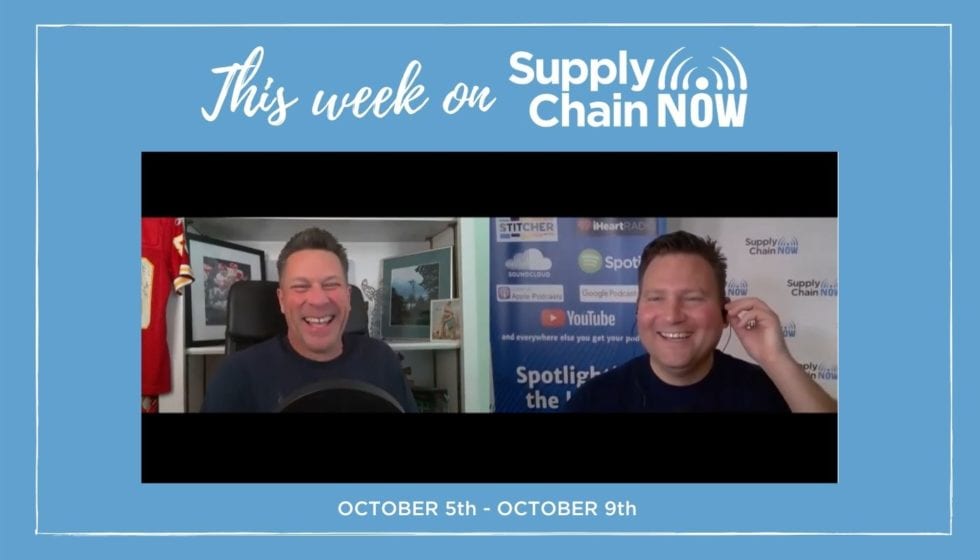
This Week on Supply Chain Now: October 5th – 9th
We continued this week on Supply Chain Now with more great interviews, conversations, livestreams, and episodes! Did you miss any episodes? On Monday, Scott and Karin Bursa introduced our newest Supply Chain Now program, TEKTOK, to our audience! On Tuesday, Scott and Greg welcomed Dan Reeve with Esker back to Supply Chain Now for a conversation about increasing supply chain visibility and cash flow. We published our Supply Chain Buzz on Wednesday, where Scott & Karin discussed the top news in supply chain for the week, and also welcomed featured guest, Lora Cecere with Supply Chain Insights to the podcast. On Thursday, we continued with the second half of Greg’s interview with Sarah Barnes-Humphrey for TECHquila Sunrise. And to wrap up the week, Scott and Greg welcomed Ashfaque Chowdhury, PhD with XPO Logistics to the podcast for a great conversation. Which was your favorite episode this week? Never miss an episode by subscribing to Supply Chain Now! Make sure you tune in next week for more great conversation, timely topics, and exceptional guests.