

More
November 12, 2020
This Week on Supply Chain Now: November 1st – November 12th
This week on Supply Chain Now, we released our 500th episode, gained key insight into the latest industry news, & heard from featured guests who shared their journeys into supply chain. Make sure you’re up to date on all the latest episodes, interviews, conversations, and livestreams! On Saturday, Brandon Mason, a lead analyst for Eaton’s Global Market Intelligence group shares with Scott his insights into automotive industry trends, including emerging technologies & economic trends. On Monday, the Supply Chain Now team got together to celebrate 500 episodes and look back on the journey so far. On Tuesday’s podcast episode, Scott & Greg welcomed Hank Picken and Jeff Picken, the father-son team leading Beaumont Products. Listen up as they share what its like to be part of a family business as well as key insight into manufacturing. For Veteran’s Day on Wednesday, we featured the Veteran Voices podcast where Scott welcomed Rear Admiral Casey W. Coane, U.S. Navy (Retired) to talk about his military service and the mission he’s on now. On Thursday, Karin Bursa & Sofia Rivas Herrera joined Scott & Greg on the Supply Chain Buzz. Listen up as they dive into giving forward…
April 7, 2021
Catch the Replay of Our Industry 4.0 Webinar with SAP
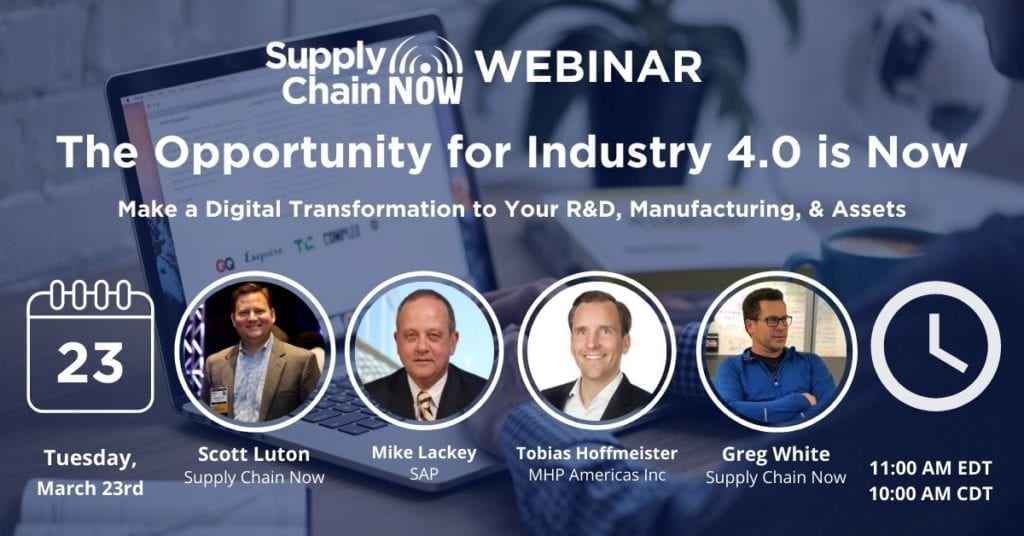
Did you miss our recent Industry 4.0 webinar with SAP? On March 23rd, Mike Lackey with SAP and Tobias Hoffmeister with MHP Americas Inc joined Scott and Greg to discuss Industry 4.0, how the opportunity to get started is NOW, and how to make that digital transformation to your R&D, manufacturing, and assets. If you missed the live session, no worries! Click here and access it right on the Supply Chain Now website.