

More

February 17, 2021
This Week on Supply Chain Now: February 8th – 14th
Listen up to the latest episodes, interviews, conversations, and livestreams from Supply Chain Now this week! On Monday, Scott Luton and guest host Will Haraway welcomed JP Wiggins with 3Gtms for a conversation on transportation management and even a little baseball! On Tuesday, Host Karin Bursa welcomed supply chain genius Criag Ablin to TEK TOK to discuss the 6 levers that drive digital and physical success. On Wednesday, we kicked off our Reverse Logistics series in partnership with the Reverse Logistics Association featuring Chuck Johnson, COO of goTRG. Tune in for a great conversation about peak returns season, with passionate opinions from Chuck, our hosts Scott, Greg, and Tony Sciarrotta, and our audience! On Thursday, Scott Luton, Greg White, and Enrique Alvarez sat down to discuss all the top news and biggest stories in supply chain this week on The Supply Chain Buzz. On Friday, Scott Luton dived into the top news in business, including industry developments in the tech and talent sector, aviation, the beverage industry, and more! And we wrapped up with a bonus livestream this Saturday to discuss Supply Chain leadership across Africa. Which was your favorite episode? Make sure…
Red Sea
April 14, 2025
Supply Chain Now’s Guide to the Red Sea Crisis
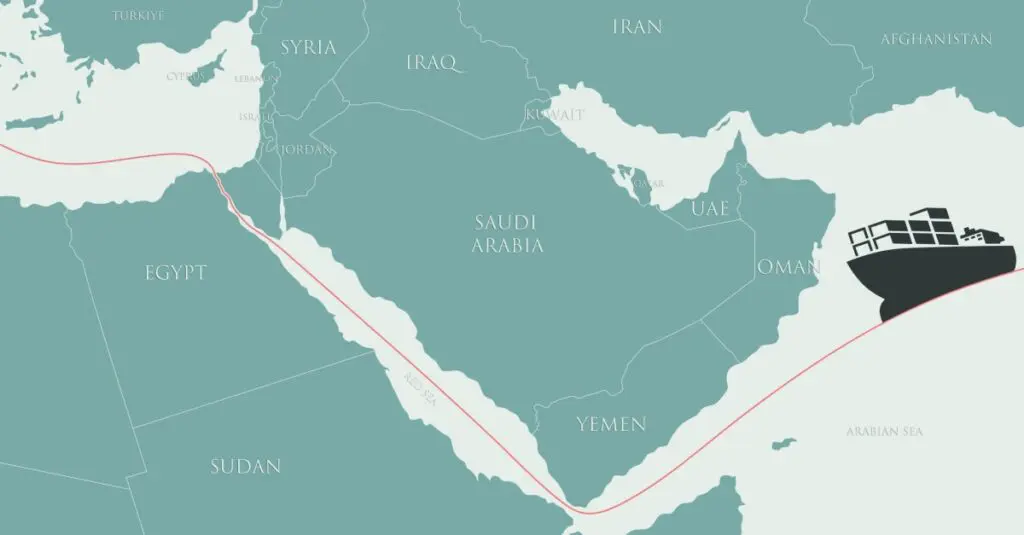
An estimated 12% of global trade worth more than $1 trillion traverses the Red Sea each year. When Houthi rebels started attacking commercial vessels in November 2023, ocean carriers began rerouting container ships around Africa’s Cape of Good Horn rather than through the Suez Canal on voyages from Asia to Europe. That greatly increased travel time and costs. As of March of this year, shipping through the Red Sea was still down 70% from before the attacks began, according to The Economist, with many ocean carriers still avoiding the Bab el-Mandeb Strait, which separates the Red Sea from the Gulf of Aden and the Arabian Peninsula. Maritime Industry Caught in the Crosshairs Houthi rebels launched attacks on ships in the Red Sea in response to Israel’s military operations in Gaza. The Houthis attacked more than 100 cargo ships between November 2023 and January 2025. The attacks, with missiles and drones, sunk two vessels and killed four sailors. In late October 2024, a headline in gCaptain read, “Red Sea Is Now So Dangerous Even NATO Warships Are Avoiding It.” “The United States Navy continues to send warships through the Red Sea, but its mission to protect merchant ships – Operation Prosperity…