

More
supply chain thought leadership
February 23, 2026
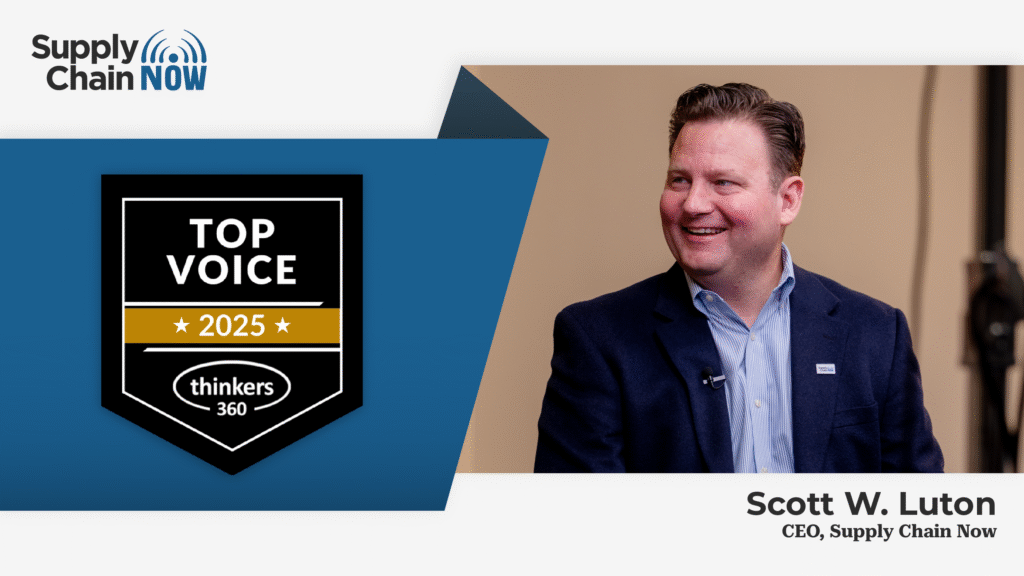
Scott Luton Recognized as a 2025 Thinkers360 Top Voice
For another year, Supply Chain Now Founder, CEO, and Host Scott Luton has been named to the Thinkers360 Top Voices of 2025, a prestigious global recognition honoring influential experts shaping conversations across business and technology. Described as the “definitive list of leading experts,” the Thinkers360 Top Voices Awards celebrate thought leaders who consistently share valuable insights and help advance professional knowledge across industries. Honorees are selected based on demonstrated expertise, impact, and meaningful contributions to the broader thought leadership community. Luton’s inclusion once again highlights his ongoing impact on the global supply chain community – from hosting thousands of interviews with industry leaders to spotlighting innovation, leadership, and the real-world challenges facing operations today. Through Supply Chain Now’s podcasts, livestreams, event coverage, and collaborative content, his work continues to connect practitioners with practical ideas they can immediately apply. As supply chains grow more complex and interconnected, recognition like this reflects not just individual influence, but the strength of a community committed to learning and improvement. Scott’s voice, and the voices he amplifies, continue to help leaders navigate change, build resilience, and move the industry forward. Learn more about Thinkers360 and the Thinkers360 Top Voices award here.
October 28, 2020
Digital Transformers and TEKTOK Digital Supply Chain podcasts
Supply Chain Now announces an expanded program portfolio to focus on innovation. Digital Transformers and TEKTOK Digital Supply Chain podcasts, anchored by industry experts Kevin L. Jackson and Karin Bursa, help amplify thought-leading insights and accelerate business transformation to the Supply Chain Now community and audience. READ FULL PRESS RELEASE HERE.