

More
November 12, 2020
This Week on Supply Chain Now: November 1st – November 12th
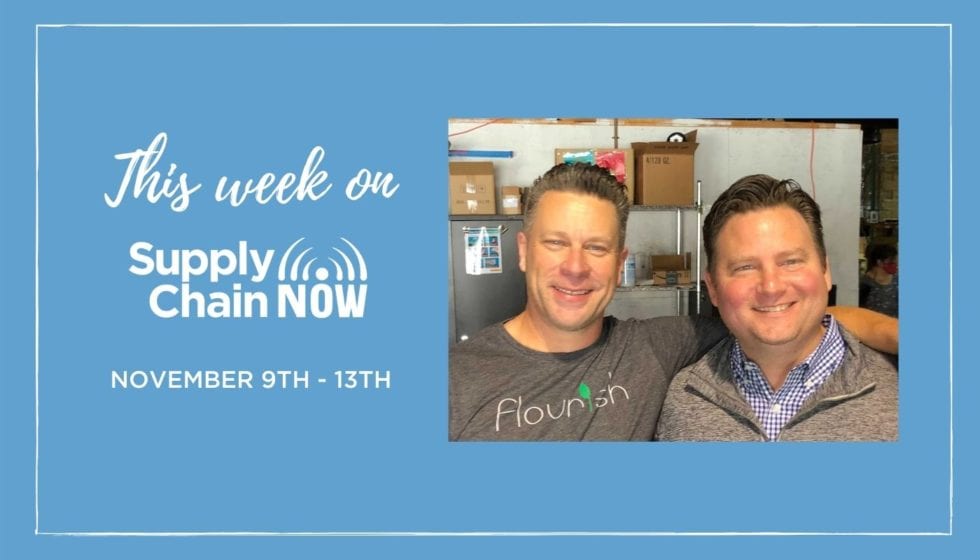
This week on Supply Chain Now, we released our 500th episode, gained key insight into the latest industry news, & heard from featured guests who shared their journeys into supply chain. Make sure you’re up to date on all the latest episodes, interviews, conversations, and livestreams! On Saturday, Brandon Mason, a lead analyst for Eaton’s Global Market Intelligence group shares with Scott his insights into automotive industry trends, including emerging technologies & economic trends. On Monday, the Supply Chain Now team got together to celebrate 500 episodes and look back on the journey so far. On Tuesday’s podcast episode, Scott & Greg welcomed Hank Picken and Jeff Picken, the father-son team leading Beaumont Products. Listen up as they share what its like to be part of a family business as well as key insight into manufacturing. For Veteran’s Day on Wednesday, we featured the Veteran Voices podcast where Scott welcomed Rear Admiral Casey W. Coane, U.S. Navy (Retired) to talk about his military service and the mission he’s on now. On Thursday, Karin Bursa & Sofia Rivas Herrera joined Scott & Greg on the Supply Chain Buzz. Listen up as they dive into giving forward…
fulfillment automation
February 20, 2026
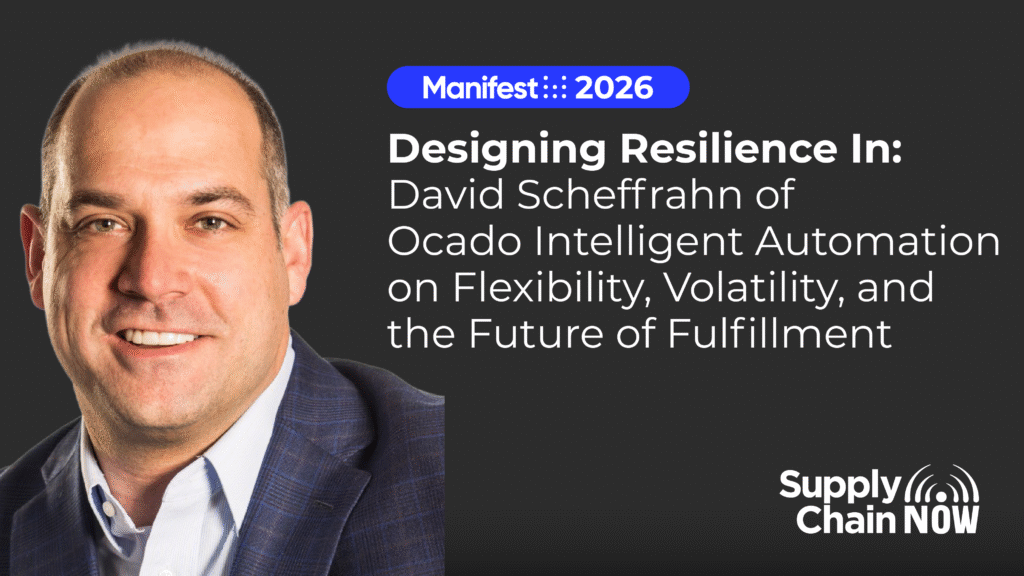
Designing Resilience In: David Scheffrahn of Ocado Intelligent Automation on Flexibility, Volatility, and the Future of Fulfillment
From Grocery Innovator to Global Tech Enabler At Manifest 2026, Scott Luton spent time with David Scheffrahn, Vice President of Sales with Ocado Intelligent Automation, to explore how fulfillment technology is evolving in an era defined by volatility. While Ocado is widely known in the UK and Europe for its e-commerce grocery leadership, Scheffrahn explained that the company’s North American focus is different. Over 25 years of building its own advanced grocery e-commerce and fulfillment operations, Ocado developed a powerful technology stack to drive efficiency. “What we’ve done in the last five years,” he shared, “has taken the tech stack that we built for our own use, and now we’re offering it to other companies to buy and use for their operations.” Today, Ocado supports 3PLs and global brands with end-to-end automation solutions that enable companies to maintain greater control over their omnichannel fulfillment, especially those looking for alternatives to marketplace giants. Volatility Hasn’t Gone Away When asked about dominant supply chain themes heading into 2026, Scheffrahn was direct: “Volatility has not gone away.” He described 2025 as “a massive shock in the system,” with tariffs and shifting trade policies forcing customers to pause projects and reassess strategy. “Almost…