

More

supply chain podcasts
June 17, 2024
Stay in the Know: Three Supply Chain Now Podcasts to Keep You Up to Date
Whether you’re a seasoned supply chain professional or a newcomer, keeping up with the latest trends, technologies, and best practices is essential for maintaining a competitive edge. One of the most effective ways to do this is by tuning into podcasts that focus on the industry. Here, we introduce three influential podcasts: Supply Chain Now, Logistics with Purpose, and Digital Transformers. Let’s explore each of these supply chain podcasts, covering their topics, episode formats, and why they should be on your must-listen list. Three Supply Chain Podcasts to Keep You Informed We’re spilling the tea on the best supply chain podcasts you need to know. Be sure to check out these three favorites of ours, wherever you get your podcasts. 1. Supply Chain Now Where to listen: https://supplychainnow.com/program/supply-chain-now/ Hosts: Scott Luton and various others Podcast Description We may be a little biased but Supply Chain Now is a leading podcast that provides comprehensive insights into global supply chain performance. Hosted by Scott Luton and his team of industry-veteran co-hosts from companies like Amazon, P&G, and Nordstrom, this podcast covers a wide range of topics, including logistics, transportation, technology, and innovation. Supply Chain Now has been featured in the Apple Podcasts…
July 31, 2020
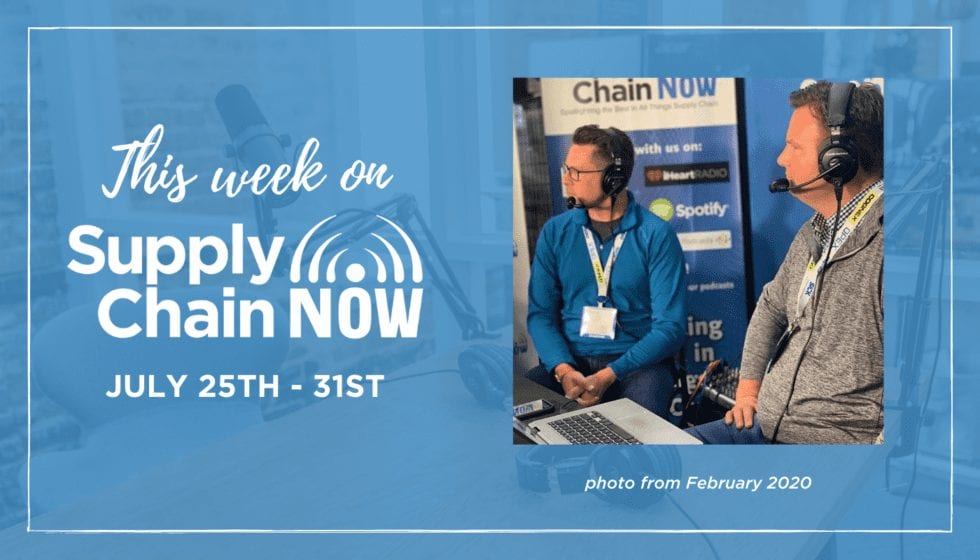
This Week on Supply Chain Now- July 25th – 31st
Did you catch all the episodes from Supply Chain Now this week? If not, get a quick summary and listen here! We added TWO additional episodes this week starting on Saturday, July 25th. We continued our Logistics with Purpose series, sponsored by Vector Global Logistics, and welcomed Kevin Carvajal with Salesian Missions. Supply Chain Now · “Logistics with Purpose: Kevin Carvajal with Salesian Missions” On Sunday, we featured our recent webinar, “Stand Up & Sound Off: A Conversation About Race in Industry,” and welcomed panelists Dyci Sfregola and David Burton to Supply Chain Now. Supply Chain Now · “Stand Up & Sound Off: A Conversation About Race in Industry” We featured another great episode in This Week in Business History on Monday, where Scott looks back at some of the biggest historical events in business history for the week ahead. This week, he spoke about the past, present, and future of the cannabis industry. Supply Chain Now · “This Week in Business History for July 27th: The Past, Present, & Future of the Cannabis Industry” Then on Tuesday, we shared our live-stream with Jeff Cashman of GreyOrange with our podcast audience, as…