

More
October 1, 2021
This Week In Supply Chain Now: September 27th – October 1st
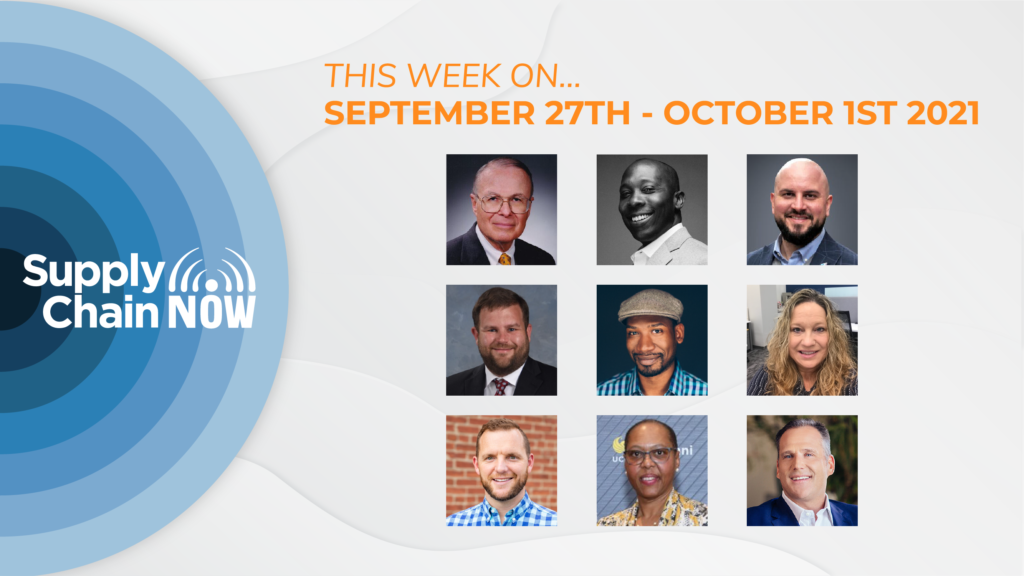
Stay up to date on all the latest conversations, interviews, and episodes we released this week here at Supply Chain Now! We kicked the week off with a special episode of Digital Transformers with host Kevin L. Jackson and Scott Luton. This episode also featured the Vice President of Strategic Customers at Ratelinx, Andrew Hooser. During this episode Andrew talks about how Ratelinx helps companies unite their data and take action. For This Week In Business History Kelly covers stories from plumbing inventors to a black woman holding incredible records for having a substantial amount of patents. For this episode of Supply Chain Now host Scott gets to chat with the CEO and co-founder of Tommy Run, Bernard Parks and Tandreia Bellamy. One topic that is discussed includes why logistics is an important part of EVERY business model because “everything has to touch a truck”. On Wednesday we released an episode of Logistics With Purpose with host Enrique Alvarez and Kristi Porter. This episode also features Audra Weddle, Shipping Director and Ryan Grabill, Director of International Disaster Service, for Convoy of Hope. This episode focuses on Convoy of Hope and the logistics of disaster outreach. For this special Thursday feature…

visibility
December 2, 2025
Top 10 Ways a Data Gateway Improves Time to Value Across End-to-End Supply Chains
Special Guest Blog Post written by Mark Holmes with InterSystems Top 10 Ways a Data Gateway Improves Time to Value Across End-to-End Supply Chains Supply chain practitioners seeking the best way to speed decision intelligence, unify supply chain data, increase operational efficiency, and improve supply chain resilience can benefit from a supply chain data gateway. A data gateway provides unified access to supply chain data from various sources, including enterprise systems, supply chain applications, data feeds, data warehouses, data lakes, data marts, and business entities. Here are the top 10 ways a supply chain data gateway can improve your supply chain performance. Enables You to Identify Inefficiencies and Make Better and Informed Decisions A unified view of your data accelerates informed decision making and provides you with a comprehensive understanding of your supply chain. For example, a supply planner gains accelerated access to customer orders, inventory levels, and transportation schedules, all in one place, to identify inefficiencies and make better informed decisions. Reduces Implementation Times Enterprises and supply chain software providers strive to reduce application implementation times. A data gateway can serve as a front-end for a range of supply chain software applications, speeding and simplifying data ingestion, integration,…