

More
June 5, 2020
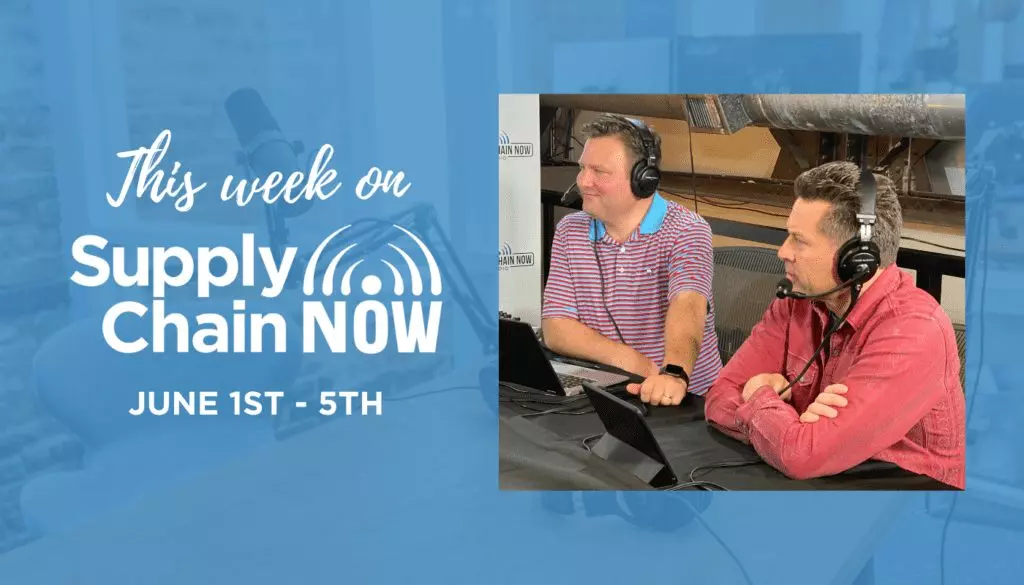
This Week in Supply Chain Now: June 1st – 5th
Another great week here at Supply Chain Now! Have you listened to all the episodes? If not, you can check them all out here: On Monday, Scott and Greg chatted with Tim Dooner with FreightWaves, about working from home and how it will work going forward, brokers and owner-operators, and more! Supply Chain Now · “What the Truck is Going On: Tim Dooner with FreightWaves” On Tuesday we were overwhelmed by the passion for supply chain and the positivity of Jamin Alvidrez with Freight Tribe! Supply Chain Now · “Meet Jamin: Supply Chain Vet Shows How to Unleash Positivity” On Wednesday we welcomed Supply Chain Now vets Claudia Freed with EALgreen and Chuck Easley with the Georgia Tech Supply Chain and Logistics Institute back to the show to discuss education and the future of supply chain. Supply Chain Now · “Supply Chain Lessons Learned from Pandemic: Claudia Freed & Chuck Easley” Scott and Greg were joined by Cathy Morrow-Roberson with Logistics Trends and Insights for the Supply Chain Buzz, discussing the top news in supply chain for this week. Supply Chain Now · “UPS Rate Changes & More: Supply Chain Buzz…

AI warehouse optimization
February 19, 2026
Automation That Adapts: Romain Moulin of Exotec on Building Warehouses for an Uncertain Future
Uncertainty Is the New Baseline At Manifest 2026, Scott Luton spoke with Romain Moulin, CEO and co-founder of Exotec, to discuss how warehouse automation is evolving in an era defined by volatility. “The big trend of last year was uncertainty,” Romain said, reflecting on 2025’s tariffs, economic tensions, and shifting trade dynamics. “Anything that would be done needed to deal with uncertainty.” Rather than waiting for stability, companies are designing operations that assume change is constant. “Anything that is going on now must be projects that are able to reorganize themselves,” he explained. Warehouses must be robust, agile and flexible as to whatever the next disruption brings. From Conveyors to Configurable Robotics Exotec is known for inventing 3D warehouse robots (Skypods) that move across the floor and climb racks up to 14 meters (46 feet) to retrieve totes and deliver them to operators. But beyond the visual wow factor, the real transformation is simplification. “The time of bespoke complex warehouses tailored to a very specific need is over,” Romain said. Customers are moving toward more generic, adaptable warehouses. Exotec replaces hardware complexity with intelligent software. “We don’t program the solution,” he noted. “We let the software find the best…