

More
October 29, 2021
This Week In Supply Chain Now: October 25th – 29th
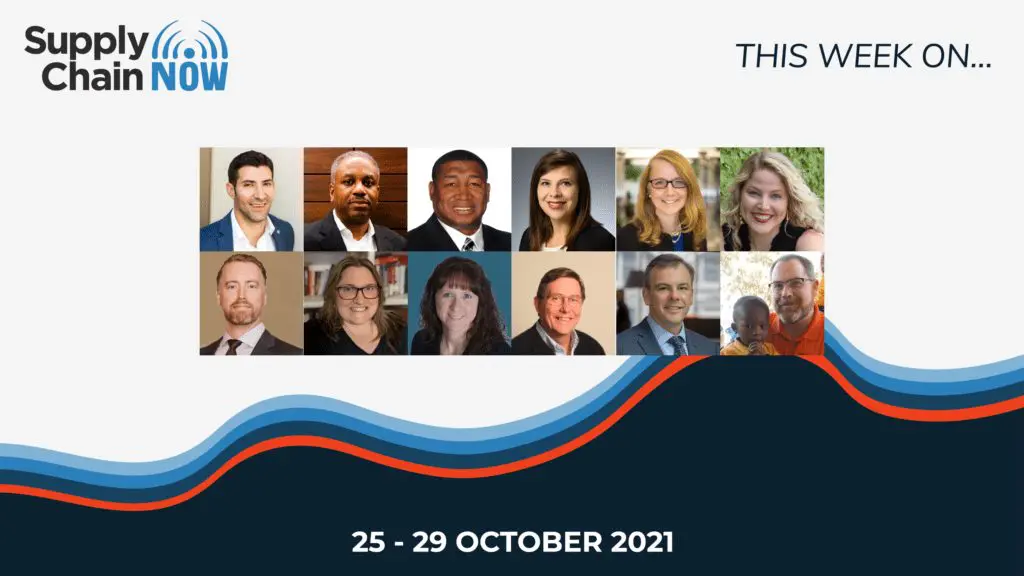
Stay up to date on all the latest conversations, interviews, and episodes we released this week here at Supply Chain Now! We started this week off with an episode of Digital Transformers with host Kevin L. Jackson. During this episode, Kevin sits down with three digital experts to discuss new approaches to establishing trust and provenance within a supply chain that is increasingly both digital and physical. This episode features Dustin McIntire the CTO of COMSovereign Holding Corporation. Eric Adolphe the CEO of Forward Edge-AI and Joshua Pendrick the CEO and Co-founder of Rypplzz. For Monday’s This Week In Business History episode, Kelly Barner talks about the political act that led to an increase in organized crime and the end of the Great Depression. On Tuesday, we released a new episode of Supply Chain Now with host Scott Luton and guest host Allison Giddens. They welcomed the head of Global Supply Chain for Peloton, Jennifer McKeehan, to the show. They discussed how the hybrid work environment is allowing the best leaders to shine by continuing to build strong, meaningful relationships, and much more. This week we released an episode of Logistics With Purpose with hosts Enrique Alvarez and Kristi Porter.…
technology
October 25, 2022
Top 100 Global Thought Leaders on Technology to Follow in 2022
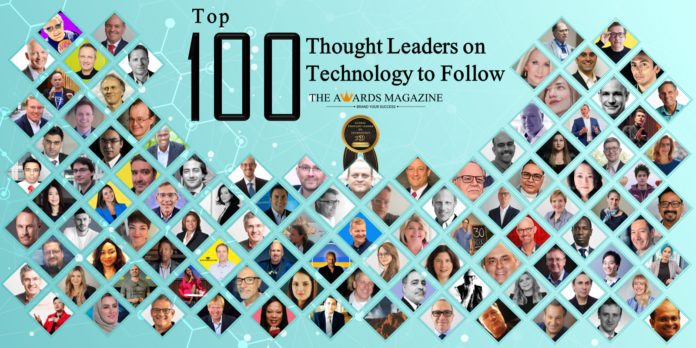
To be a successful leader you can use social media, such as Twitter, LinkedIn, Facebook, Instagram, and other popular social channels for numerous purposes. Digital Transformers host Kevin L. Jackson was recently recognized as one of the Top 100 Global Thought Leaders and Influencers to Follow on Social Media by The Awards Magazine for making a great impact in many industries and society. Read the article and see the full list here.