

More
May 15, 2020
This Week in Supply Chain Now: May 9th-15th
Another great week here at Supply Chain Now! Have you listened to all the episodes? If not, no worries! Check them all out here: We added a special Saturday episode on May 9th and featured another speaker from the 2020 AIAG CR Summit, Eric Kane with Bloomberg, and his insights from the conference. On Monday, we continued our Supply Chain Super Trends series with Sarah Barnes-Humphrey with Let’s Talk Supply Chain. Supply Chain Super Trend #3 focused on a holistic approach to supply chain TALENT. Mike Griswold with Gartner joined us for another excellent livestream last week, and we published it as a podcast episode on Tuesday. He shared his latest observations on how COVID-19 is impacting global supply chains. A MUST-listen! We continued our interviews with the speakers from the AIAG CR Summit on Wednesday, with great insights from Dr. Assheton Carter with TDI Sustainability. Thursday we published our popular Supply Chain Buzz, with Scott and Greg sharing and discussing the latest news and events in Supply Chain and beyond. And on Friday, we wrapped up the interviews with the extrordinary speakers from the AIAG CR Summit, with Brian Rich…
reverse logistics
January 28, 2026
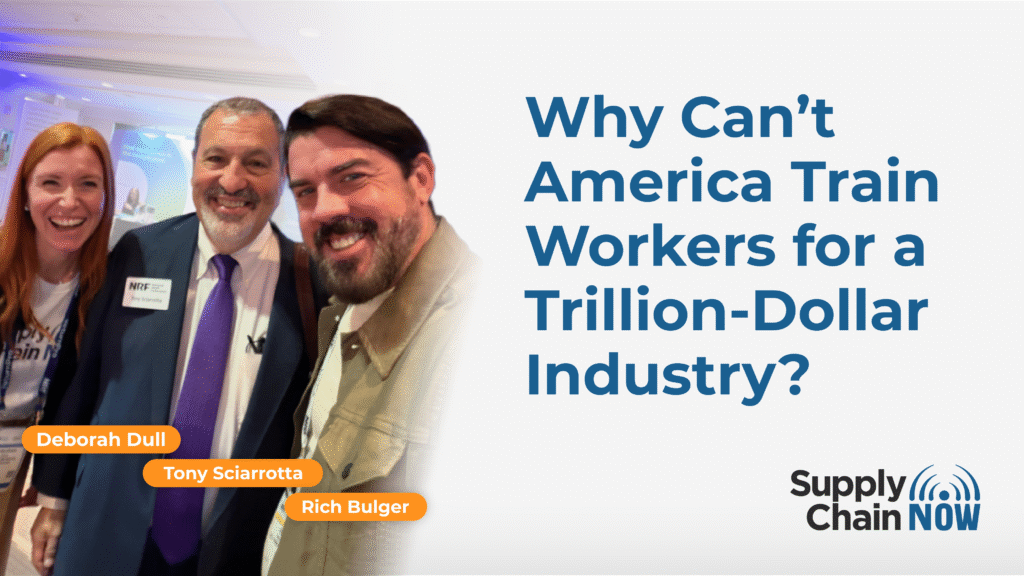
Why Can’t America Train Workers for a Trillion-Dollar Industry?
Inside the reverse logistics education gap and the economic blind spot keeping it invisible Special Guest Blog Post written by Deborah Dull Tony Sciarrotta has been asking the same question at industry conferences for years. As the Senior Director of Circularity and Reverse Logistics at the National Retail Federation, he knows what answer he’s going to get. But he keeps asking anyway. “Anybody in here go to school for returns management, reverse logistics, circularity? Any degrees in those fields the room?” It’s rare that anyone raises their hand. “That’s what’s wrong with our industry,” Sciarrotta told me at NRF Rev this January, the first conference under NRF’s new reverse logistics banner. “We still need to fix it.” The Numbers That Should Make Headlines Here’s what makes reverse logistics so fascinating: the scale is staggering, but the infrastructure to support it needs to be stronger. According to the National Retail Federation, American retailers processed approximately $890 billion in returns in 2024 which is roughly 17% of all retail sales – and it’s higher for ecommerce. But that number almost certainly understates reality. “We have a fragmented industry,” Sciarrotta explained. “Where are all those returns going? It has to be…