
More
October 15, 2021
This Week In Supply Chain Now: October 11th – 15th
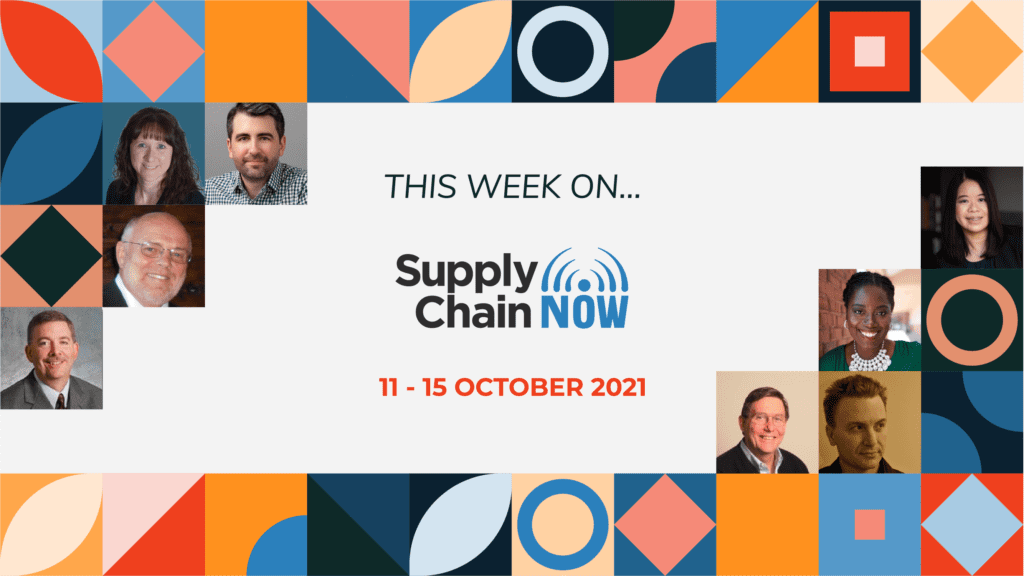
Stay up to date on all the latest conversations, interviews, and episodes we released this week here at Supply Chain Now! We kicked this week off with a special episode of Supply Chain Now featuring Mike Griswold. Scott, Kelly, and Mike discuss the key takeaways from the Gartner Supply Chain Symposium/Xpo 2021. For Monday’s This Week In Business History, Kelly gives insight on two notable figures who have made some amazing strides in theoretical economic science research. On Tuesday, we released an episode of Supply Chain Now with host Scott Luton. Scott had the opportunity to chat with Theodora Lau the Founder of Unconventional Ventures and Bradley Leimer the Co-Founder of Unconventional Ventures. They discuss some of the amazing points in their book titled “Beyond Good: How Technology Is Leading a Purpose-Driven Business Revolution.” We also released an episode of Logistics With Purpose this week. Host Enrique and Monica talk with Dave Schweidenback the Founder and CEO of Pedals for Progress. Dave shares the story behind the logistics of shipping 4,800 bikes across 45 different countries. For Thursday’s Supply Chain Now episode Scott interviews communications expert Monique Russell from Clear Communications, LLC. This conversation is all about effective communication and…

Building Brand Leaders
January 20, 2025
Supply Chain Podcasts in 2025: Building Brand Leaders
The first podcast available for download reportedly was Queen Elizabeth’s 2004 Christmas address. Apparently, people were hungry to download anything they could. Social media influencers, true crime aficionados, comedians, scholars, and business leaders all have stepped up to meet demand. There are now more than 4 million registered podcasts around the world – and more than 100 million listeners in the United States alone. And according to Edison Research, as of June 2024, podcasts occupied 9% of Americans’ total audio consumption time. “From podcast to podcast, thought leadership is everywhere, educating the masses in innovative ways,” Nancy Marshall – aka The PR Maven – wrote in a Forbes Council post. Supply chain-focused podcasts, in particular, have evolved into powerful platforms for building brand authority, sharing thought leadership, and achieving deeper audience engagement. The State of Supply Chain Podcasts in 2025 Podcasts today cover everything from the arts to zoology. In January, several of the top podcasts on Spotify were devoted to crime, self-help, and relationships. The Joe Rogan Experience, ranked No. 5, is categorized as a culture podcast. How I Built This, No. 9, is all about entrepreneurship. Notably, two-thirds of listeners say they hear news discussed on podcasts and…