

More
October 22, 2021
This Week In Supply Chain Now: October 18th – 22nd
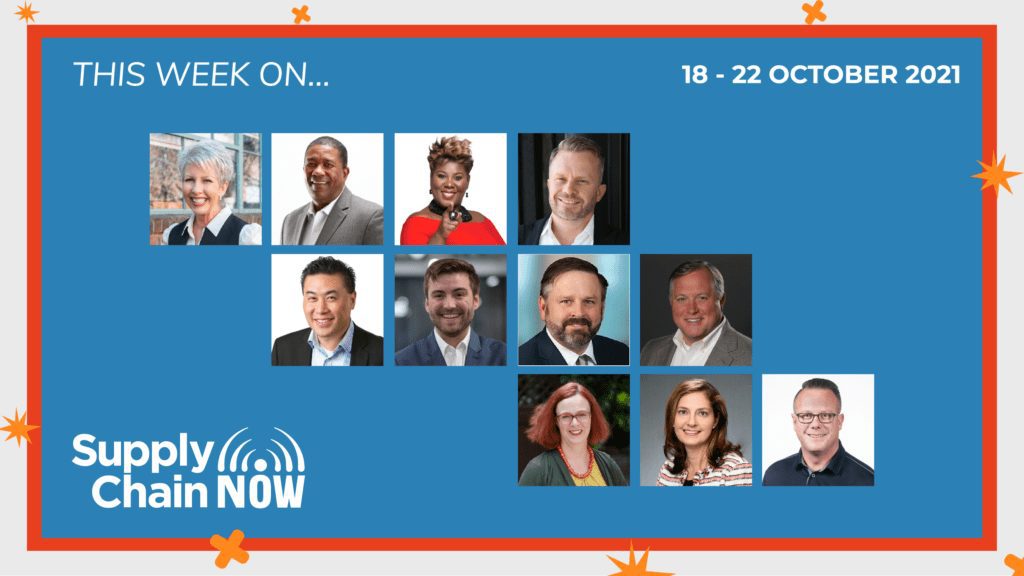
Stay up to date on all the latest conversations, interviews, and episodes we released this week here at Supply Chain Now! We kicked this week off with a new episode in our Supply Chain Real Estate Series produced in partnership with Prologis. Scott Luton and special host Ward Richmond welcomed Managing Partner Will O’Donnell and Vice President Todd Lewis from Prologis Ventures. For Monday’s This Week In Business History episode, Scott tells an interesting story of one of the most captivating and influential movie rental businesses in American history. On Tuesday, we released a new episode of TEKTOK, with host Karin Bursa. In this episode, Karin talks with Ben Cubitt, SVP of Consulting and Network Services for Transplace. They discuss the future of supply chain logistics into next year, from continued network disruptions to taking smart steps today to regain a proactive footing. On Wednesday’s Supply Chain Now episode, Scott and special guest host Crystal Davis welcomed the Vice President of Transportation for Home Depot, Sarah Galica, to the show. She gives insight on some of the improvements that resulted in $34 billion dollars in growth for The Home Depot. For Thursday’s Supply Chain Now episode, Scott and guest host…
ERP vs email supply chain
April 6, 2026
Why Your Supply Chain Team Spends More Time in Outlook Than Your ERP
written by Nick Gospodinov, Founder & CEO of Mandel AI There is a dirty secret in supply chain management: the most critical information about your orders, delays, and supplier commitments doesn’t live in your ERP. It lives in email. Not in dashboards. Not in control towers. In inboxes. Ask any procurement manager what they do first thing in the morning, and the answer is almost always the same: open Outlook, start scrolling. A supplier confirmed a ship date in a reply chain. A freight forwarder flagged a delay in an attachment. A pricing update came through as a PDF buried in a thread from two weeks ago. This is the real operating system of supply chain, and it has no search, no alerts, no reconciliation, and no memory. The Coordination Gap No One Talks About The supply chain technology market has poured billions into planning, visibility, and execution systems. These tools work when the data is clean, structured, and already inside the system. The problem is that the most operationally critical information never makes it there in time. Manufacturers and distributors manage hundreds, sometimes thousands, of supplier relationships. Each one generates a constant stream of unstructured communication: order…