

More
June 12, 2020
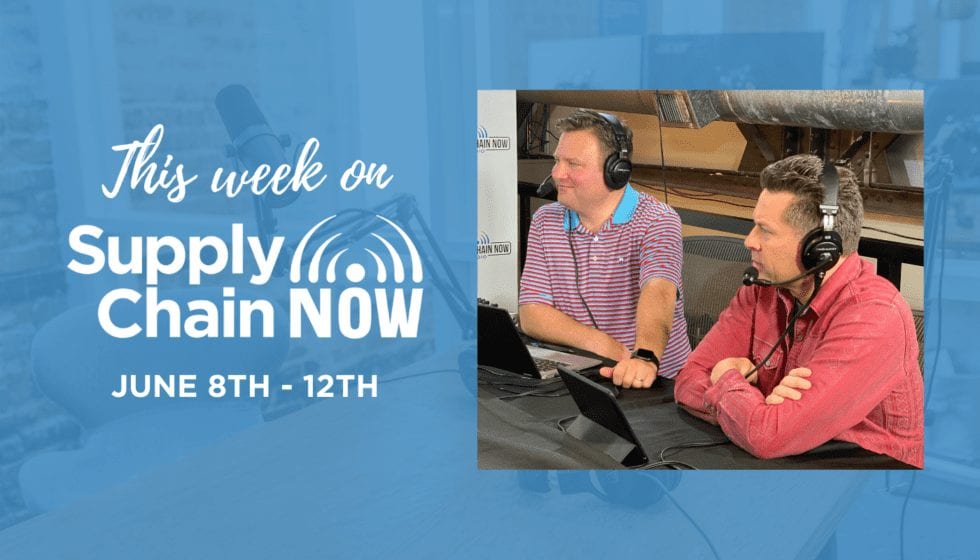
This Week on Supply Chain Now: June 8th – 12th
Another great week here at Supply Chain Now! Have you listened to all the episodes? If not, you can check them all out here: On Monday, Scott and Greg chatted with Jenny Froome and Dominique Zwinkels. Supply Chain Now · “Supply Chain Front & Center: Jenny Froome & Dominique Zwinkels” Then on Tuesday, we continued in the Logistics with Purpose series and welcomed Jeremy Newhouse with MATTER to the podcast. Supply Chain Now · “Logistics with Purpose: Jeremy Newhouse with MATTER” On Wednesday, Scott and Greg tackled the top news in supply chain on the Buzz, and welcomed special guest Rob Lopez with Peach Tree Commercial Capital. Supply Chain Now · “Supply Chain Buzz with Rob Lopez & Peach Tree Commercial Captial: Manufacturing, Money & More” Scott and Greg were joined by Lynne Johnson and Joe Barto with AME on Thursday: Supply Chain Now · “Helping Manufacturers Share, Learn, & Grow: Joe Barto & Lynne Johnson with AME” And we wrapped up the week as Scott and Greg were joined by Ricahrd Schrade with Automation Intelligence: Supply Chain Now · “Tomorrow’s Automation Today: Richard Schrade, Co-Founder & President of Automation Intelligence” Which…

supply chain decision velocity
March 6, 2026
The High Cost of Labor Firefighting and Systemic Attrition
Warehouses are not running out of labor. They are running out of labor that can sustain the pace. Manual firefighting, overtime, and constant reassignment push skilled associates to burn out faster than they can be replaced. The result is a cycle of turnover, training, and rising labor costs that slow performance and strain budgets. This whitepaper breaks down the current state of labor in distribution, including turnover trends, overtime risk, burnout dynamics, and the true cost of churn. Click here to download and see how labor forces impact throughput, planning, and workforce strategy today.