

More
freight network
February 12, 2026
How Freight Visibility is Reshaping Supply Chain Resilience
Special Guest Blog Post from Amazon Freight For supply chains across the globe, goods in motion are promises in motion. When a palletised shipment is delayed or goes dark, the impact is felt not just in transport teams, but in customer service, inventory planning, and broader network performance. In a conversation, economist Dr. Rebecca Harding and Chris Roe, Managing Director of Amazon Freight, explored how technology and collaboration are changing the way freight networks operate. While their primary focus was freight, their insights map directly onto the resilience challenges supply chain leaders face every day. Old pressures, new data In a study supported by Amazon Freight, every shipper surveyed agreed that technology is crucial to the freight industry’s resilience. While this isn’t a surprise, it’s an important reminder of the role that technology plays. Roe shared a key example where Amazon Freight connected a customer’s system to its own system. Visibility on the end-to-end movement went from essentially zero to a high level of coverage. Instead of discovering problems only when a shipment failed to arrive, the customer could now see disruptions as they emerged and act earlier. For supply chain teams, that move from partial, delayed information…
global supply chain
January 29, 2026
Constant Supply Chain Disruption Promises to Keep Logistics Entertaining, Exciting, & Challenging
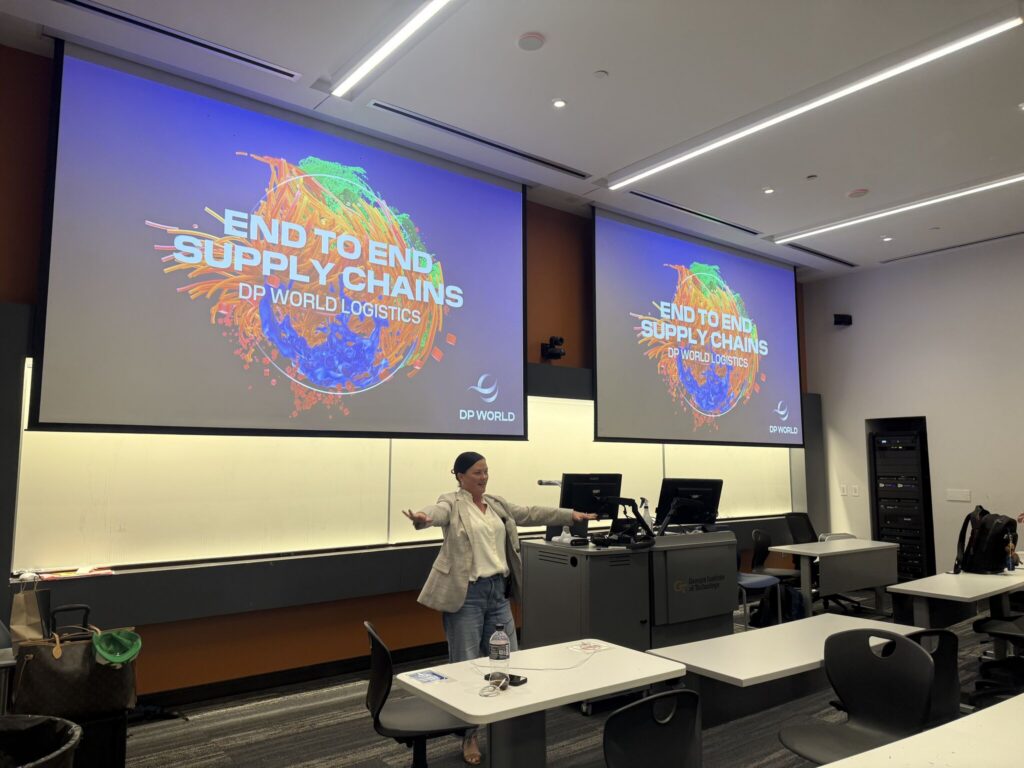
Special Guest Blog Post written by Brittany Caskey, Chief Commercial Officer – Logistics with DP World Americas I was recently invited to speak with students in the Supply Chain and Logistics Organization at Georgia Tech, and it reminded me why I still find this industry so energizing. I walked them through my own path — starting in logistics right out of college, building my foundation at UPS in sales and sales management, and eventually stepping into my role today as Chief Operating Officer at DP World in the Americas. What I shared with them is something I still believe deeply: logistics keeps life interesting, because no two days are ever the same. Customer expectations change. Geopolitical realities shift. Trade lanes evolve. Weather, labor, technology — everything is in constant motion. That constant change is what keeps logistics professionals sharp and solutions focused. It’s also why customer experience has become the true differentiator in today’s supply chains. Because while disruption is unavoidable, how you manage it is a choice. Customers Don’t Care Why — They Care That It Works One message I emphasized with the students is the same one I reinforce with customers and teams every day: customers…