
More
veterans
January 12, 2023
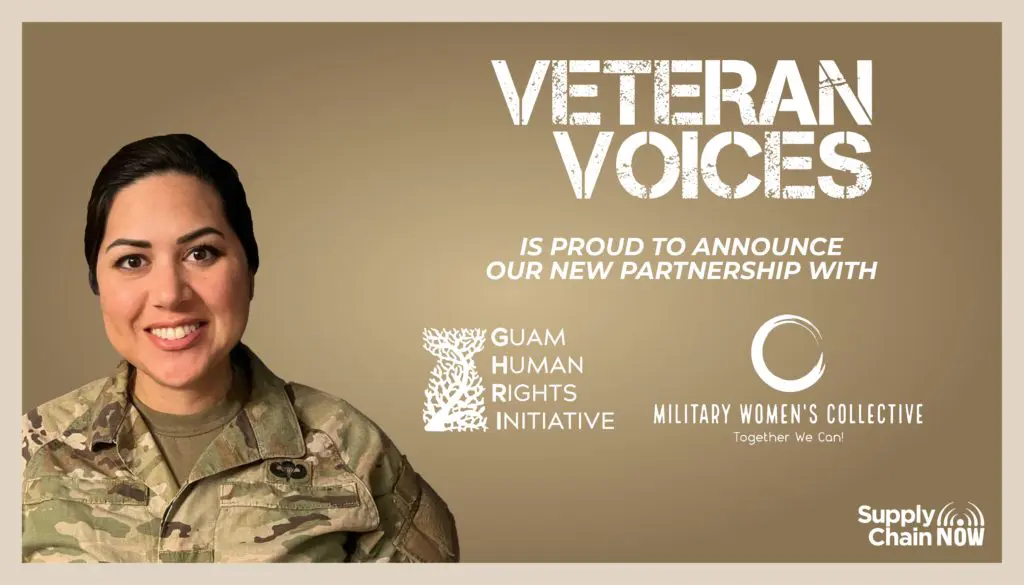
Veteran Voices Launches New Partnership
Supply Chain Now Founder and CEO Scott Luton announced that its “Veteran Voices” podcast will re-launch this year in partnership with two non-profit organizations: The Guam Human Rights Initiative and the Military Women’s Collective. “We’re proud to promote the efforts of these two organizations, as we are all highly aligned in our dedicated mission to serve our veteran community. Both organizations are veteran-led, start-up nonprofits that are doing big things out in the market. They are the perfect partners for ‘Veteran Voices,’” said Luton. As noted on its website, the Guam Human Rights Initiative “is a collaborative research nonprofit seeking to advance human rights on Guam and throughout the Pacific through meaningful and impactful research efforts.” Since its founding in 2021, the Military Women’s Collective is determined “to make an impact in the military nonprofit space by focusing on our women veteran population.” Its mission focuses on empowering homeless and food-insecure women veterans as well as providing coaching, mentorship and support for women veterans who are transitioning out of the military. Mary Kate Soliva, host of “Veteran Voices,” said that she has a special place in her heart for both organizations and the good works they do. She is excited…
supply chain thought leadership
February 23, 2026
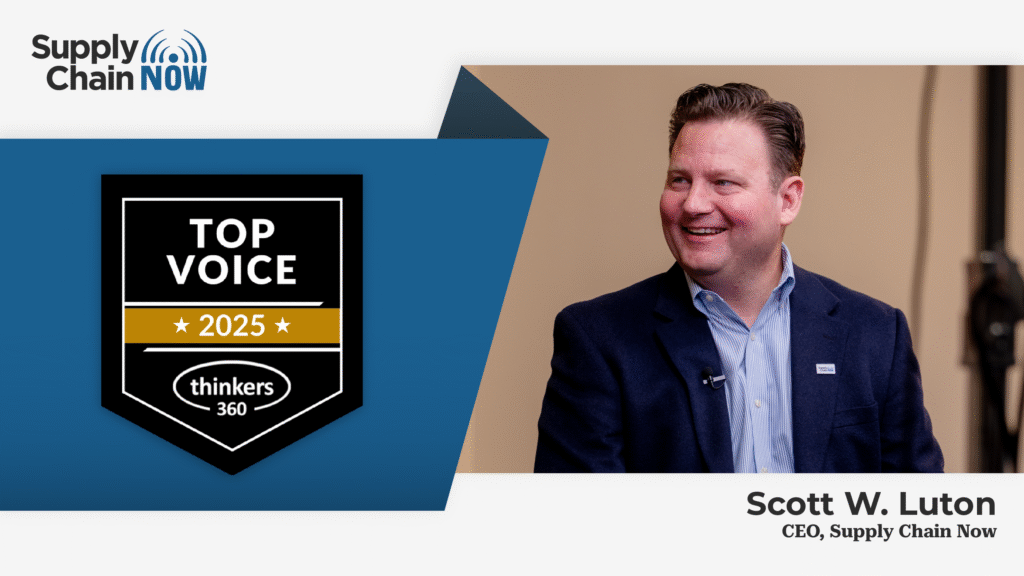
Scott Luton Recognized as a 2025 Thinkers360 Top Voice
For another year, Supply Chain Now Founder, CEO, and Host Scott Luton has been named to the Thinkers360 Top Voices of 2025, a prestigious global recognition honoring influential experts shaping conversations across business and technology. Described as the “definitive list of leading experts,” the Thinkers360 Top Voices Awards celebrate thought leaders who consistently share valuable insights and help advance professional knowledge across industries. Honorees are selected based on demonstrated expertise, impact, and meaningful contributions to the broader thought leadership community. Luton’s inclusion once again highlights his ongoing impact on the global supply chain community – from hosting thousands of interviews with industry leaders to spotlighting innovation, leadership, and the real-world challenges facing operations today. Through Supply Chain Now’s podcasts, livestreams, event coverage, and collaborative content, his work continues to connect practitioners with practical ideas they can immediately apply. As supply chains grow more complex and interconnected, recognition like this reflects not just individual influence, but the strength of a community committed to learning and improvement. Scott’s voice, and the voices he amplifies, continue to help leaders navigate change, build resilience, and move the industry forward. Learn more about Thinkers360 and the Thinkers360 Top Voices award here.