

More
human factor in supply chain
March 4, 2026
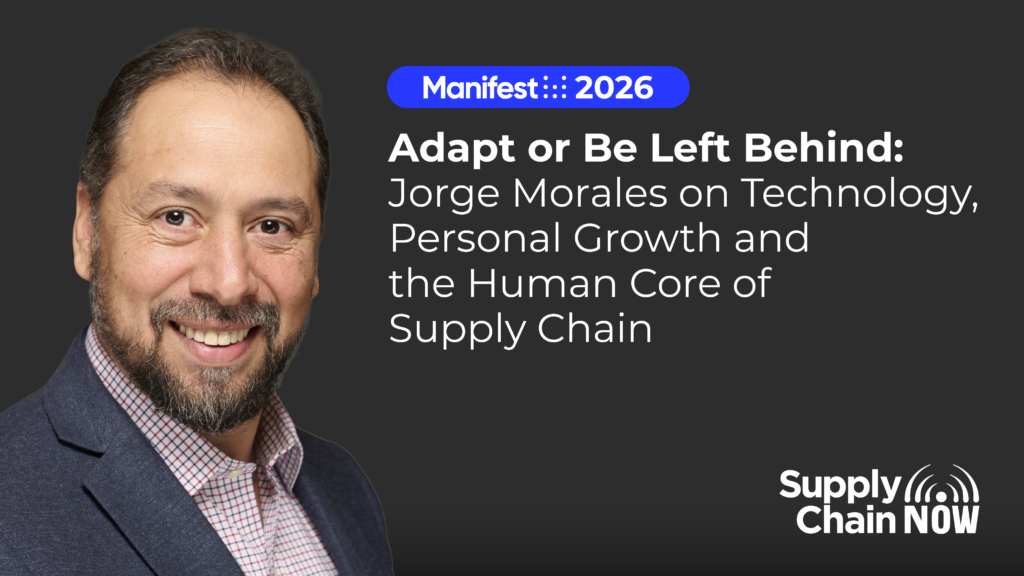
Adapt or Be Left Behind: Jorge Morales on Technology, Personal Growth and the Human Core of Supply Chain
At Manifest 2026, Scott Luton spent time with his friend, Jorge Morales, Global Chief Operating Officer of the International Supply Chain Education Alliance (ISCEA), for a conversation that centered not on hype, but on growth. ISCEA is a global certification body serving supply chain professionals around the world. But as Morales put it, “We’re in the knowledge business; but most of all, we’re in the personal growth business.” Through certifications, membership programs, advisory boards, and global events, ISCEA empowers professionals to stay current, expand their networks, and advance their careers. In a volatile era, that mission has never been more relevant. Beyond the AI Hype Cycle When asked about dominant themes from 2025 to 2026, Morales pointed to a shift in how the industry views technology. “Last year we were still in the bubble of the hype of AI,” he said. Many professionals feared being replaced or assumed AI would solve everything overnight. That perspective has matured. “Technology by itself is not what determines your level of success,” Morales explained. “Understanding the basics, knowing how things work; THAT is key.” AI and data tools remain critical across procurement, logistics, manufacturing, planning and more. But success depends on how organizations…
May 22, 2020
This Week in Supply Chain Now: May 18th – 22nd
Another great week here at Supply Chain Now! Have you listened to all the episodes? If not, no worries! Check them all out here: On Monday, we welcomed Dan Reeve with Esker to the show to talk about how organizations can leverage AI effectively to win in uncertain times. Supply Chain Now · “Leveraging AI Effectively to Win in Uncertain Times: Dan Reeve with Esker” We continued our Today in Manufacturing series on Tuesday, and welcomed Rebecca Bowman with The Clorox Company to Supply Chain Now, along with special co-hosts Jason Moss with Georgia Manufacturing Alliance and Laura Madajewsli with HLB Gross Collins. Supply Chain Now · “Today in Manufacturing: Rebecca Bowman with The Clorox Company” On Wednesday we published our popular Supply Chain Buzz, with Scott and Greg sharing and discussing the latest news and events in Supply Chain and beyond. Supply Chain Now · “Pharma Supply Chain, Reshoring, & TP: The Supply Chain Buzz for May 18th” Thursday we welcomed back Latia Thomas via livestream as she shared what the future of supply chain has in store. A bright future indeed! Supply Chain Now · “Latia Thomas: Leading the Charge into the…