
More

automated warehouse systems
November 21, 2024
The Future Is Now: Four Businesses Transforming Modern Warehousing
Warehousing historically hasn’t been a particularly exciting topic. But times have changed. Thanks to technological innovations, warehouse automation has made the receiving, housing, and distributing of goods truly fascinating stuff. At Supply Chain Now, we spotlight companies doing exciting things throughout the industry. In modern warehousing, the innovations garnering attention include systems integrations involving robotics, automation, and artificial intelligence (AI); the use of optical character recognition (OCR) technology in yard management; an “elegant” automated storage and retrieval system (AS/RS); and a solution called Chuck. Warehousing at a Crossroads: Innovation for Efficiency “The warehousing industry is experiencing a technological revolution, with advancements in automation, robotics, IoT, AI, and data analytics transforming operations and driving efficiency. These innovations are not just enhancing operational capabilities but are also paving the way for smarter, more connected, and efficient warehouse environments,” an October report by Taiwan-based logistics property developer ALP said. ALP said AS/RSs, automated guided vehicles (AGVs), and robotics “are at the forefront of the smart warehousing revolution. These systems enhance efficiency, reduce labor costs, and improve accuracy.” AI and Robotics: A New Frontier for Modern Warehousing A Forbes Council post in November said that “one of the most visible impacts of AI and…
April 24, 2020
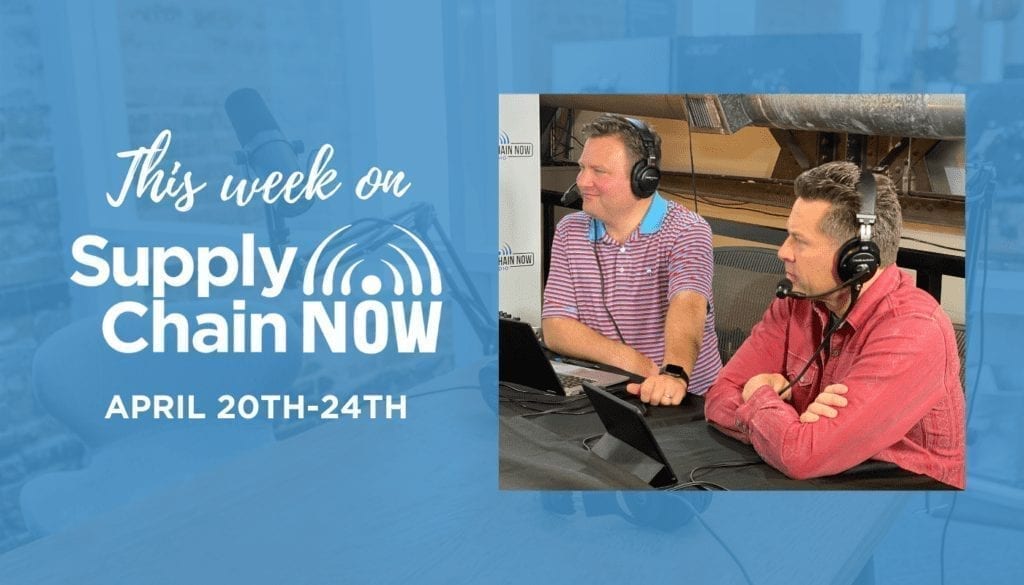
This Week on Supply Chain Now: April 20-24
It has been another busy week for Supply Chain Now! Did you catch all the episodes? If not, no worries! Check them all out here: We started out the week with a new episode in our Logistics with a Purpose series sponsored by our good friends at Vector Global Logistics. Listen as Scott, Greg, and Enrique have a great conversation with Mickey Horner with Rise Against Hunger. On Tuesday, Scott and Greg were joined by AIAG’s CR Summit speaker Joerg Walden, CEO of iPoint. Then we published the new and improved Supply Chain Buzz, with Scott and Greg sharing and discussing the latest news and events in Supply Chain and beyond. Scott and Greg were joined by Randy Strang with MedShare on Thursday for another episode in the Logistics with a Purpose series, sponsored by Vector Global Logistics. And to wrap up the week, Scott and fellow host Fred Tolbert with Demand Solutions were proud to host three exceptional Supply Chain students from the University of Georgia’s Terry College of Business.