

More
September 25, 2020
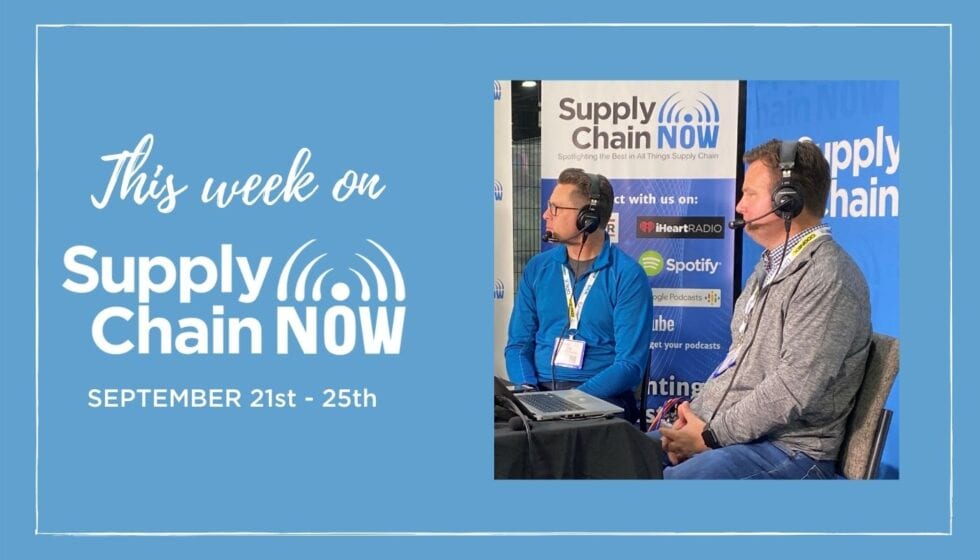
This Week on Supply Chain Now: September 21st – 25th
Heading right into October (can you believe it’s next week??) with more great interviews, conversations, livestreams, and episodes! We started the week with a new episode in our Logistics with Purpose series. Pat Plonski joined Scott, Greg, and Enrique to celebrate 50 million books for Africa! On Tuesday, Scott and Greg welcomed Mike Griswold with Gartner back to the podcast as they discussed the top three things to know in supply chain today and tomorrow. We published our Supply Chain Buzz on Wednesday, and Scott and Jamin were happy to welcome Sarah Barnes-Humphrey with Let’s Talk Supply Chain to the show! On Thursday, Greg continued his conversation with Ben Gordon of Cambridge Capital for part two of the interview for TECHquila Sunrise. And Friday, Scott and Greg were excited to welcome one of their favorite Supply Chain News writers, Emma Cosgrove with Supply Chain Dive, to the podcast! Which was your favorite episode? Never miss an episode by subscribing to Supply Chain Now! Make sure you tune in next week for more great conversation, timely topics, and exceptional guests.
supply chain automation
April 6, 2026
Why Your Supply Chain Team Spends More Time in Outlook Than Your ERP
written by Nick Gospodinov, Founder & CEO of Mandel AI There is a dirty secret in supply chain management: the most critical information about your orders, delays, and supplier commitments doesn’t live in your ERP. It lives in email. Not in dashboards. Not in control towers. In inboxes. Ask any procurement manager what they do first thing in the morning, and the answer is almost always the same: open Outlook, start scrolling. A supplier confirmed a ship date in a reply chain. A freight forwarder flagged a delay in an attachment. A pricing update came through as a PDF buried in a thread from two weeks ago. This is the real operating system of supply chain, and it has no search, no alerts, no reconciliation, and no memory. The Coordination Gap No One Talks About The supply chain technology market has poured billions into planning, visibility, and execution systems. These tools work when the data is clean, structured, and already inside the system. The problem is that the most operationally critical information never makes it there in time. Manufacturers and distributors manage hundreds, sometimes thousands, of supplier relationships. Each one generates a constant stream of unstructured communication: order…