

More

inventory
November 18, 2025
From War Rooms to Winning Strategies: How High-Tech Brands Tame Supply Chain Chaos
Special Guest Blog Post written by Jeff Echel and Steve Lykken with e2open Supply chain planners in high-tech don’t just manage shipments; they’re crisis managers, data detectives, and sometimes, referees in a high-stakes game of inventory tug-of-war. Why do these planners find themselves huddled in “war rooms,” surrounded by spreadsheets and urgent emails? It starts with relentless pressure: customers expect rapid, reliable service, but the reality is a maze of long lead times, outsourced manufacturing, and unpredictable global logistics. Securing critical components can take months, and a single misstep, like overstocking or missing a shipment, can ripple through the business, impacting revenue and margins. The chaos: War rooms and spreadsheet battles Add to that, the complexity of forecasting demand. Planners reconcile noisy, inconsistent data from retailers and distributors, often with little visibility, into . Forecasts are built, torn down, and rebuilt, sometimes manually, as teams try to align bottom-up channel data with top-down financial targets. Meanwhile, supply plans are constantly threatened by shortages, excess inventory, and last-minute changes. When demand surges or supply is disrupted, channels compete for limited stock, sometimes “stealing” from each other, and sometimes winning simply by being the loudest voice in the room. All of…
agentic AI
January 19, 2026
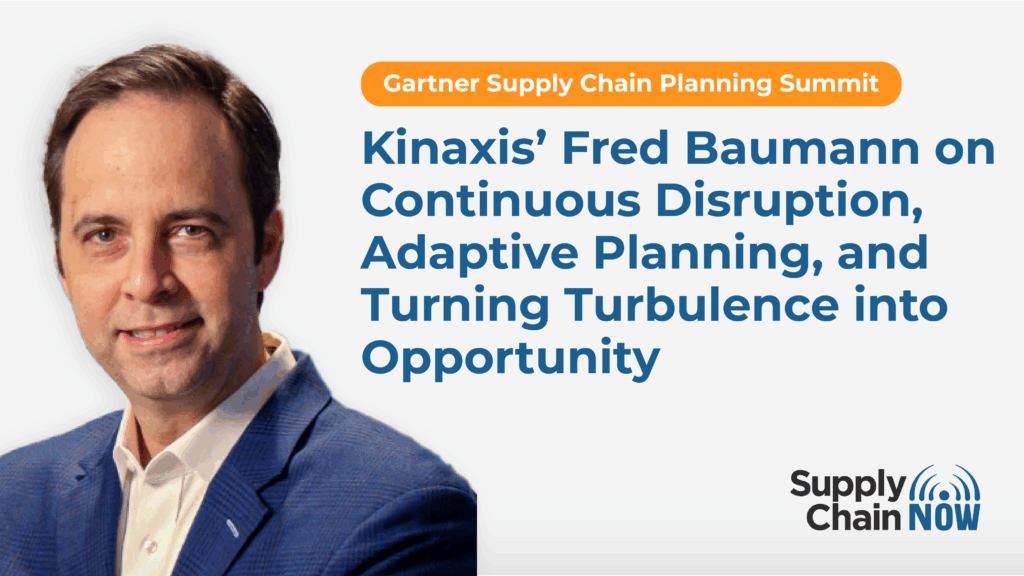
Kinaxis’ Fred Baumann on Continuous Disruption, Adaptive Planning, and Turning Turbulence into Opportunity
At the 2025 Gartner Supply Chain Planning Summit in Denver, Scott Luton sat down with Fred Baumann, Senior Industry Principal at Kinaxis, one of the world’s most recognized leaders in supply chain planning and orchestration. Kinaxis has spent over four decades shaping the planning landscape and has been named to the Gartner Leaders Quadrant an extraordinary 11 consecutive times—a testament to its execution strength and long-term vision. Baumann’s role at Kinaxis centers on helping chief supply chain officers and senior leaders shape their strategic transformation roadmaps, quantify value, and build the business cases necessary to achieve breakthrough outcomes. From Episodic Disruptions to Continuous Turbulence When asked about old and new challenges facing supply chain planning teams, Baumann observed a major shift: disruption is no longer episodic—it’s continuous. Historically, companies faced major disruptions every few years. Today, volatility and constraint-related challenges—whether driven by tariffs, sourcing changes, geopolitical shifts, or supply shortages—are unfolding weekly or even daily. This environment demands a new way of working. The speed of global business is accelerating, and uncertainty is at historic highs. As Baumann noted, organizations must now adjust their supply chains “much faster than they had to even last year.” The shift isn’t only…