
More
December 22, 2020
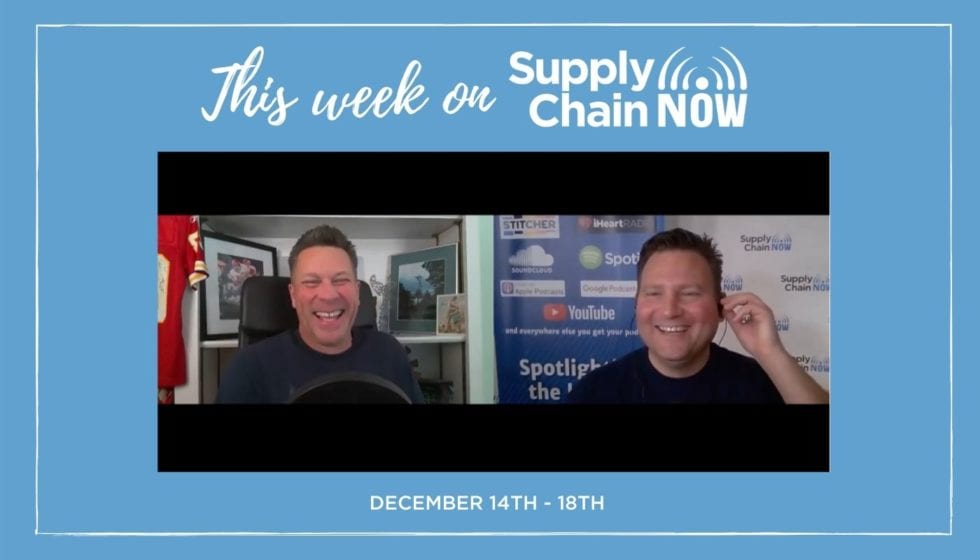
This Week on Supply Chain Now: December 14th – 19th
Want to hear the latest supply chain trends and industry news? Make sure to catch up on all the latest episodes, interviews, conversations, and livestreams right here! On Saturday, Scott Luton and Vector Global Logistics’ Enrique Alvarez welcomed Patrick Nelson, a decorated combat veteran whose received the Bronze Star and the Purple Heart Medal, to hear his thoughts on what makes an effective leader in a challenging year like this. On Monday, Scott welcomed Rod Sherkin with ProPurchaser.com back to the podcast to discuss one of our most asked topics: how to optimize the job search and truly stand out amongst the crowd. On Tuesday’s podcast, we welcomed Sandro Natale with AT&T and Thomas Carter with TNS – Total Network Service to discuss digital engagement and digital transformations plus its role and purpose with your customers, employees, and partners. On Wednesday, special guest Zachary Ramirez with Ally Logistics joined Scott and Greg to talk all about simplifying logistics in an ever more complex world. On Thursday, Dale Wilkinson, Founder of goodgigs, joined us to share the trends he’s seeing among mission driven companies as the workforce remains virtual in the foreseeable future, the other media channels…
April 7, 2021
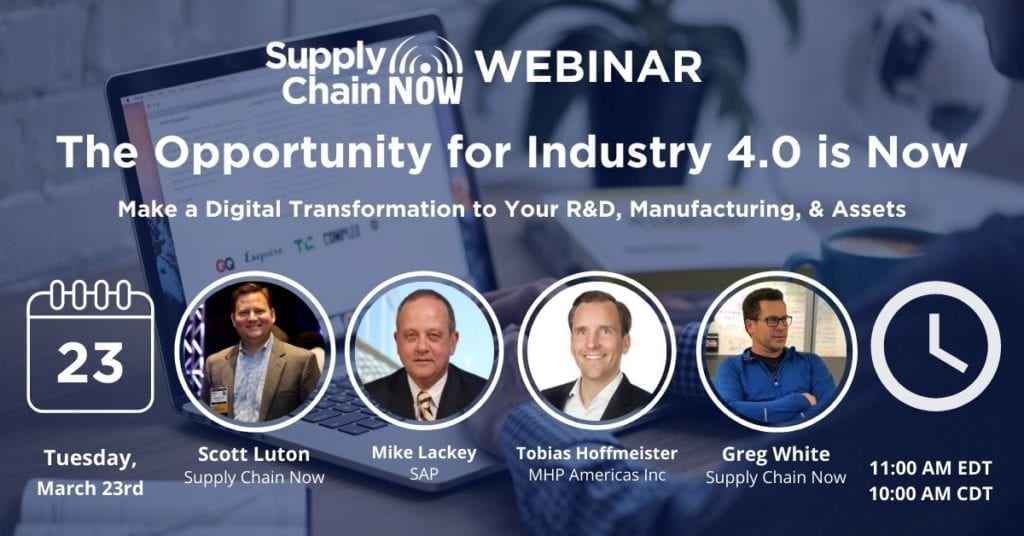
Catch the Replay of Our Industry 4.0 Webinar with SAP
Did you miss our recent Industry 4.0 webinar with SAP? On March 23rd, Mike Lackey with SAP and Tobias Hoffmeister with MHP Americas Inc joined Scott and Greg to discuss Industry 4.0, how the opportunity to get started is NOW, and how to make that digital transformation to your R&D, manufacturing, and assets. If you missed the live session, no worries! Click here and access it right on the Supply Chain Now website.