

More
November 19, 2021
This Week In Supply Chain Now: November 15th – November 19th
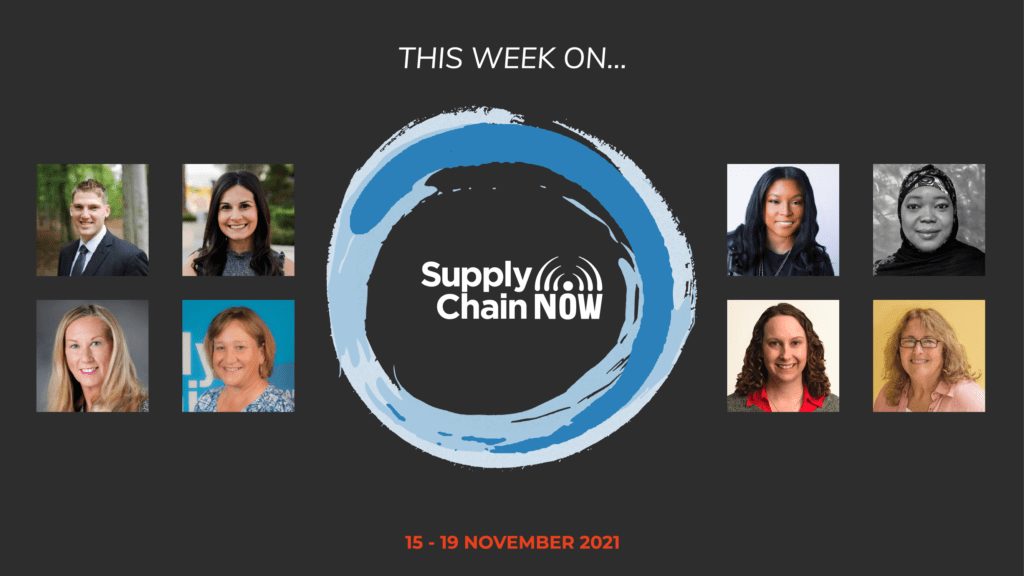
Stay up to date on all the latest conversations, interviews, and episodes we released this week here at Supply Chain Now! We started this week off with a very special episode of Supply Chain Now. Host Scott Luton and co-host Jenny Froome interview Ramatu Abdulkadir the Head of Pharmacy Department for the National Ear Care Centre at Kaduna. One of the main topics of discussion are the huge supply chain challenges that Africa is facing right now. For Monday’s This Week In Business History episode, Scott Luton gives insight on 3 different figures and how their contributions were critical and aligned with humanity & our march forward. On Tuesday, we released a TEK TOK classic episode with host Karin Bursa and guest host from Supply Chain Now Scott Luton. For this episode, they get to chat with one of the top 50 retail technology influencers, Paula Rosenblum. Paula is also the Founder and Managing Partner for RSR Research. On Wednesday we released an episode of Supply Chain Now with Scott Luton. He had a great conversation with author and the founder of The Memo, LLC, Minda Harts. These two talk about the importance of asking for what you need and…

Supply Chain Influencers
October 16, 2024
The New Guard: Three Supply Chain Influencers to Watch
“The term ‘influencer’ has become quite ubiquitous in the online space, especially in social media marketing. What was previously being done by celebrities is now taken over by regular people with large followings on social media platforms,” said Influencer Marketing Hub. The Denmark-based company says it “specializes in producing how-to guides, courses, and research reports in the social media and influencer marketing industry.” How far we’ve come – to the point where there’s an actual influencer marketing industry. Influencer Marketing Hub did say that industry experts and thought leaders “can also be considered influencers in their respective industries. These key opinion leaders have gained respect because of their qualifications, position, or experience in their topic of expertise.” It added that “the opinions of these influencers hold significant weight regardless of their social media follower count.” Supply Chain Media is Transforming to Fit the Needs of a Changing Industry Thankfully, it is the industry experts and thought leaders who are influencing supply chain media rather than TikTok “stars” and the Kardashians. There is now a wealth of supply chain-focused programming keeping industry professionals abreast of the latest trends and innovations. Three Supply Chain Influencers to Watch Vin Vashista, Sofia Rivas, and…