

More
workforce
December 11, 2025
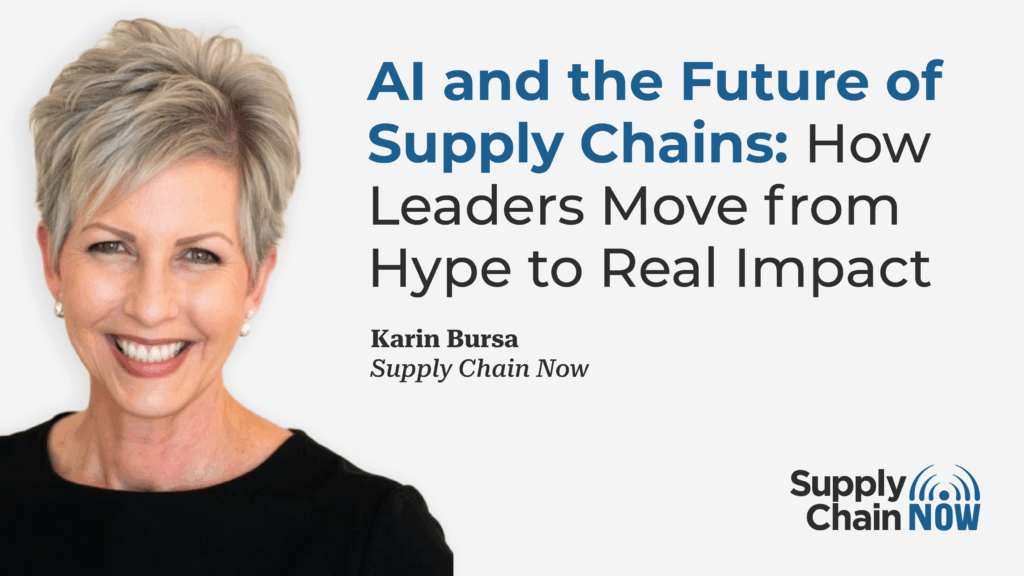
AI and the Future of Supply Chains: How Leaders Move from Hype to Real Impact
Special Guest Blog Post written by Karin Bursa, Founder and CEO of NIRAKIO and Supply Chain Now Host Artificial intelligence is no longer a “what if” in supply chain — it is here. In fact, Gartner predicts that 50% of cross-functional supply chain management solutions will use intelligent agents to autonomously execute decisions in the ecosystem by 2030. But how do leaders move from hype to real impact? During our recent Supply Chain Now Power Panel, I asked five senior executives to share where they see AI making the biggest impact. Their answers revealed not just excitement, but a roadmap for how supply chains can evolve. Here is how they responded, in their own words. Q: Where do you see AI making the greatest impact in your supply chain? Eliza Simeonova – VP Global Supply, Mars Pet Nutrition “AI forces operational discipline. Clean data is no longer optional. The system itself demands it. I also see AI shaping supply chain synchronization — aligning suppliers, factories, warehouses, and customers in new ways.” Whitney Shlesinger – VP Global Planning & Logistics, McCormick “For me, it’s about people. Employees want to move beyond non-value-added work. AI allows us to free them up…
November 20, 2020
This Week on Supply Chain Now: November 16th – November 20th
Supply Chain Now has been full of great conversations, key takeaways, and inspiring stories from some amazing business leaders this week. Make sure you catch all the latest episodes, interviews, conversations, and livestreams right here for all the hottest supply chain news! On Saturday, Steve Britt, senior manager for customs at Fiat Chrysler Automobiles, joins us in partnership with AIAG – Automotive Industry Action Group’s 2020 Supply Chain Summit to talk about his role and thepartnership between industry and US Customs and Border Protection. On Monday, Scott and the Vector Global Logistics team sat down with Steven Stirling from MAP International for an episode of our Logistics with Purpose series to hear Steven’s inspiring story that made him dedicate his life to bringing critical medicines and health supplies to some of the world’s poorest people. On Tuesday, TEK TOK Digital Supply Chain Podcast with host Karin Bursa welcomed industry trailblazer Lora Cecere, CEO of Supply Chain Insights, to hear about Lora’s career path On Wednesday, Scott and Greg sit down with Bob Bova from AccuSpeechMobile to the Supply Chain Buzz to talk about how voice automation in the warehouse is increasing producitivity and announcing na…