

More
February 25, 2021
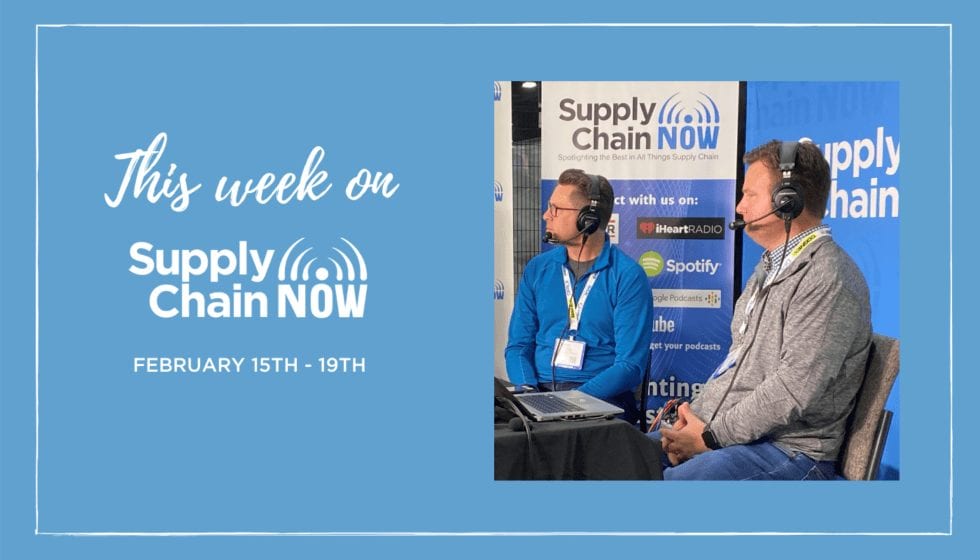
This Week on Supply Chain Now: February 15th – 19th
It’s time for Supply Chain Now! Make sure you’re up to date on all the latest episodes, interviews, conversations, and livestreams right here! On Monday, Tracie Ohonme & Angela Carlson with Samaritan’s Feet International joined us to talk about how their outreach has shifted due to COVID-19, leading with a servant-leader mentality, & more! On Tuesday, Scott and Greg welcomed, VP of Client Solutions with Alloy, Logan Ensign, a business leader from an industry dynamo that is empowering companies to successfully bridge the gap between plans and reality. On Wednesday, Mike Griswold, VP Analyst at Gartner, joined us to discuss the latest in retail supply chains from an analyst’s perspective. On Thursday, Scott and Greg welcomed Jon Gold with NRF to share the key NRF takeaways and trade issues to keep an eye on. On Friday, we replayed a recent livestream that kicked off our new partnership with The Assoication for Manufacturing Excellence (AME). Scott & Greg heard from Lee Alves with Simpler Consulting (an IBM Company), Jan Freyburgher with OpusWorks, Tony Spielberg with Cambridge Air Solutions, and Errette Dunn with Rever about the prevailing trends may drive manufacturing in 2021. Which was…
supply chain decision making
February 16, 2026
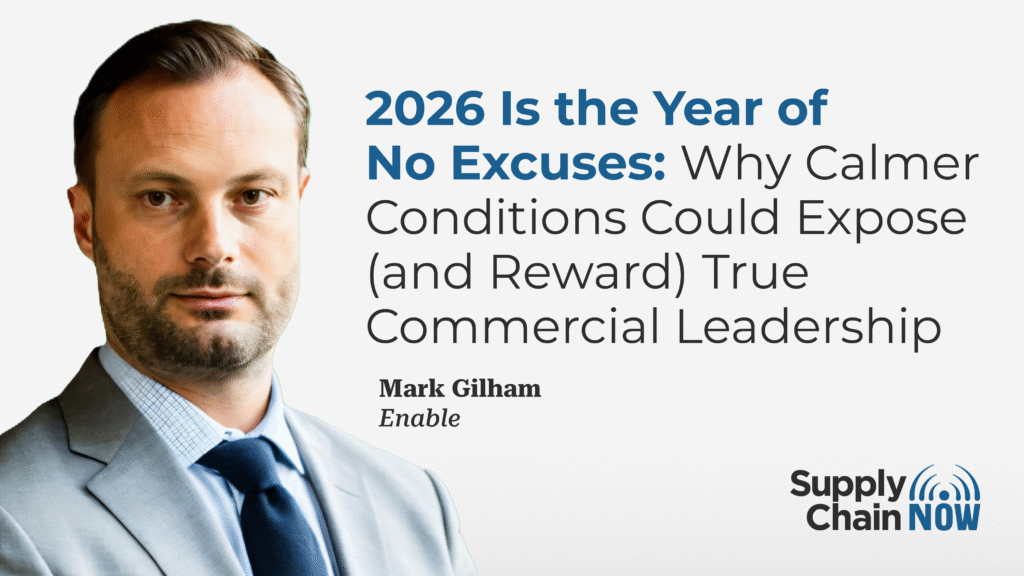
2026 Is the Year of No Excuses: Why Calmer Conditions Could Expose (and Reward) True Commercial Leadership
A Shift in the Narrative for 2026 In a recent conversation, Scott Luton spoke with Mark Gilham, Vice President & Head of Global Advisory at Enable, about what supply chain and commercial leaders should expect from the year ahead. While many annual outlooks attempt to forecast the next major disruption, Gilham offered a different lens: 2026 may become the “year of no excuses.” After years defined by a global pandemic, inflationary shocks, geopolitical instability, supply shortages, and the rapid rise of AI, organizations have already endured extraordinary volatility. Businesses not only survived, but in many cases adapted and grew. According to Gilham, that reality weakens the argument that disruption alone explains underperformance. Disruption is not disappearing, he cautioned, but leaders can only lean on it for so long. Why a Calmer Year Raises the Bar Gilham argued that if external conditions stabilize even slightly, the pressure on leadership actually increases. A less chaotic environment removes convenient explanations and shines a brighter light on internal shortcomings. Process gaps, misaligned incentives, and execution failures become harder to ignore when the world is not on fire. Rather than waiting for certainty, Gilham believes leaders should act decisively. This does not mean radical…