

More
October 15, 2021
This Week In Supply Chain Now: October 11th – 15th
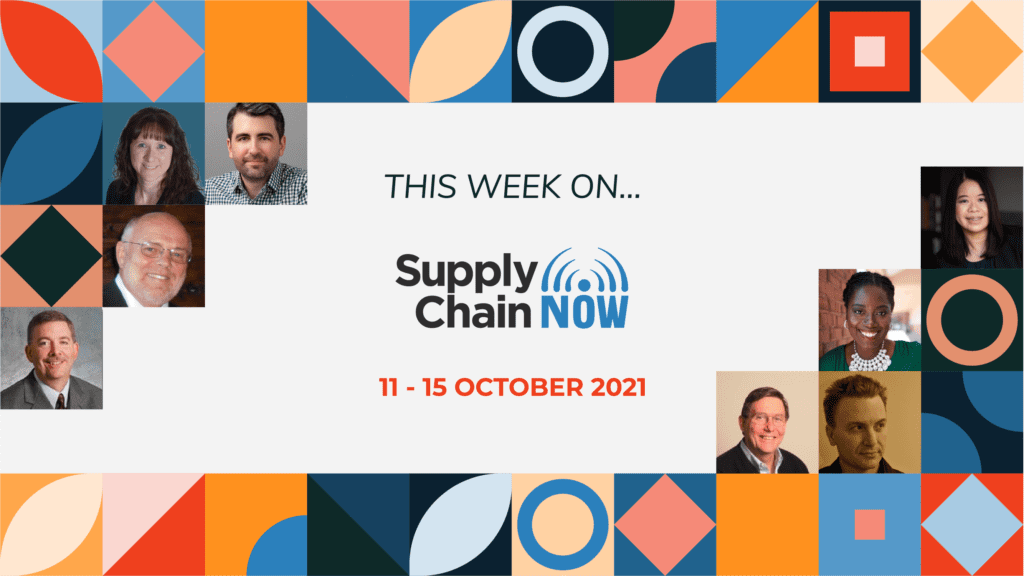
Stay up to date on all the latest conversations, interviews, and episodes we released this week here at Supply Chain Now! We kicked this week off with a special episode of Supply Chain Now featuring Mike Griswold. Scott, Kelly, and Mike discuss the key takeaways from the Gartner Supply Chain Symposium/Xpo 2021. For Monday’s This Week In Business History, Kelly gives insight on two notable figures who have made some amazing strides in theoretical economic science research. On Tuesday, we released an episode of Supply Chain Now with host Scott Luton. Scott had the opportunity to chat with Theodora Lau the Founder of Unconventional Ventures and Bradley Leimer the Co-Founder of Unconventional Ventures. They discuss some of the amazing points in their book titled “Beyond Good: How Technology Is Leading a Purpose-Driven Business Revolution.” We also released an episode of Logistics With Purpose this week. Host Enrique and Monica talk with Dave Schweidenback the Founder and CEO of Pedals for Progress. Dave shares the story behind the logistics of shipping 4,800 bikes across 45 different countries. For Thursday’s Supply Chain Now episode Scott interviews communications expert Monique Russell from Clear Communications, LLC. This conversation is all about effective communication and…
September 4, 2020
This Week on Supply Chain Now: August 31st – September 4th
Another busy week full of new episodes and livestreams at Supply Chain Now! If you missed an episode, get a quick summary and listen here. On Monday, our very own Clay “The Dawg” Phillips gives some insight on his job at Supply Chain Now. Supply Chain Now · “Recent Key Takeaways with Clay “The Dawg” Phillips” On Tuesday, Scott & Greg welcomed Shannon Vaillancourt with RateLinx and Tim Judge with Agillitics to the show to share about optimizing supply chain decision making. Supply Chain Now · “Optimizing Decision-Making in Supply Chain in 2020 & Beyond” On Wednesday, we published this week’s Supply Chain Buzz, complete with the Retail Rundown and with special guest Chris Lingamfelter with 6 River Systems. Supply Chain Now · “The Supply Chain Buzz for August 31st: The Retail Rundown & Chris Lingamfelter” On Thursday, Scott and Greg welcomed co-host Paul Noble with Verusen to the show and featured Scott Armstrong with CONA Services LLC as their special guest. Supply Chain Now · ” A View from the CFO’s Office: Scott Armstrong with CONA Services LLC” And we wrapped up the week with Greg’s TECHquila Sunrise as he gives some…