
More
US Bank
November 2, 2021
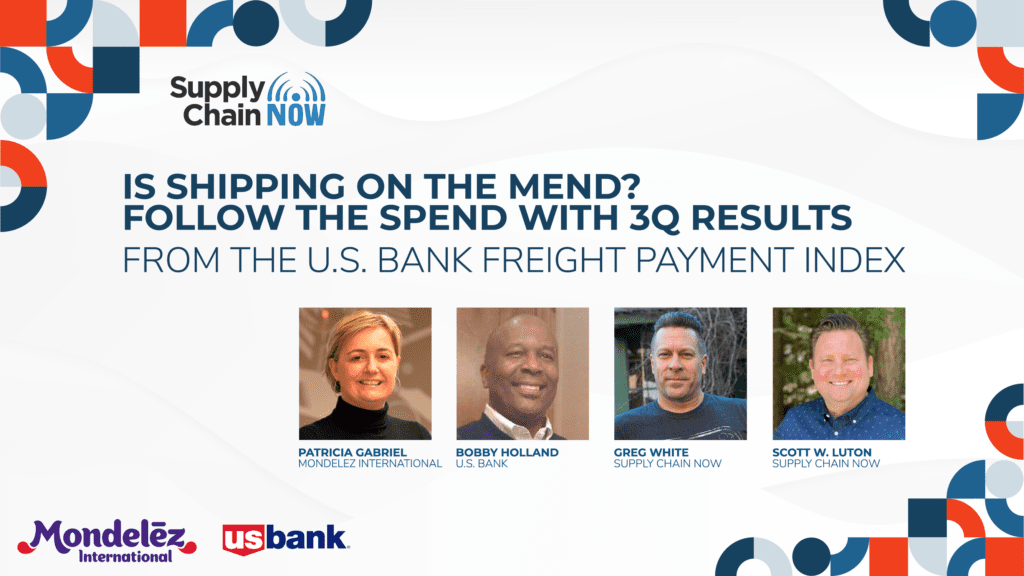
Is Shipping on the Mend? Follow the Spend with 3Q Results from the U.S. Bank Freight Payment Index
The U.S. Bank Freight Payment Index for 3Q 2021 has been released, and one thing remains clear: spend is up. More specifically, year over year, quarterly freight spend showed the second largest increase ever – rising 32.6% from 3Q 2020. What’s driving the dollars, and what can this increase tell us about the state of the supply chain across the country? Supply Chain Now co-hosts Scott Luton and Greg White recently sat down with Bobby Holland, Director, Freight Data Solutions at U.S. Bank, and Patricia Gabriel, Vice President US Customer Service & Logistics, at Mondelez International, to find out. Let’s review highlights from their discussion of the report – and take a look at what you need to consider moving forward. But first, what is the U.S. Bank Freight Payment Index? The U.S. Bank Freight Payment Index is a free report you can download each quarter to keep your finger on the pulse of freight shipping volumes and spend from both a national and regional perspective. The report uses actual transaction payment data, de-seasonalized and calendar adjusted for maximum comparability. How do I use it? When you’re asking the question, “What happened last quarter?” the U.S. Bank Freight Payment Index…
supply chain thought leadership
February 19, 2026
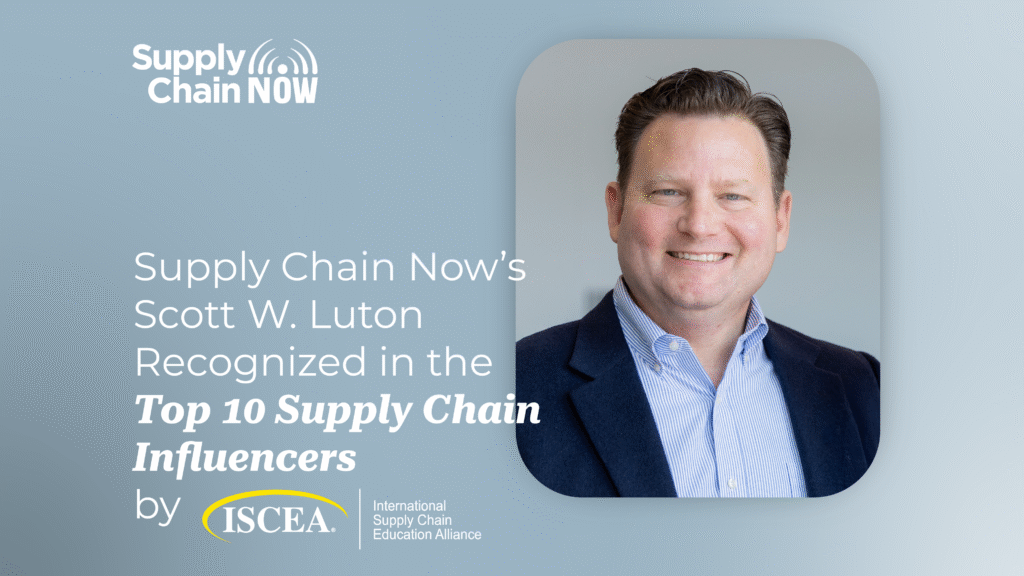
Supply Chain Now’s Scott Luton Recognized in the Top 10 Supply Chain Influencers by ISCEA
We’re proud to celebrate another industry recognition for Supply Chain Now Founder, CEO, and Host Scott Luton – he has been named one of the ISCEA Top 10 Supply Chain Influencers of 2026. The International Supply Chain Education Alliance (ISCEA) highlights leaders who actively shape the profession by sharing research, perspectives, and practical insights that help advance the global supply chain conversation. (ISCEA) Scott’s inclusion reflects the spirit of the Supply Chain Now community: real conversations, practical takeaways, and a commitment to connecting practitioners across industries and roles. Through interviews, events, and ongoing dialogue with leaders around the world, his goal has always been to amplify voices and help move the industry forward together. We’re grateful to our listeners, partners, and guests; this recognition belongs to the entire community that shows up and shares knowledge every day. Check out the entire list and learn more about ISCEA here.