

More
September 3, 2021
This Week In Supply Chain Now: August 30th – September 3rd
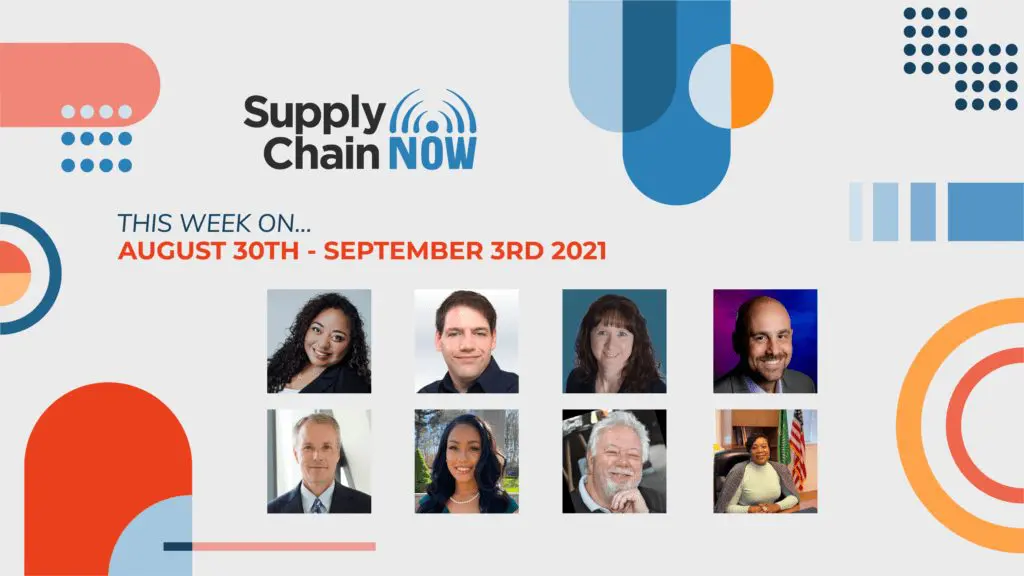
Stay up to date on all the latest conversations, interviews, and episodes we released this week here at Supply Chain Now. We started our week off with a Dial P for Procurement episode hosted by Kelly and Scott. They welcomed Member Services Manager at Una, Crystal Villareal and Philip Ideson, Founder and Managing Director, Art of Procurement. During the show, they discussed how to convert your vision for customer experiences into a set of tasks and priorities that guide your daily work and more. On This Week in Business History, Kelly has a very exciting lineup of stories! The topics in this episode ranged from the founder of the first African-American magazine to the introduction of the ATM. On Tuesday, Scott had the great opportunity of interviewing Dan Gingiss, Chief Experience Officer at The Experience Maker, LLC. In this episode, Scott talks with Dan about the secrets behind crafting remarkable customer interactions. On Wednesday, we published another episode of Logistics With Purpose with hosts Enrique Alverez, Matilda Ahrin, and Books for Africa’s Pat Plonski. The special guest for this episode was Madame Ambassador Hilda Suka Mafudze with the African Union. As you listen to this episode, look forward to learning…
operations
July 31, 2025
5 questions I frequently get asked about automating operations with AI
Special Guest Blog Post written by Parabola Founder & CEO, Alex Yaseen Operators are under pressure. They’re expected to move faster, do more with less, and somehow keep everything running smoothly while their systems, tools, and data are a mess. Now, AI is adding a whole new layer. On one hand, it’s exciting. The potential is real. On the other, a lot of teams feel stuck. They know they should be using AI, but they’re not sure where it fits into their day-to-day work. These are the five questions I get asked most often—whether someone’s trying to get started with automation, or trying to figure out how AI actually helps. 1. Can we automate this, or is it too messy? This question usually comes from someone deep in a spreadsheet that was never meant to scale. The short answer is: yes, you can probably automate it. But the longer answer is that you’ll need to rethink the process first. AI can help summarize, transform, and clean data—but it won’t fix a broken workflow. That’s on you. The best teams pair structured automation with lightweight AI to get leverage. Think: using rules and logic to standardize a workflow, and AI…