

More
AI
January 9, 2026
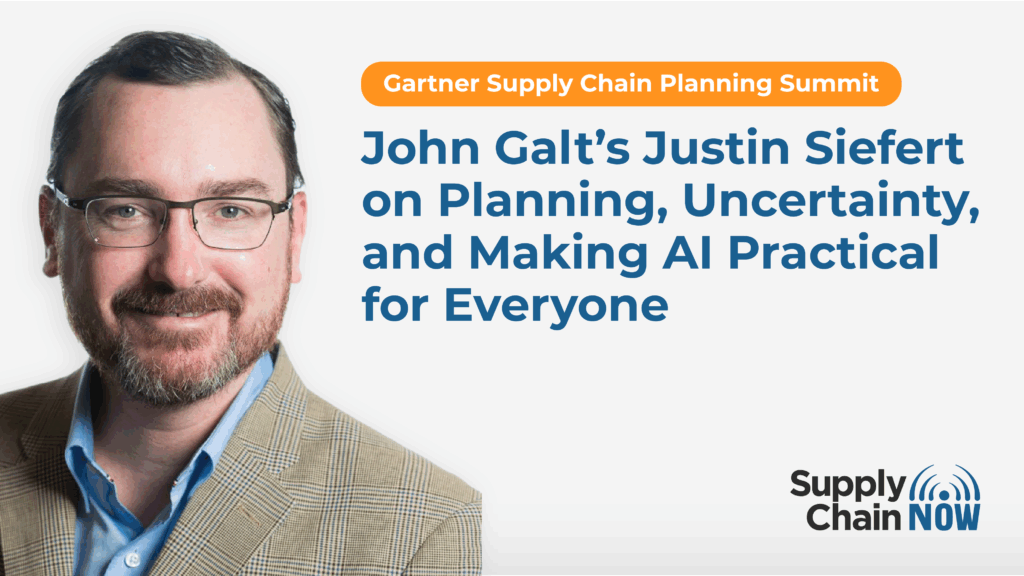
John Galt’s Justin Siefert on Planning, Uncertainty, and Making AI Practical for Everyone
At the 2025 Gartner Supply Chain Planning Summit in Denver, Scott Luton caught up with Justin Siefert, a familiar face in the supply chain community and a leader at John Galt Solutions, a global provider of end-to-end supply chain planning software. From demand and supply planning to inventory and S&OP, John Galt supports organizations across industries with the holistic capabilities needed to thrive in an increasingly unpredictable landscape. A Company Investing in the Next Generation Before diving into industry trends, Siefert shared an update on one of the programs that sets John Galt apart: its supply chain scholarship program, which awards $10,000 to students pursuing supply chain degrees. This year’s cycle brought in a record number of nominations, with new winners set to be announced in January. It’s an initiative Siefert is proud of—and one that reflects John Galt’s belief in cultivating tomorrow’s leaders. Old Problems, New Pressures: Planning in a World of Uncertainty When asked about the biggest challenges facing planners today, Siefert didn’t hesitate: uncertainty. While the forms of disruption change—pandemics, geopolitical shifts, demand shocks, evolving portfolios—the underlying challenge remains the same. Planners must anticipate what’s next and respond quickly, often in real time. “No day…
AI
July 31, 2025
5 questions I frequently get asked about automating operations with AI
Special Guest Blog Post written by Parabola Founder & CEO, Alex Yaseen Operators are under pressure. They’re expected to move faster, do more with less, and somehow keep everything running smoothly while their systems, tools, and data are a mess. Now, AI is adding a whole new layer. On one hand, it’s exciting. The potential is real. On the other, a lot of teams feel stuck. They know they should be using AI, but they’re not sure where it fits into their day-to-day work. These are the five questions I get asked most often—whether someone’s trying to get started with automation, or trying to figure out how AI actually helps. 1. Can we automate this, or is it too messy? This question usually comes from someone deep in a spreadsheet that was never meant to scale. The short answer is: yes, you can probably automate it. But the longer answer is that you’ll need to rethink the process first. AI can help summarize, transform, and clean data—but it won’t fix a broken workflow. That’s on you. The best teams pair structured automation with lightweight AI to get leverage. Think: using rules and logic to standardize a workflow, and AI…