

More
September 25, 2020
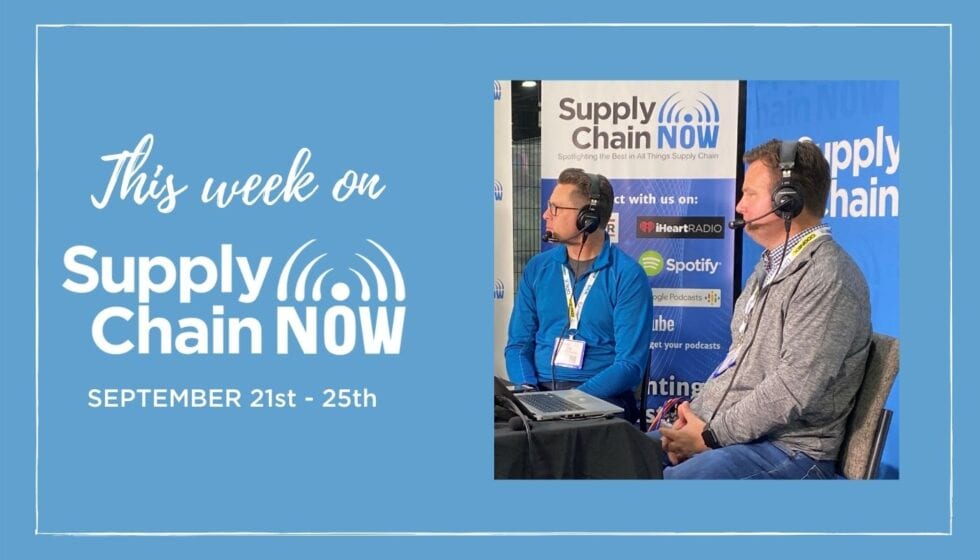
This Week on Supply Chain Now: September 21st – 25th
Heading right into October (can you believe it’s next week??) with more great interviews, conversations, livestreams, and episodes! We started the week with a new episode in our Logistics with Purpose series. Pat Plonski joined Scott, Greg, and Enrique to celebrate 50 million books for Africa! On Tuesday, Scott and Greg welcomed Mike Griswold with Gartner back to the podcast as they discussed the top three things to know in supply chain today and tomorrow. We published our Supply Chain Buzz on Wednesday, and Scott and Jamin were happy to welcome Sarah Barnes-Humphrey with Let’s Talk Supply Chain to the show! On Thursday, Greg continued his conversation with Ben Gordon of Cambridge Capital for part two of the interview for TECHquila Sunrise. And Friday, Scott and Greg were excited to welcome one of their favorite Supply Chain News writers, Emma Cosgrove with Supply Chain Dive, to the podcast! Which was your favorite episode? Never miss an episode by subscribing to Supply Chain Now! Make sure you tune in next week for more great conversation, timely topics, and exceptional guests.
January 22, 2020
Key Parntership between Supply Chain Now and U.S. Bank
Supply Chain Now announced today that they will serve as the live streaming media partner for U.S. Bank, increasing exposure and engagement with the bank’s Freight Payment Index’s quarterly releases in 2020, starting with the release of the Q4 2019 report on January 22nd at 12 noon ET. VIEW FULL PRESS RELEASE HERE.