
More
July 1, 2021
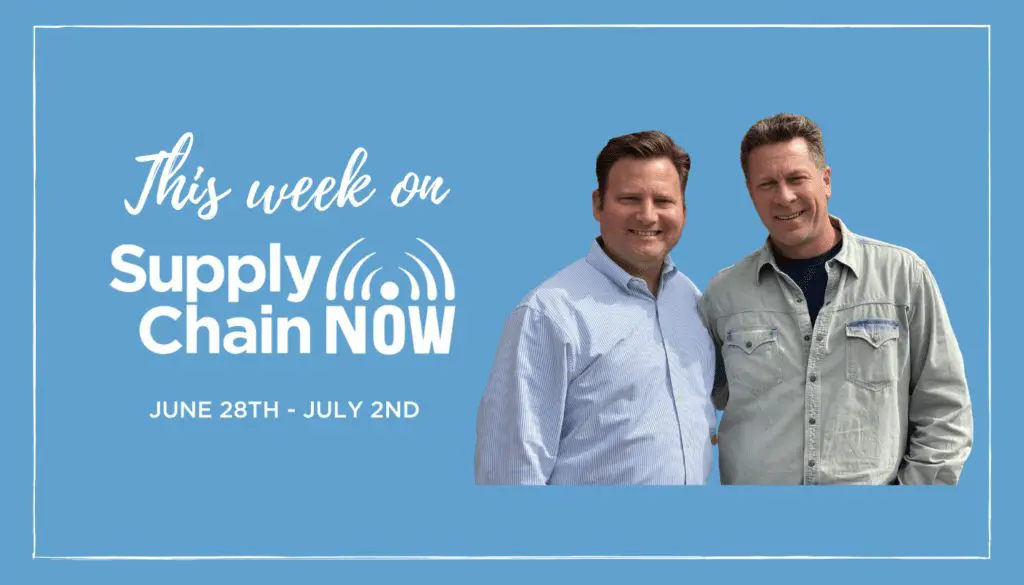
This Week In Supply Chain Now: June 28th – July 2nd
Stay up to date on all the latest conversations, interviews, and episodes we released this week here at Supply Chain Now. On Monday, we released 2 new episodes! On this episode of Digital Transformers, produced in partnership with TNS, host Kevin L. Jackson welcomes Praveen Rao, Managing Director with IBM, to the podcast. On This Week in Business History, host Scott W. Luton relates true stories marking notable anniversary dates this week, including the Federal Aid Highway Act of 1956, the first Chevy Corvette to be produced in 1953, & more! On Tuesday, we released an episode of TEK TOK! In this episode, host Karin Bursa dives into 6 strategies that supply chain innovators are doing now to become more resilient. On Wednesday’s episode of Supply Chain Now, Scott Luton and Kelly Barner, Host of Dial P for Procurement, dive into the friction between North Face and the oil and gas industry – an industry that supplies the substance and materials North Face needs to make its products. Despite this, North Face is concerned with protecting their brand from the potential damage of publicly associating with oil and gas, leaving them in a tough spot with regard to their supply…
transportation
November 2, 2021
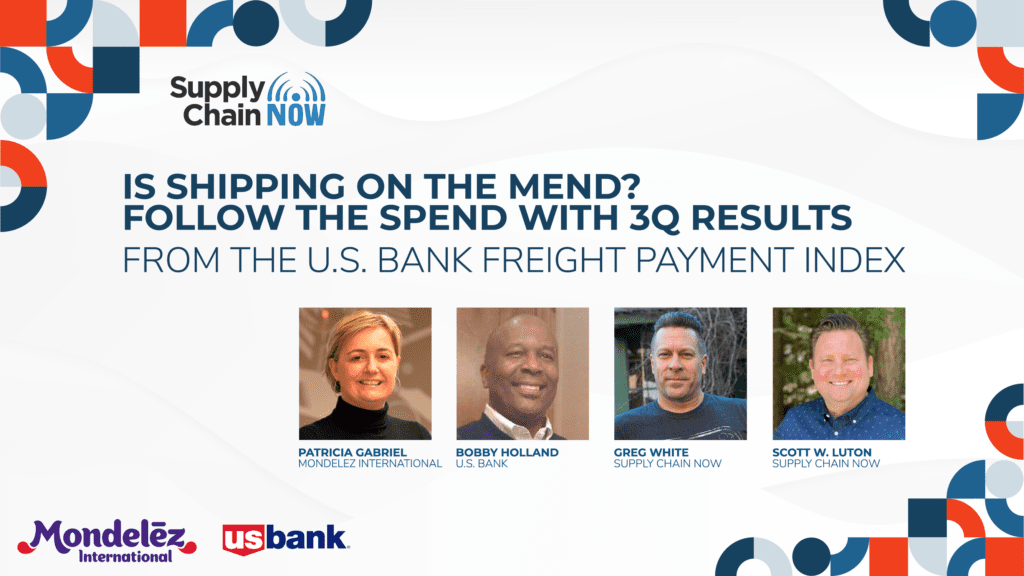
Is Shipping on the Mend? Follow the Spend with 3Q Results from the U.S. Bank Freight Payment Index
The U.S. Bank Freight Payment Index for 3Q 2021 has been released, and one thing remains clear: spend is up. More specifically, year over year, quarterly freight spend showed the second largest increase ever – rising 32.6% from 3Q 2020. What’s driving the dollars, and what can this increase tell us about the state of the supply chain across the country? Supply Chain Now co-hosts Scott Luton and Greg White recently sat down with Bobby Holland, Director, Freight Data Solutions at U.S. Bank, and Patricia Gabriel, Vice President US Customer Service & Logistics, at Mondelez International, to find out. Let’s review highlights from their discussion of the report – and take a look at what you need to consider moving forward. But first, what is the U.S. Bank Freight Payment Index? The U.S. Bank Freight Payment Index is a free report you can download each quarter to keep your finger on the pulse of freight shipping volumes and spend from both a national and regional perspective. The report uses actual transaction payment data, de-seasonalized and calendar adjusted for maximum comparability. How do I use it? When you’re asking the question, “What happened last quarter?” the U.S. Bank Freight Payment Index…