

More
August 14, 2021
This Week In Supply Chain Now: August 9th – 13th
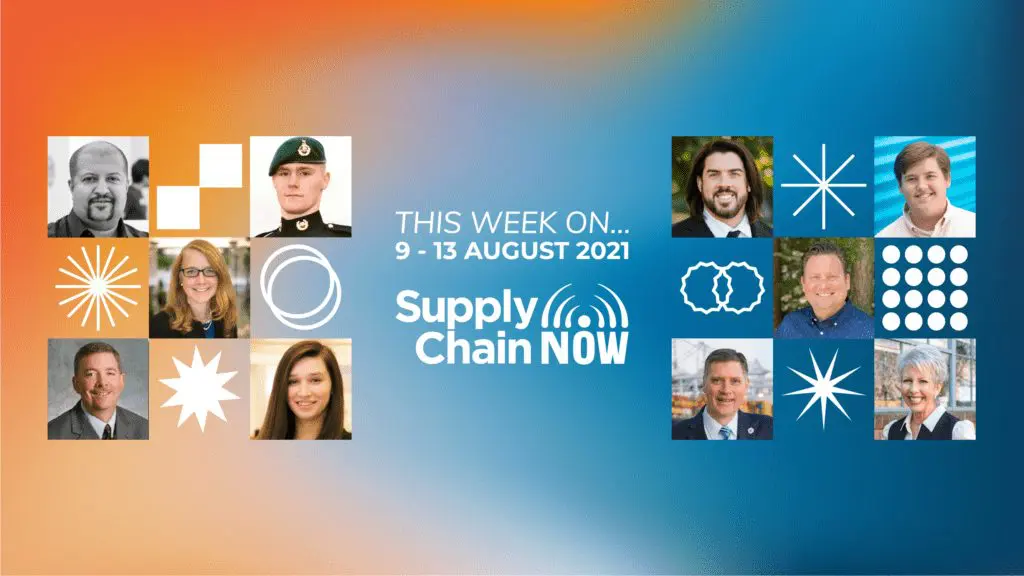
Stay up to date on all the latest conversations, interviews, and episodes we released this week here at Supply Chain Now. On Monday’s episode of Supply Chain Now, Scott Luton leads the conversation on reverse logistics and welcomes Tony Sciarrotta with RLA and Rich Bulger with Cisco to the show. On This Week in Business History, Scott tells the rags to riches story of Airbnb and more. On Tuesday we released a classic episode of TEKTOK in which Karin Bursa shares the 3 Things C-Level Execs Need to Know About Sales & Operations Planning and Inventory Optimization. On Tuesday we also released a new episode of TECHquila Sunrise. Greg White welcomed Kubera Venture Capital’s Balaji Gopinath and special guest Robin Gregg, CEO of RoadSync. On Wednesday, Scott had the opportunity to talk with some of the University of Georgia’s up-and-coming Supply Chain Rising stars, Jessie Bailey and Elena Griggs. We also released another episode of the Supply Chain Buzz featuring Mike Griswold, and presented by OMNIA Partners. Scott, Greg, and Mike discussed everything from rising COVID-19 infections impact of the supply chain to the United Nations response to climate change. On Friday, host Page Siplon sat down with Griff Lynch…
retail
March 6, 2026
The Retail TCO Playbook: Strategies for Supply Chain Savings
Retail margins rarely disappear all at once, they leak out quietly across transportation, inventory, and returns. As ecommerce grows and return rates rise, retailers are facing higher logistics costs, volatile freight spend, and inventory positioned in the wrong places at the wrong time. Many organizations still operate without true end-to-end visibility, making it difficult to control cost or respond proactively to disruption. This playbook shows how leading retailers are addressing total cost of ownership (TCO) as a strategic priority, not just an operational metric. Instead of massive transformation programs, it outlines practical actions that can uncover measurable savings in as little as 90 days through better purchase order control, improved visibility, and smarter network design. Why download this white paper: Identify where margin is leaking across transportation, inventory, and returns Understand the three most effective levers for reducing supply chain cost Learn how to reduce premium freight, improve utilization, and avoid markdowns See how real-time visibility improves planning and service levels Get a step-by-step 90-day pilot roadmap to validate savings Build a finance-ready business case for scalable TCO improvement By the end, you’ll have a clear framework to evaluate your current operations, prioritize improvements, and turn hidden supply chain inefficiencies…