

More

freight
September 18, 2025
Freight Audit & Payment: The Anchor for Supply Chains in Turbulent Times
Special Guest Blog Post written by Bart A. De Muynck The past few years have exposed just how fragile our supply chains can be. From tariff shocks to pandemic disruptions, from inflationary pressures to mounting parcel surcharges, the landscape has shifted beneath our feet. Companies that once managed logistics as a back-office function are now grappling with its role as a front-line business risk. What’s often missed in this conversation is the role of freight audit and payment (FAP). Long considered a tactical necessity, FAP has quietly become a strategic imperative. And as I explored in the Better Supply Chains Market Radar: Freight Audit & Payment, the companies that treat it that way are the ones best equipped to weather today’s volatility. Why FAP Has Become Mission-Critical When tariffs can add 15–20% to input costs almost overnight, or when the elimination of the U.S. de minimis exemption threatens to reshape cross-border e-commerce, companies need more than visibility. They need real-time intelligence and agility. Traditional FAP approaches—manual audits, siloed spreadsheets, reactive error correction—are no longer sufficient. Modern FAP platforms, powered by AI and advanced analytics, enable shippers to: Audit with precision at scale, uncovering hidden…
global supply chain
January 29, 2026
Constant Supply Chain Disruption Promises to Keep Logistics Entertaining, Exciting, & Challenging
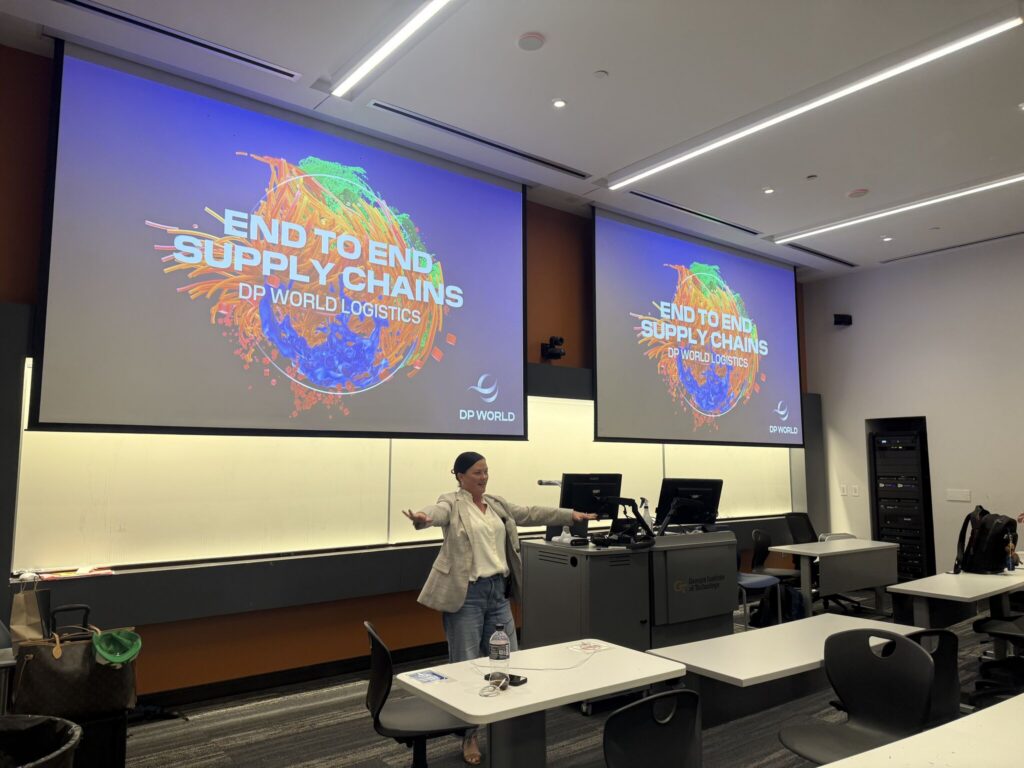
Special Guest Blog Post written by Brittany Caskey, Chief Commercial Officer – Logistics with DP World Americas I was recently invited to speak with students in the Supply Chain and Logistics Organization at Georgia Tech, and it reminded me why I still find this industry so energizing. I walked them through my own path — starting in logistics right out of college, building my foundation at UPS in sales and sales management, and eventually stepping into my role today as Chief Operating Officer at DP World in the Americas. What I shared with them is something I still believe deeply: logistics keeps life interesting, because no two days are ever the same. Customer expectations change. Geopolitical realities shift. Trade lanes evolve. Weather, labor, technology — everything is in constant motion. That constant change is what keeps logistics professionals sharp and solutions focused. It’s also why customer experience has become the true differentiator in today’s supply chains. Because while disruption is unavoidable, how you manage it is a choice. Customers Don’t Care Why — They Care That It Works One message I emphasized with the students is the same one I reinforce with customers and teams every day: customers…