

More
July 31, 2020
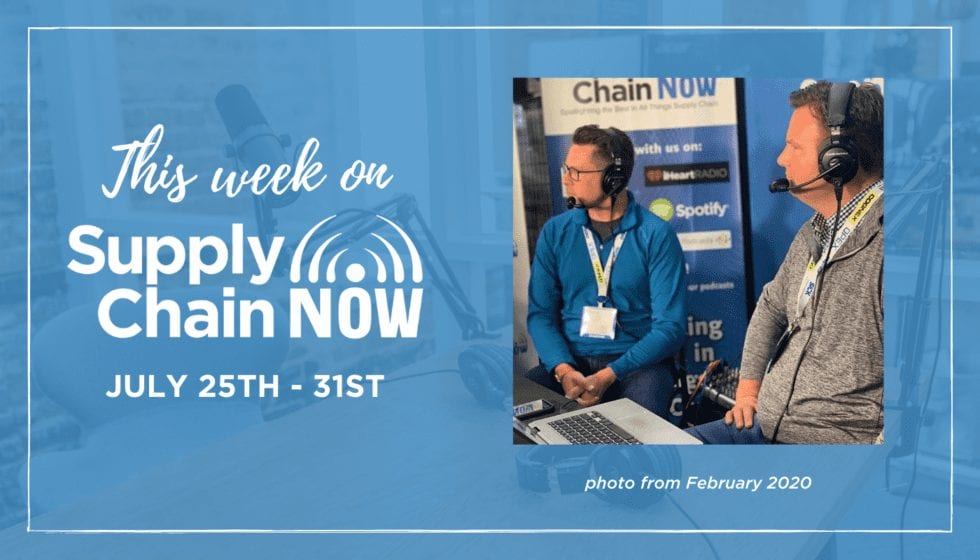
This Week on Supply Chain Now- July 25th – 31st
Did you catch all the episodes from Supply Chain Now this week? If not, get a quick summary and listen here! We added TWO additional episodes this week starting on Saturday, July 25th. We continued our Logistics with Purpose series, sponsored by Vector Global Logistics, and welcomed Kevin Carvajal with Salesian Missions. Supply Chain Now · “Logistics with Purpose: Kevin Carvajal with Salesian Missions” On Sunday, we featured our recent webinar, “Stand Up & Sound Off: A Conversation About Race in Industry,” and welcomed panelists Dyci Sfregola and David Burton to Supply Chain Now. Supply Chain Now · “Stand Up & Sound Off: A Conversation About Race in Industry” We featured another great episode in This Week in Business History on Monday, where Scott looks back at some of the biggest historical events in business history for the week ahead. This week, he spoke about the past, present, and future of the cannabis industry. Supply Chain Now · “This Week in Business History for July 27th: The Past, Present, & Future of the Cannabis Industry” Then on Tuesday, we shared our live-stream with Jeff Cashman of GreyOrange with our podcast audience, as…

supply chain
August 23, 2024
New Kids on the Block: Three Voices Transforming the Supply Chain
Supply chain management is constantly evolving. Whether you see the glass as half full or half empty, this dynamic environment brings both challenges and opportunities to the fore. The good news is that, while challenges continue to emerge, experts and thought leaders who offer insights and strategies are changing the industry, too. This article highlights three such visionaries — Searoutes Co-Founder & CEO Pierre Garreau, Noodle.ai Chief Operating Officer Michael Ciatto, and Owlery Co-Founder Travis Downs — who not only offer fresh perspectives but are also driving change through their innovative approaches. Three Voices Transforming the Supply Chain These experts have emerged with pragmatic solutions to many of today’s logistical problems, ushering in the potential for a more effective supply chain operation. True, many might consider them “new kids on the block,” but their thought leadership already resonates well across the entire industry. Pierre Garreau, Searoutes “Today’s businesses are under pressure to improve visibility over carbon emissions, as regulators and consumers alike place greater emphasis on emissions reduction. However, businesses struggle to build accurate visibility over emissions, instead turning to greenwashing and estimation as a means of signaling decarbonization efforts. Searoutes uses the physical characteristics of vessels, planes, and trucks,…