
More
August 25, 2025
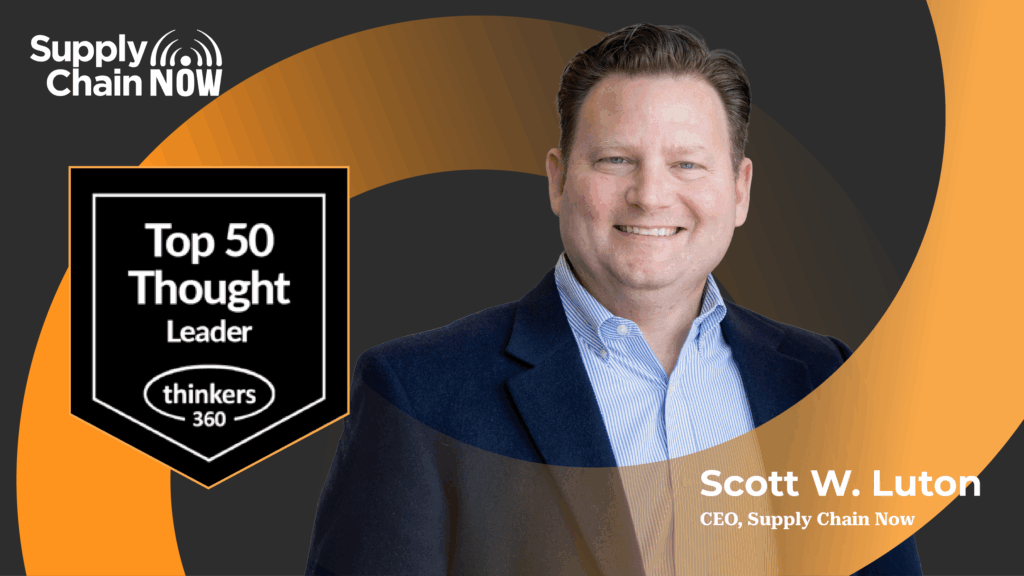
Scott Luton Named #1 Global Thought Leader & Influencer on Supply Chain 2025 by Thinkers360
We are proud to announce that Scott Luton, Founder and CEO of Supply Chain Now, has once again been recognized as the #1 Global Thought Leader and Influencer on Supply Chain for 2025 by Thinkers360—marking his second consecutive year at the very top of this prestigious list. This exceptional distinction reaffirms Scott’s ongoing leadership and influence in the global supply chain arena. Under his dynamic stewardship, Supply Chain Now has grown into an award-winning digital content platform—delivering podcasts, livestreams, webinars, and virtual events that resonate across more than 60 countries. Scott’s voice continues to shape and empower the industry, inspiring professionals worldwide with insights that drive innovation and progress. Learn more here.
fulfillment automation
February 20, 2026
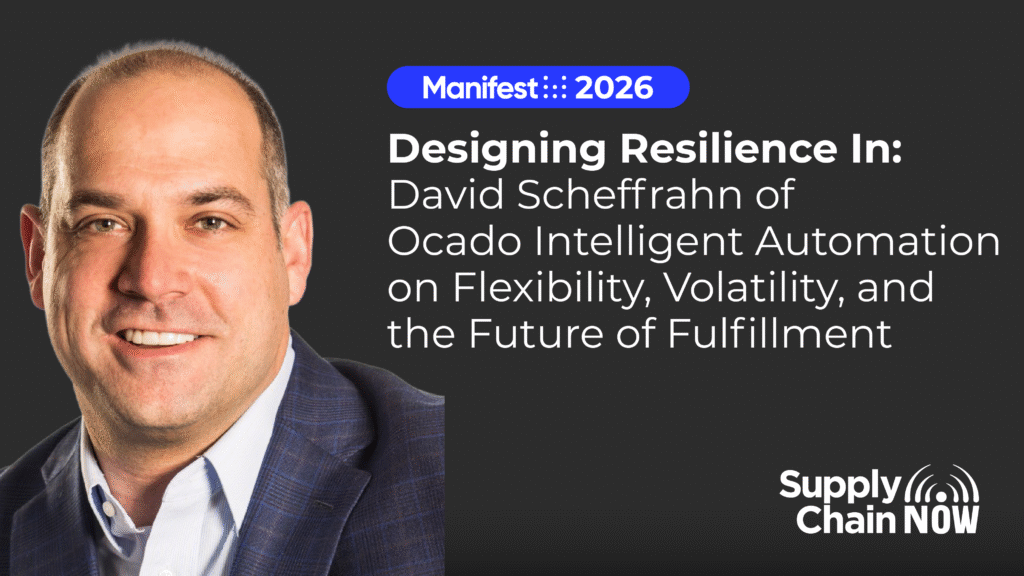
Designing Resilience In: David Scheffrahn of Ocado Intelligent Automation on Flexibility, Volatility, and the Future of Fulfillment
From Grocery Innovator to Global Tech Enabler At Manifest 2026, Scott Luton spent time with David Scheffrahn, Vice President of Sales with Ocado Intelligent Automation, to explore how fulfillment technology is evolving in an era defined by volatility. While Ocado is widely known in the UK and Europe for its e-commerce grocery leadership, Scheffrahn explained that the company’s North American focus is different. Over 25 years of building its own advanced grocery e-commerce and fulfillment operations, Ocado developed a powerful technology stack to drive efficiency. “What we’ve done in the last five years,” he shared, “has taken the tech stack that we built for our own use, and now we’re offering it to other companies to buy and use for their operations.” Today, Ocado supports 3PLs and global brands with end-to-end automation solutions that enable companies to maintain greater control over their omnichannel fulfillment, especially those looking for alternatives to marketplace giants. Volatility Hasn’t Gone Away When asked about dominant supply chain themes heading into 2026, Scheffrahn was direct: “Volatility has not gone away.” He described 2025 as “a massive shock in the system,” with tariffs and shifting trade policies forcing customers to pause projects and reassess strategy. “Almost…