

More

software
December 2, 2025
Top 10 Ways a Data Gateway Improves Time to Value Across End-to-End Supply Chains
Special Guest Blog Post written by Mark Holmes with InterSystems Top 10 Ways a Data Gateway Improves Time to Value Across End-to-End Supply Chains Supply chain practitioners seeking the best way to speed decision intelligence, unify supply chain data, increase operational efficiency, and improve supply chain resilience can benefit from a supply chain data gateway. A data gateway provides unified access to supply chain data from various sources, including enterprise systems, supply chain applications, data feeds, data warehouses, data lakes, data marts, and business entities. Here are the top 10 ways a supply chain data gateway can improve your supply chain performance. Enables You to Identify Inefficiencies and Make Better and Informed Decisions A unified view of your data accelerates informed decision making and provides you with a comprehensive understanding of your supply chain. For example, a supply planner gains accelerated access to customer orders, inventory levels, and transportation schedules, all in one place, to identify inefficiencies and make better informed decisions. Reduces Implementation Times Enterprises and supply chain software providers strive to reduce application implementation times. A data gateway can serve as a front-end for a range of supply chain software applications, speeding and simplifying data ingestion, integration,…
data
December 17, 2025
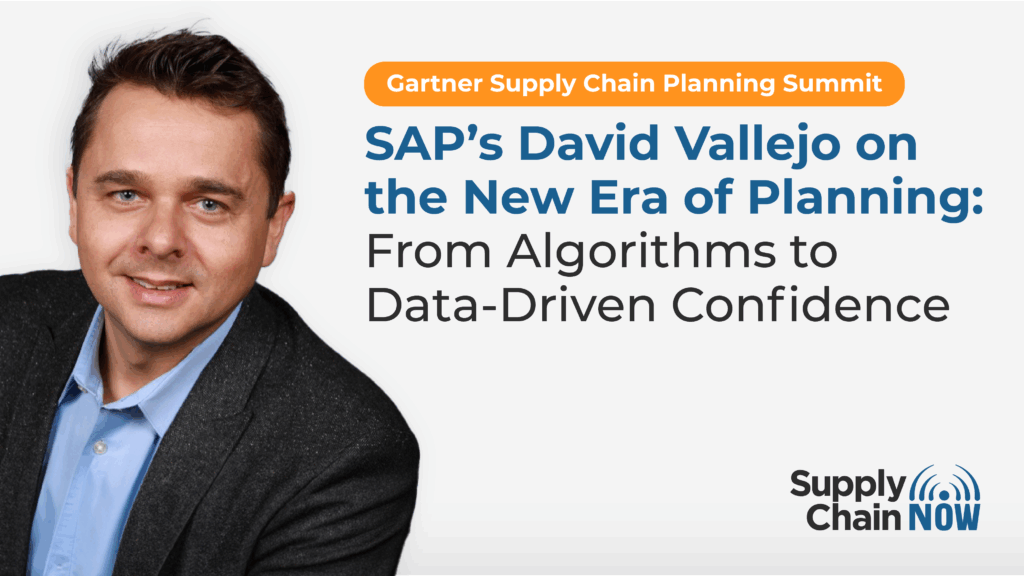
SAP’s David Vallejo on the New Era of Planning: From Algorithms to Data-Driven Confidence
In a rapidly evolving global supply chain landscape, SAP’s David Vallejo believes the most exciting innovations are happening in planning—and that the industry is entering a fundamentally new era. At the Gartner Supply Chain Planning Summit 2025 in Denver, Vallejo, who leads global product marketing for SAP’s supply chain portfolio, joined Scott Luton to discuss how planning is transforming, why data now sits at the center of competitiveness, and what SAP is doing to help organizations make faster, more confident decisions. A Shift From ERP-Centric to Data-Centric Vallejo described his team’s role as one that constantly scans the market—identifying trends, customer expectations, and the problems companies will need to solve next. Those insights help shape new innovations across the SAP ecosystem. He noted that SAP has moved decisively from an ERP-centric worldview to a data-centric one. This shift is essential, he argued, because the biggest advantage in modern planning lies in having the right data—clean, connected, contextualized, and ready to drive decisions. As Vallejo put it, “It’s all about the data that I need to make better planning decisions.” Planning Models Are No Longer Static Reflecting on how planning has evolved since he entered the field two decades…