

More
July 24, 2020
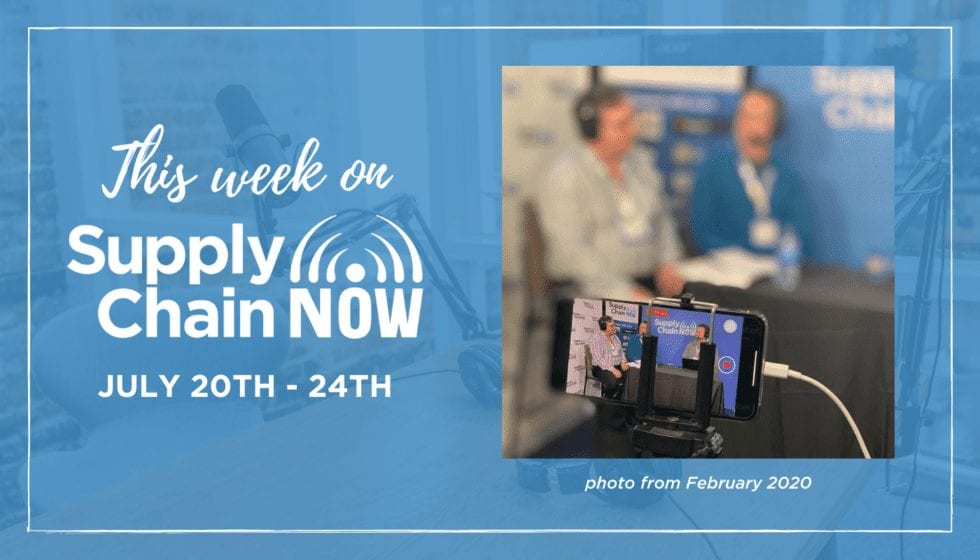
This Week on Supply Chain Now- July 20th-24th
What a week! Five episodes, four livestreams, and so much to listen to and watch! Did you catch all the episodes? If not, listen here! On Monday, we featured another great episode in This Week in Business History, where Scott looks back at some of the biggest historical events in business history for the week ahead. This week, he spoke about the business legacy of the Apollo missions. Supply Chain Now · “This Week in Business History for July 20th: The Legacy of the Apollo Program” Then on Tuesday, Chris Barnes proved that Supply Chain is in fact anything but boring with a cross-over episode of Supply Chain is Boring with Data & WMS Pioneer, special guest John Hill. Supply Chain Now · “Data Collection is Boring: Data and WMS Pioneer John Hill on Supply Chain is Boring” On Wednesday we published the Supply Chain Buzz, where Greg and Scott discussed the top supply chain news of the week, and were joined by special guest David Shillingford, Chairman of Resilience360. Supply Chain Now · “The Supply Chain Buzz for July 20th Featuring David Shillingford with Resilience360” On Thursday, we shared another great…
February 10, 2025
Team Collaboration and PCB Design
How do I select a tool for PCB design collaboration? PCB design has evolved from a single designer handling layouts to a collaborative effort among experts, especially for complex products like tablets and smartphones. With teams often working remotely, effective collaboration tools are essential to avoid errors and delays. Download this white paper to answer the following questions: Is there a downside to working on a group PCB design environment in the absense of a powerful collaborative PCB design tool? How can a PCB design tool with robust collaboration tools benefit your team? What collaboration features should you look for when considering your options for PCB design tools? Download the White Paper Here