

More
June 5, 2020
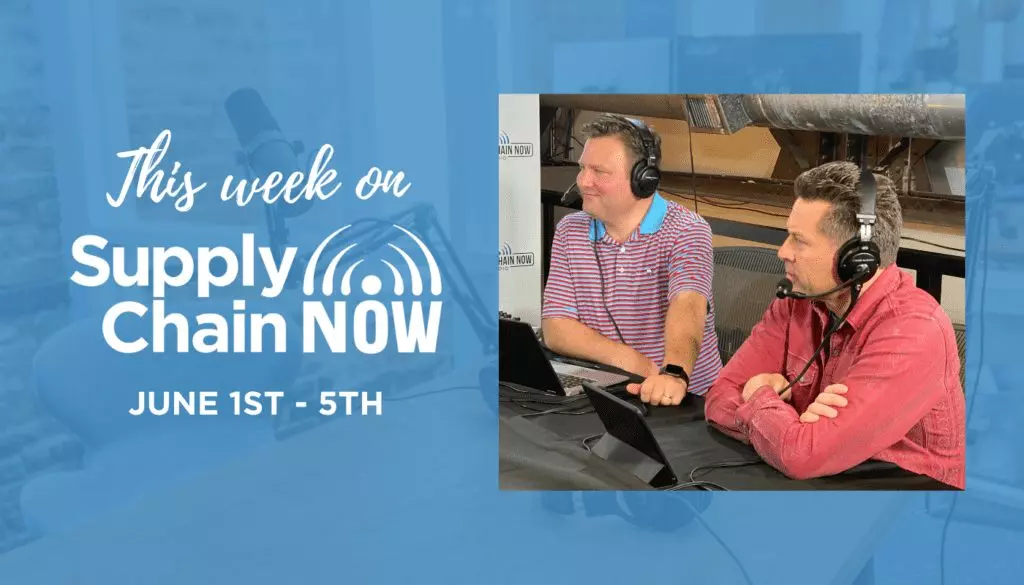
This Week in Supply Chain Now: June 1st – 5th
Another great week here at Supply Chain Now! Have you listened to all the episodes? If not, you can check them all out here: On Monday, Scott and Greg chatted with Tim Dooner with FreightWaves, about working from home and how it will work going forward, brokers and owner-operators, and more! Supply Chain Now · “What the Truck is Going On: Tim Dooner with FreightWaves” On Tuesday we were overwhelmed by the passion for supply chain and the positivity of Jamin Alvidrez with Freight Tribe! Supply Chain Now · “Meet Jamin: Supply Chain Vet Shows How to Unleash Positivity” On Wednesday we welcomed Supply Chain Now vets Claudia Freed with EALgreen and Chuck Easley with the Georgia Tech Supply Chain and Logistics Institute back to the show to discuss education and the future of supply chain. Supply Chain Now · “Supply Chain Lessons Learned from Pandemic: Claudia Freed & Chuck Easley” Scott and Greg were joined by Cathy Morrow-Roberson with Logistics Trends and Insights for the Supply Chain Buzz, discussing the top news in supply chain for this week. Supply Chain Now · “UPS Rate Changes & More: Supply Chain Buzz…
freight payment index
November 2, 2021
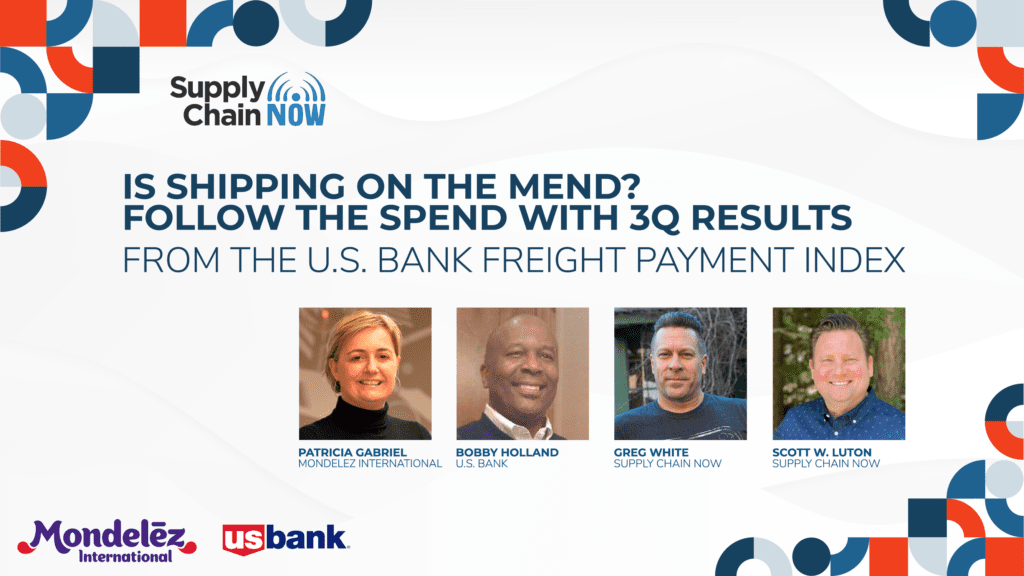
Is Shipping on the Mend? Follow the Spend with 3Q Results from the U.S. Bank Freight Payment Index
The U.S. Bank Freight Payment Index for 3Q 2021 has been released, and one thing remains clear: spend is up. More specifically, year over year, quarterly freight spend showed the second largest increase ever – rising 32.6% from 3Q 2020. What’s driving the dollars, and what can this increase tell us about the state of the supply chain across the country? Supply Chain Now co-hosts Scott Luton and Greg White recently sat down with Bobby Holland, Director, Freight Data Solutions at U.S. Bank, and Patricia Gabriel, Vice President US Customer Service & Logistics, at Mondelez International, to find out. Let’s review highlights from their discussion of the report – and take a look at what you need to consider moving forward. But first, what is the U.S. Bank Freight Payment Index? The U.S. Bank Freight Payment Index is a free report you can download each quarter to keep your finger on the pulse of freight shipping volumes and spend from both a national and regional perspective. The report uses actual transaction payment data, de-seasonalized and calendar adjusted for maximum comparability. How do I use it? When you’re asking the question, “What happened last quarter?” the U.S. Bank Freight Payment Index…