

More
foundational industries investment
February 23, 2026
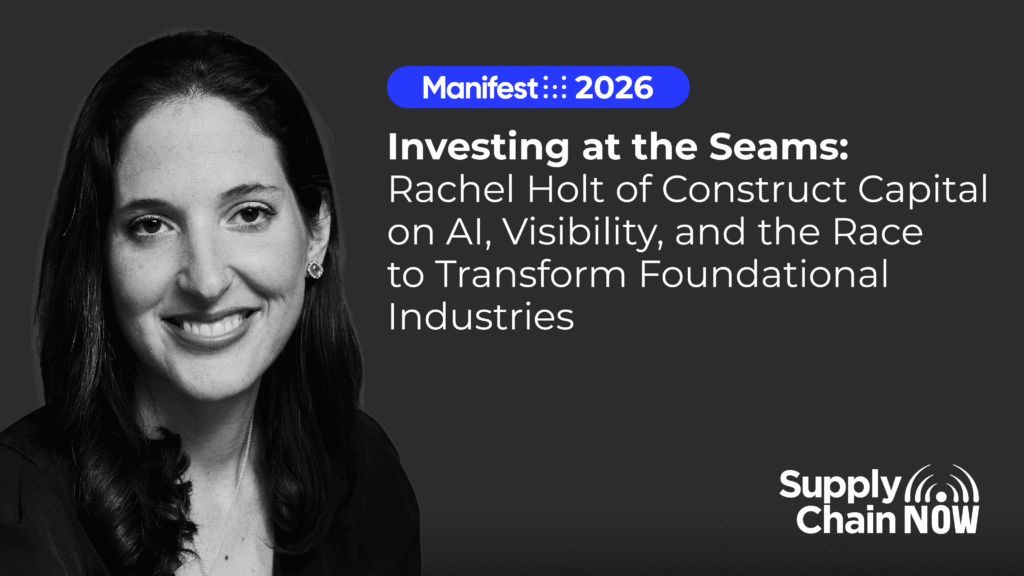
Investing at the Seams: Rachel Holt of Construct Capital on AI, Visibility, and the Race to Transform Foundational Industries
From Uber to Foundational Industries At Manifest 2026, Scott Luton sat down with Rachel Holt, Co-Founder and Managing Partner of Construct Capital, to explore how venture capital is fueling the next era of supply chain innovation. Construct Capital, now six years old, was founded in early 2020 with a bold thesis: transform foundational industries that represent nearly half of GDP: supply chain, logistics, manufacturing, mobility, infrastructure, and defense. When the fund launched, Holt recalls many skeptics asking whether supply chain and logistics were truly venture-scale opportunities. It echoed what she heard when she joined Uber in 2011, when transportation was considered slow moving and heavily regulated. Yet Uber went on to redefine personal logistics. Her final years at Uber brought a pivotal lesson. While the rides business operated with second-by-second visibility, the company’s e-bike and scooter supply chain operated in near darkness. Products shipped from China would disappear for weeks at sea, briefly reappear at ports, then stall again in customs. “We had no visibility, we had no ability to reroute,” Holt shared, as this Eureka moment would go on to help shape her investment focus. The Visibility Gap at the Seams Supply chain, Holt emphasized, is not monolithic.…
August 27, 2021
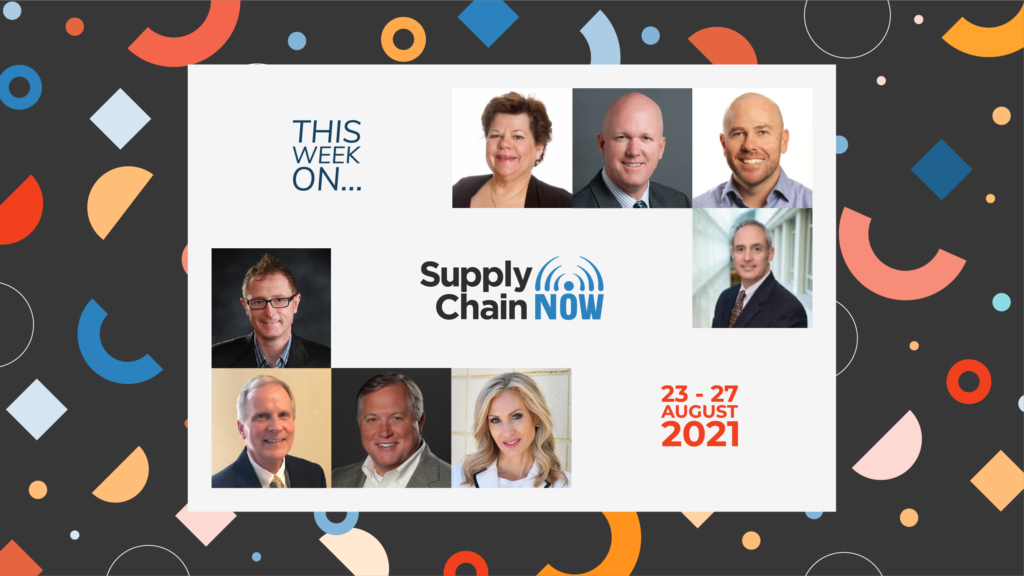
This Week In Supply Chain Now: August 23rd – 27th
Stay up to date on all the latest conversations, interviews, and episodes we released this week here at Supply Chain Now. We started our week off by publishing a Digital Transformers episode hosted by Kevin L. Jackson. This week he welcomes special guest Trina Limpert with RizeNext. On This Week in Business History, Scott shares a special story that is near and dear to his heart. This episode highlights Scott’s grandfather Dick Rutland. Scott highlights his grandfather’s experiences with Winn-Dixie and Kimberly Clark. On Tuesday, we released an episode of TEKTOK with hosts Scott Luton and Karin Bursa. These two had the amazing opportunity to interview Matthew Harding SVP of Data Science & Engineering, and Ben Cubitt, SVP of Consulting and Network Services at Transplace. For this episode of Supply Chain Now Scott and Greg had the opportunity to interview two important UPS figures: Daniel Gagnon, Vice President of Global UPS Healthcare Marketing and Strategy, and Tim Fosnough, Senior Director of UPS Global Freight Forwarding. During this conversation, UPS responses to the COVID-19 pandemic were discussed. On Thursday, we also released another episode of the Supply Chain Buzz featuring Aaron Meredith from Verusen. Scott, Greg, and Aaron covered all the…