

More
supply chain planning
January 6, 2026
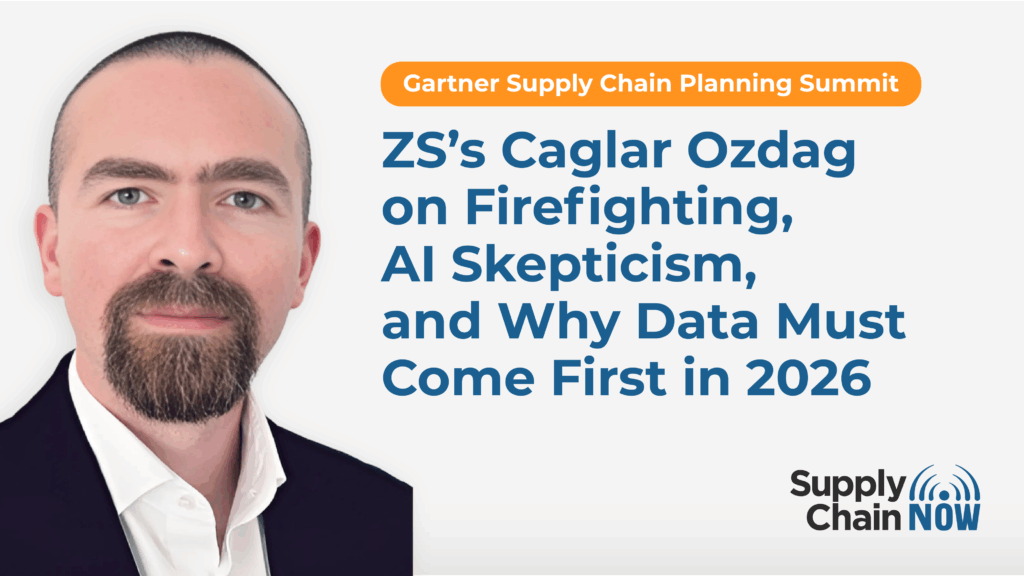
ZS’s Caglar Ozdag on Firefighting, AI Skepticism, and Why Data Must Come First in 2026
At the Gartner Supply Chain Planning Summit in Denver, Scott Luton sat down with Caglar Ozdag, a supply chain leader at ZS. Known for its deep analytics and technology expertise across industries such as life sciences, airlines, consumer goods, and agriculture, ZS has become a trusted partner for organizations looking to elevate their planning and manufacturing performance. Ozdag leads the firm’s supply chain practice with a focus on planning from detailed forecasting through detailed scheduling. As a former practitioner himself—having led planning operations at large global enterprises—he brings a grounded, real-world perspective to the challenges facing today’s supply chain leaders. Old Problems Persist—and New Ones Are Emerging When asked about classic and emerging challenges in planning, Ozdag didn’t hesitate: firefighting isn’t going away. From supply planning disruptions to last-minute schedule changes, firefighting remains a daily reality. “Life happens,” Ozdag noted. Plans rarely match reality, and organizations must constantly adjust. But today, a new layer has been added: AI uncertainty. Everywhere he goes, leaders are asking the same questions: “Is AI the right investment?” “Will the ROI materialize?” “Are we adopting the right tools, or just chasing hype?” This blend of enduring complexity and emerging skepticism has become a defining…
August 7, 2020
This Week on Supply Chain Now: August 1st – 7th
Another BIG week at Supply Chain Now! If you missed an episode, get a quick summary and listen here! We added another TWO additional episodes this week starting on Saturday, August 1st. If you didn’t catch our Supply Chain Buzz livestream last week, you got another chance to see Scott and Greg cover the top news in Supply Chain on Saturday. Supply Chain Now · “The Supply Chain Buzz for July 27th: Brand Rationalization, CSCO Diversity, & More” On Sunday, we continued our Logistics with Purpose series with a great interview with Jon Thompson with Comunidad Connect. Supply Chain Now · “Logistics with Purpose: Jon Thompson with Comunidad Connect” On Monday, Scott and Greg spoke with Andrea Kerr, the VP of Product Management with SpotSee, all about optimizing supply chain visibility. Supply Chain Now · “Optimizing Supply Chain Visibility: Angela Kerr with SpotSee” On Tuesday we had ANOTHER great new program debut! We published the first episode of the Jamin Logistics & Transportation Experience, as Jamin Alvidrez interviewed our very own, Scott Luton! Supply Chain Now · “Adapt & Thrive: Lessons from the Air Force, Andy Griffith & Granddad with Guest…