

More
supply chain thought leadership
February 19, 2026
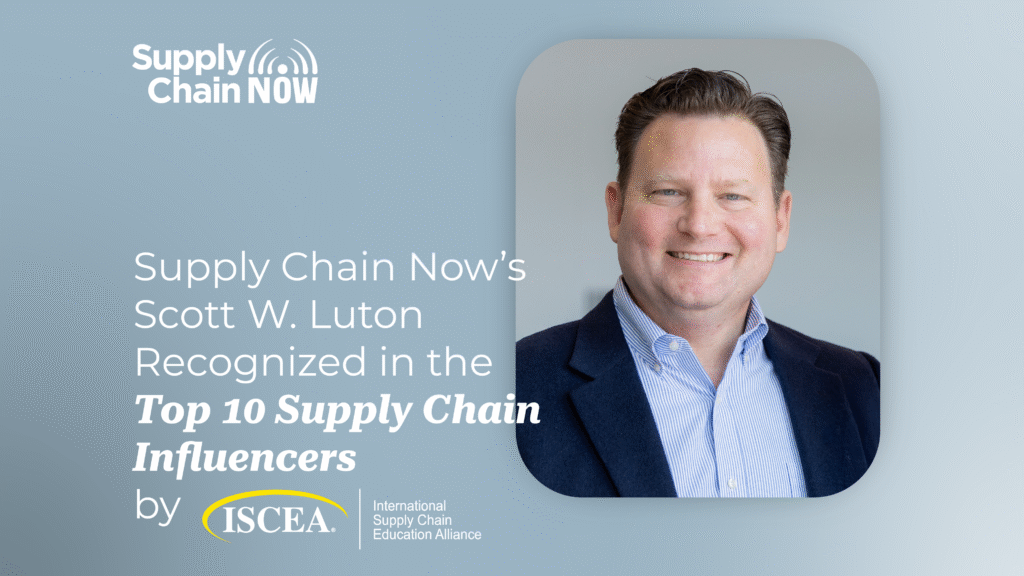
Supply Chain Now’s Scott Luton Recognized in the Top 10 Supply Chain Influencers by ISCEA
We’re proud to celebrate another industry recognition for Supply Chain Now Founder, CEO, and Host Scott Luton – he has been named one of the ISCEA Top 10 Supply Chain Influencers of 2026. The International Supply Chain Education Alliance (ISCEA) highlights leaders who actively shape the profession by sharing research, perspectives, and practical insights that help advance the global supply chain conversation. (ISCEA) Scott’s inclusion reflects the spirit of the Supply Chain Now community: real conversations, practical takeaways, and a commitment to connecting practitioners across industries and roles. Through interviews, events, and ongoing dialogue with leaders around the world, his goal has always been to amplify voices and help move the industry forward together. We’re grateful to our listeners, partners, and guests; this recognition belongs to the entire community that shows up and shares knowledge every day. Check out the entire list and learn more about ISCEA here.
supply chain
October 25, 2022
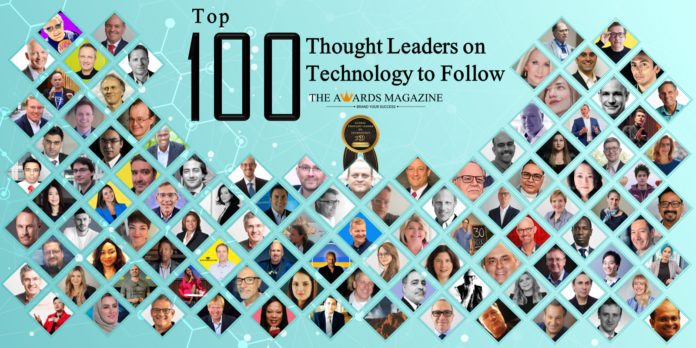
Top 100 Global Thought Leaders on Technology to Follow in 2022
To be a successful leader you can use social media, such as Twitter, LinkedIn, Facebook, Instagram, and other popular social channels for numerous purposes. Digital Transformers host Kevin L. Jackson was recently recognized as one of the Top 100 Global Thought Leaders and Influencers to Follow on Social Media by The Awards Magazine for making a great impact in many industries and society. Read the article and see the full list here.