
More
supply chain decision making
February 16, 2026
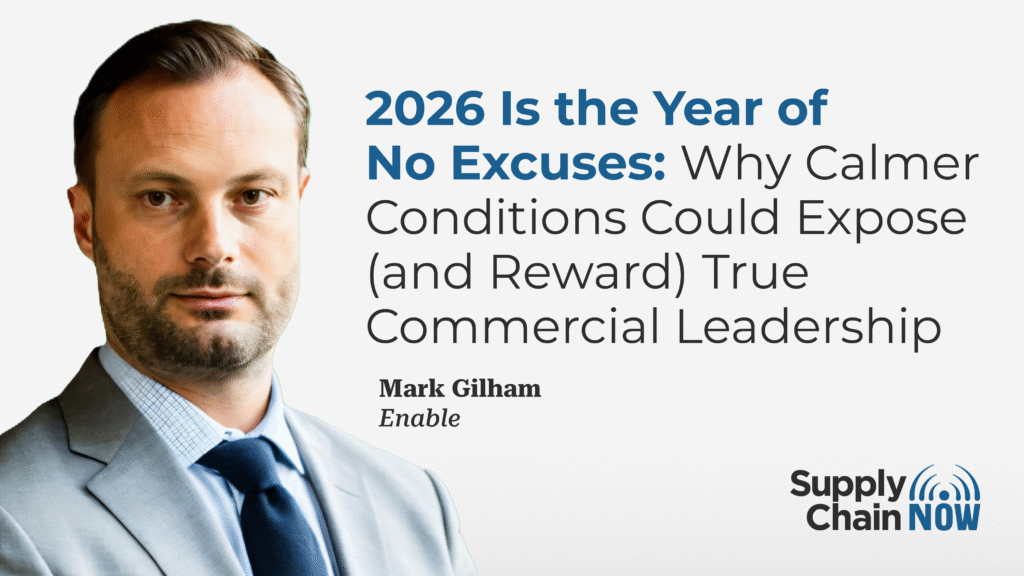
2026 Is the Year of No Excuses: Why Calmer Conditions Could Expose (and Reward) True Commercial Leadership
A Shift in the Narrative for 2026 In a recent conversation, Scott Luton spoke with Mark Gilham, Vice President & Head of Global Advisory at Enable, about what supply chain and commercial leaders should expect from the year ahead. While many annual outlooks attempt to forecast the next major disruption, Gilham offered a different lens: 2026 may become the “year of no excuses.” After years defined by a global pandemic, inflationary shocks, geopolitical instability, supply shortages, and the rapid rise of AI, organizations have already endured extraordinary volatility. Businesses not only survived, but in many cases adapted and grew. According to Gilham, that reality weakens the argument that disruption alone explains underperformance. Disruption is not disappearing, he cautioned, but leaders can only lean on it for so long. Why a Calmer Year Raises the Bar Gilham argued that if external conditions stabilize even slightly, the pressure on leadership actually increases. A less chaotic environment removes convenient explanations and shines a brighter light on internal shortcomings. Process gaps, misaligned incentives, and execution failures become harder to ignore when the world is not on fire. Rather than waiting for certainty, Gilham believes leaders should act decisively. This does not mean radical…
July 3, 2020
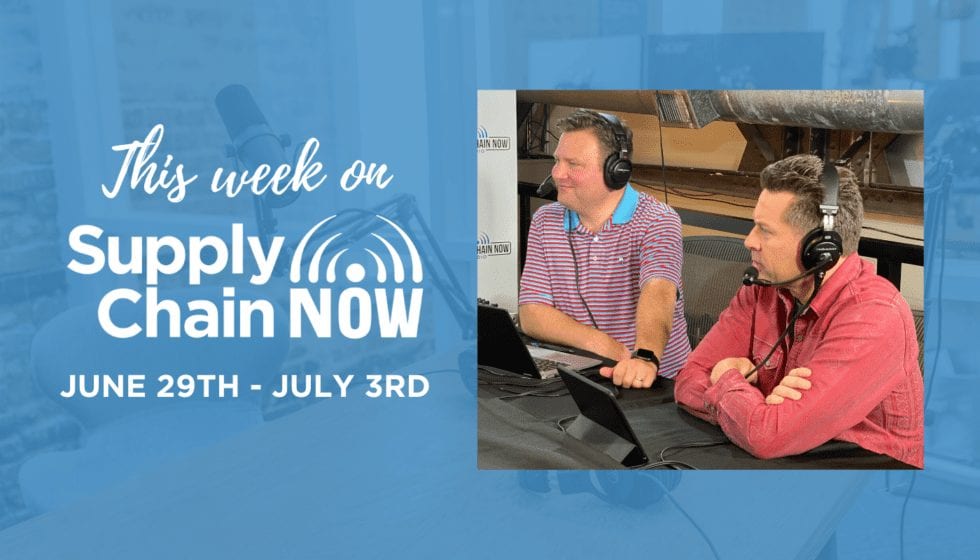
This Week on Supply Chain Now- June 29th – July 3rd
Another great week here at Supply Chain Now! Did you catch all the episodes? If not, you can check them all out here: We kicked off the week with This Week in Business History, where Scott looks back at some of the biggest historical events in business history for the week ahead. Supply Chain Now · “This Week in Business History for June 29th: The U.S. Interstate Highway System” Then on Tuesday, Scott and Greg welcomed Cynthia Curry with the Metro Atlanta Chamber and Jasmine Crowe with Goodr to the podcast for a conversation about redirecting excess prepared food and so much more. Supply Chain Now · “Feed More & Waste Less: Jasmine Crowe with Goodr” On Wednesday, we continued our new series, TECHquila Sunrise with Greg White, where Greg shares the latest investments, acquisitions, innovations, and glorious implosions in Supply Chain Tech every week. Supply Chain Now · “Top 25 Startup Ecosystems, Inclusive Investing, & Big Deals: TECHquila Sunrise with Greg White” On Thursday we published the Supply Chain Buzz, where Greg and Scott discussed the top supply chain news of the week. Supply Chain Now · “Supply Chain Buzz for June 29th:…