
More

news
January 5, 2026
Supply Chain Now Announces Leadership Advancement and Showcases Industry-Leading Advisory Board to Fuel Growth in 2026
ATLANTA, GA — January 6, 2026 — Supply Chain Now, the award-winning global digital media platform recognized as the #1 Voice of Supply Chain, today announced the promotion of Mary Kate Love to President, effective January 1, 2026, alongside the continued engagement of a distinguished Advisory Board composed of proven leaders across supply chain, technology, strategy, and media. Together, these leadership updates signal Supply Chain Now’s next chapter of growth as the company prepares for significant expansion in 2026: scaling programming, partnerships, and demand-generation capabilities while staying rooted in authentic, practitioner-led content serving a global audience of more than 1 million listeners. In her new role, Love will lead Supply Chain Now’s strategic growth across programming, partnerships, operations, and long-term platform strategy, further strengthening its mission to inform, connect, and elevate the global supply chain industry. “Mary Kate is a trusted, decisive leader with a rare combination of delivering both strategic vision and operational excellence,” said Scott W. Luton, Founder and CEO of Supply Chain Now. “In 2025, she played a pivotal role in accelerating our revenue growth, expanding our audience to more than one million supply chain professionals, and sharpening our focus on delivering measurable value for both practitioners…
October 22, 2021
This Week In Supply Chain Now: October 18th – 22nd
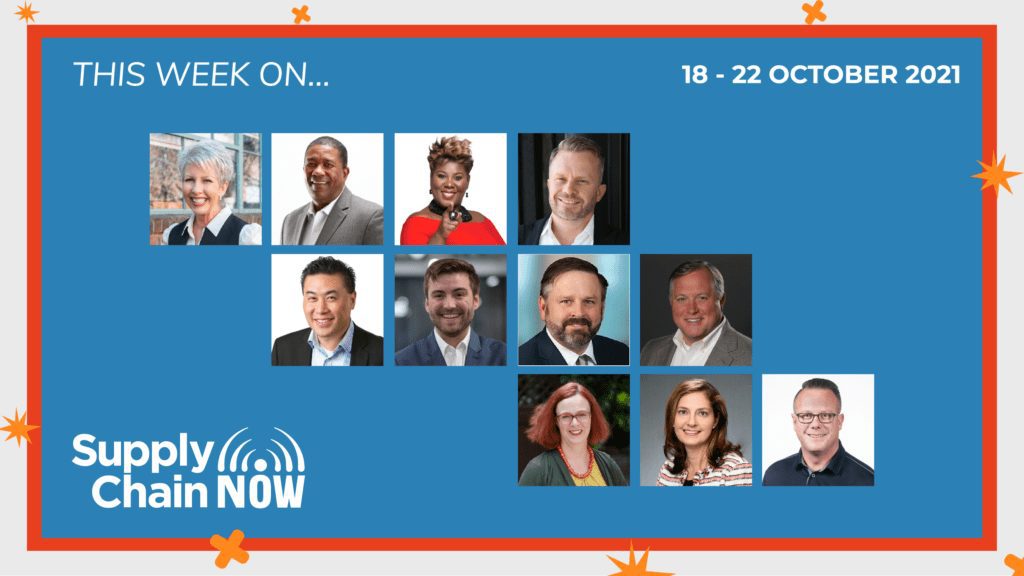
Stay up to date on all the latest conversations, interviews, and episodes we released this week here at Supply Chain Now! We kicked this week off with a new episode in our Supply Chain Real Estate Series produced in partnership with Prologis. Scott Luton and special host Ward Richmond welcomed Managing Partner Will O’Donnell and Vice President Todd Lewis from Prologis Ventures. For Monday’s This Week In Business History episode, Scott tells an interesting story of one of the most captivating and influential movie rental businesses in American history. On Tuesday, we released a new episode of TEKTOK, with host Karin Bursa. In this episode, Karin talks with Ben Cubitt, SVP of Consulting and Network Services for Transplace. They discuss the future of supply chain logistics into next year, from continued network disruptions to taking smart steps today to regain a proactive footing. On Wednesday’s Supply Chain Now episode, Scott and special guest host Crystal Davis welcomed the Vice President of Transportation for Home Depot, Sarah Galica, to the show. She gives insight on some of the improvements that resulted in $34 billion dollars in growth for The Home Depot. For Thursday’s Supply Chain Now episode, Scott and guest host…