

More

news
January 5, 2026
Supply Chain Now Announces Leadership Advancement and Showcases Industry-Leading Advisory Board to Fuel Growth in 2026
ATLANTA, GA — January 6, 2026 — Supply Chain Now, the award-winning global digital media platform recognized as the #1 Voice of Supply Chain, today announced the promotion of Mary Kate Love to President, effective January 1, 2026, alongside the continued engagement of a distinguished Advisory Board composed of proven leaders across supply chain, technology, strategy, and media. Together, these leadership updates signal Supply Chain Now’s next chapter of growth as the company prepares for significant expansion in 2026: scaling programming, partnerships, and demand-generation capabilities while staying rooted in authentic, practitioner-led content serving a global audience of more than 1 million listeners. In her new role, Love will lead Supply Chain Now’s strategic growth across programming, partnerships, operations, and long-term platform strategy, further strengthening its mission to inform, connect, and elevate the global supply chain industry. “Mary Kate is a trusted, decisive leader with a rare combination of delivering both strategic vision and operational excellence,” said Scott W. Luton, Founder and CEO of Supply Chain Now. “In 2025, she played a pivotal role in accelerating our revenue growth, expanding our audience to more than one million supply chain professionals, and sharpening our focus on delivering measurable value for both practitioners…
May 22, 2020
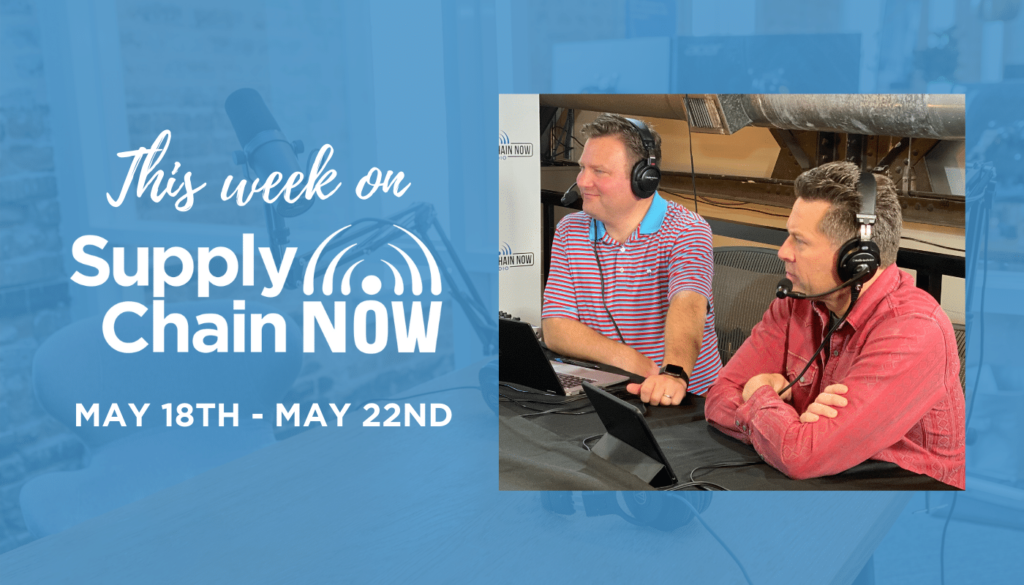
This Week in Supply Chain Now: May 18th – 22nd
Another great week here at Supply Chain Now! Have you listened to all the episodes? If not, no worries! Check them all out here: On Monday, we welcomed Dan Reeve with Esker to the show to talk about how organizations can leverage AI effectively to win in uncertain times. Supply Chain Now · “Leveraging AI Effectively to Win in Uncertain Times: Dan Reeve with Esker” We continued our Today in Manufacturing series on Tuesday, and welcomed Rebecca Bowman with The Clorox Company to Supply Chain Now, along with special co-hosts Jason Moss with Georgia Manufacturing Alliance and Laura Madajewsli with HLB Gross Collins. Supply Chain Now · “Today in Manufacturing: Rebecca Bowman with The Clorox Company” On Wednesday we published our popular Supply Chain Buzz, with Scott and Greg sharing and discussing the latest news and events in Supply Chain and beyond. Supply Chain Now · “Pharma Supply Chain, Reshoring, & TP: The Supply Chain Buzz for May 18th” Thursday we welcomed back Latia Thomas via livestream as she shared what the future of supply chain has in store. A bright future indeed! Supply Chain Now · “Latia Thomas: Leading the Charge into the…